Counterpoint Political Desk, Cover Story
Row over a bill: When hope springs eternal amid uncertainty
by Counterpoint Political Desk
What basically determines the fate of any bill in the parliament is the number of the ayes its proponents can muster for it. Legislators cast their votes on the basis of their political allegiances. The members of the ruling party invariably vote for any bill the government presents, and their Opposition counterparts oppose it unless they arrive at a pre-vote agreement, as was the case regarding the 17th Amendment, the 19th Amendment and the 21st Amendment.
However, there have been occasions when defections brought down governments, but they are the exception that proves the rule. The SLFP-led government of Sirimavo Bandaranaike fell in December 1964 after C. P. de Silva and 13 other government MPs crossed the floor and voted against it, amidst the controversy over the proposed Lake House takeover. In 2001, the SLFP-led People’s Alliance government led by President Chandrika Bandaranaike Kumaratunga fell due to mass crossovers from the ruling party.
No doubts
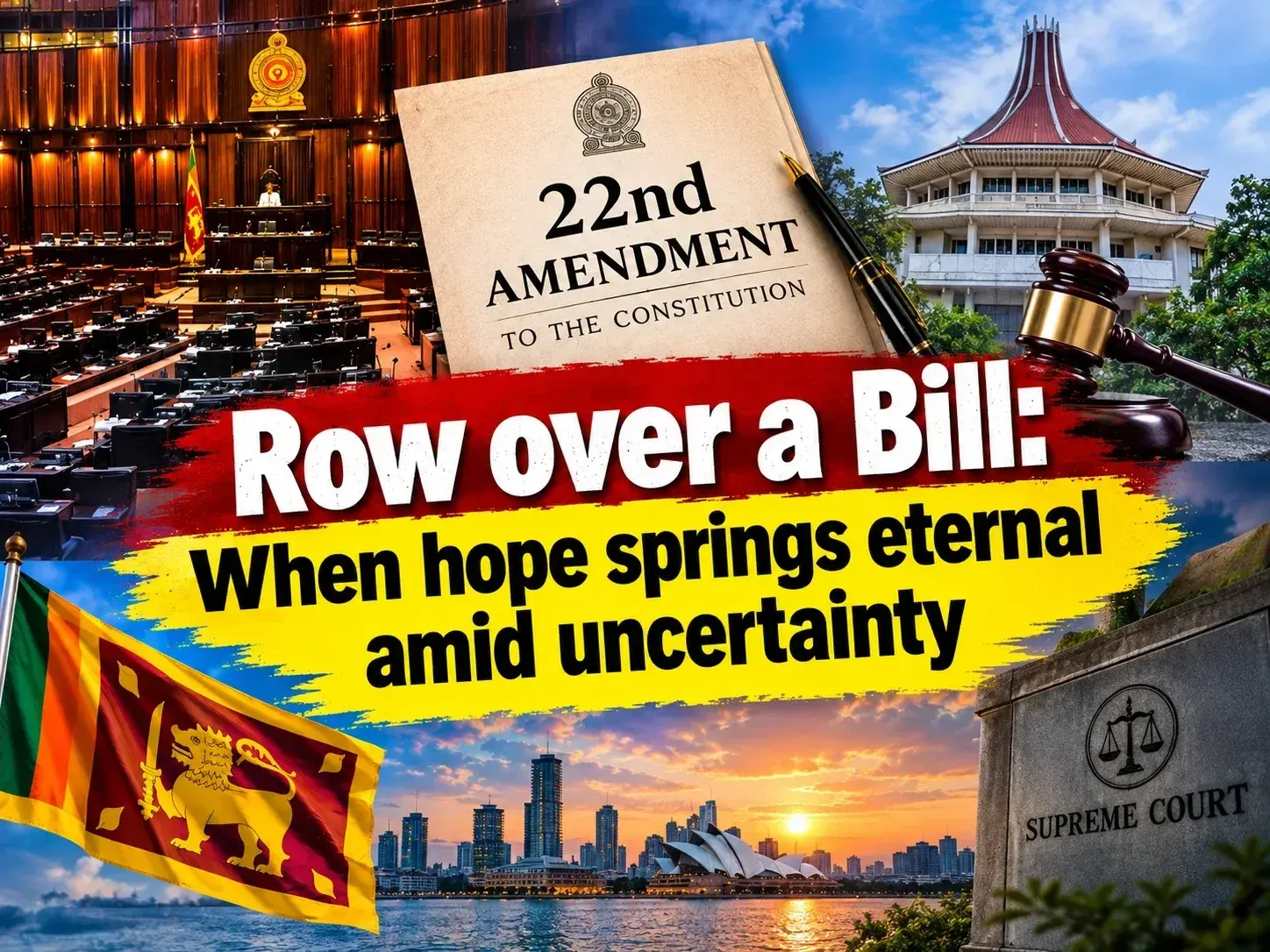
Nobody had any doubts about the passage of the 22nd Amendment to the Constitution, which the government has brought in to raise the retirement ages of the judges of the Supreme Court and the Court of Appeal. The same can be said about the Judicature (Amendment) Bill intended to increase the retirement ages of the judges of other courts. It was also passed with a two-thirds majority.
The Opposition and other opponents of the controversial constitutional amendment argue will undermine judicial independence in that an extension of retirement age benefitting the serving judges will lead to a quid pro quo, and future governments will also be free to change the retirement ages of judges to suit their political agendas. Their efforts to have the 22nd Amendment put to a referendum in keeping with two previous Supreme Court determinations on some other bills failed. The SC stated in those two sperate determinations that the retirement ages of the serving judges of the Supreme Court and the Court of Appeal could not be changed without people’s approval at a referendum.
Hoping against hope
Their attempts to stall the constitutional amendment on the legal front having failed, the opponents of the bill pinned their hopes on a conscience vote. The Bar Association of Sri Lanka, the Opposition and several civil society organizations called upon the MPs to vote according to their conscience. There is no such thing as a conscience vote in the parliament, where how an MPs votes is determined by his or her political allegiance, as pointed out earlier in this comment.
The Opposition only hoped against hope when it expected a division in the government camp over the 22nd Amendment. The government is hoping that the path is clear and there will be not trouble over changing the judges’ retirement ages. It is also mistaken.
Beginning of trouble
Trouble has just begun for the government. The Opposition has launched a protest campaign to mobilize mass support. The SJB held a well-attended protest on Thursday itself hours before a vote was taken on the 22nd amendment. Protests tend to snowball. What marked the beginning of the end of the 17-year UNP rule in 1994 was an abortive bid to impeach the then President Ranasinghe Premadasa and protests that ensued.
President Mahinda Rajapaksa had the 18th Amendment enacted to further self-interest and so did his brother President Gotabaya Rajapaksa, who introduced the 20th Amendment, but both had to leave office a few years after the enactment of those amendments. One may argue that the 22nd Amendment is different from the constitutional amendments introduced by the Rajapaksas, but the manner in which they were passed was similar; the Executive had them steamrollered through the parliament.
The Opposition and other anti-government forces are bound to make the most of the 22nd Amendment to recover lost ground. They have got something to hold on to.
Political hurdling
The passage of the 22nd Amendment looks, on the surface, like a hurdle cleared. But given the fierce resistance it provoked today's victory may yet prove tomorrow's obstacle.
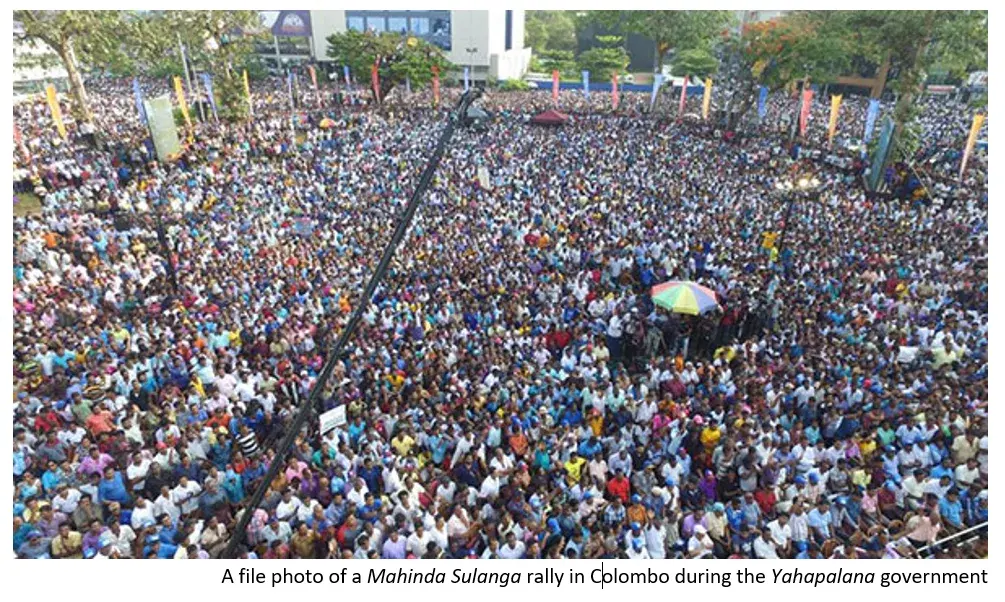
With no election on the horizon, the major parties are nonetheless out there in force, courting the public. President Anura Kumara Dissanayake has toured Polonnaruwa, Anuradhapura and Matara under the banner "Two Years, Good for the Country," marking the government's anniversary. Not to be outdone, the Sri Lanka Podujana Peramuna staged a massive rally of its own in Anuradhapura on Sept. 12. The government and the Opposition alike are laying their respective report cards before the electorate.
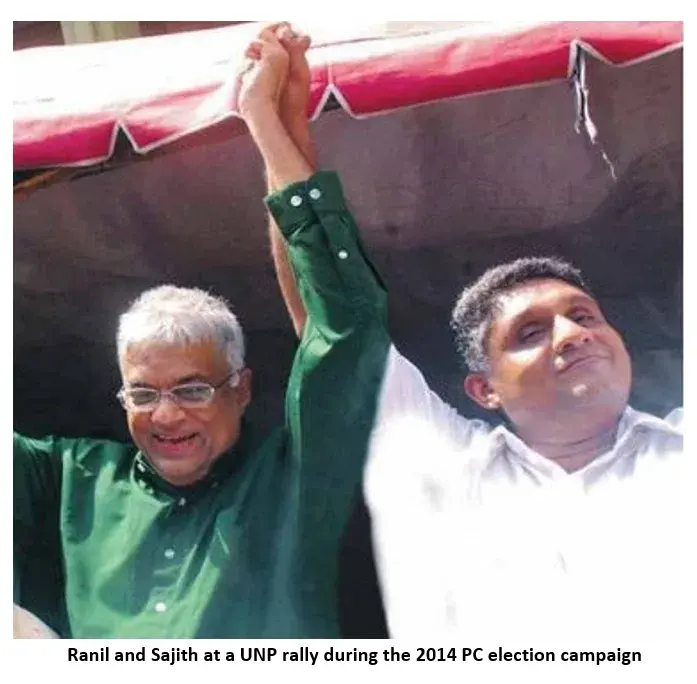
The Opposition argues that the government is using the law as cover to stifle dissent, and accuses ministers, MPs and even the President of pre-announcing court verdicts from political platforms. Opposition Leader Sajith Premadasa has gone further, telling Parliament that the government was sliding from democracy into authoritarianism, This, he said, was the "system change" it once promised , and warned that judicial independence and standing were being deliberately eroded.
Banned Bodhi Puja
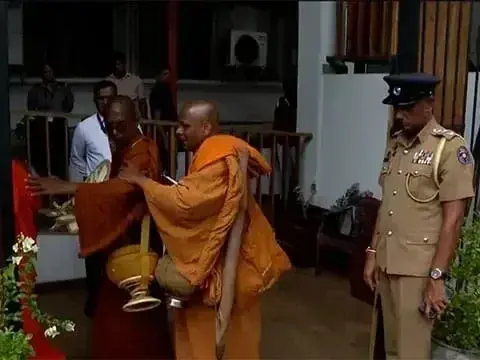
In Matara, organisers from the Podujana Peramuna had secured permission to hold a Bodhi Puja invoking blessings on MP Namal Rajapaksa only to be told at the eleventh hour by the Bodhi Protection Council that permission had been withdrawn. Two alternative pujas were held instead, one at the Devinuwara Devalaya and the other at the Seetha Amman Temple in Nuwara Eliya.
Rajapaksa, the party's National Organiser, used the incident as a springboard for a broader parliamentary broadside, accusing government leaders and the President of making undeliverable promises while suppressing opposition voices even as the President, he said, looked away from the government's own failings.
22nd Amendment, Easter Sunday, and a verdict
When the Supreme Court determination on the 22nd Amendment was announced in Parliament, the Bar Association of Sri Lanka urged that MPs be allowed a free conscience vote. That freedom was granted by neither the government nor the opposition parties.
In a separate but consequential development, the long-awaited verdict in the Easter Sunday attacks case was handed down: fifteen convicted, nine acquitted. The convicts were sentenced to terms of rigorous imprisonment ranging from 200 years to 260 years. Rev. Fr. Cyril Gamini Fernando of the Colombo Archdiocese immediately cautioned that it was not the end of the matter, calling for action against the alleged masterminds still at large. He named Suresh Sallay, Gotabaya Rajapaksa and Maithripala Sirisena as figures who still owed answers.
A joint protest that wasn't
The SJB had planned its own anti-22nd-Amendment protest. Ahead of it, the Free Struggle Centre for Democracy convened a unity meeting at Colombo's Janaki Hotel, drawing together President's Counsel Maithree Gunaratne, Shirall Lakthilaka, former Governor Keerthi Tennakoon, Professor G. L. Peiris for the common opposition, Ajith P. Perera for the SJB, SLPP General Secretary Sagara Kariyawasam, SLFP's Duminda Dissanayake, and veterans like Wimal Weerawansa, Udaya Gammanpila, Champika Ranawaka and Mano Ganesan. A joint protest was agreed and signed off , with Perera signing for the SJB.
The unity was short-lived. SJB spokesman S. M. Marikkar announced that since the protest was an SJB initiative, only the United National Party would be invited to join. The smaller parties quietly withdrew, as did the Free Struggle Centre itself. The SJB, under Marikkar, pressed ahead alone even as Premadasa reportedly discovered that a rival opposition party was working out of its Colombo office to sabotage the whole effort.
Whispers of a secret deal
Adding to the intrigue, a social media statement, naming names, alleged that three senior SJB MPs had secretly met with ruling-party General Secretary Tilvin Silva, striking a bargain that fractured opposition unity. The statement further claimed a businessman linked to a major pharmaceutical racket had brokered the meeting, and that his relative sits in the SJB.
Sajith's promise: repeal, not just resist
Despite heavy rain, the SJB's protest went ahead, with Premadasa vowing that whatever the government's enthusiasm for the 22nd Amendment, a future government under his leadership would reverse it. Before the protest, Gunaratne accused Premadasa's party of reneging on the previous week's unity agreement. Kariyawasam, for his part, argued that opposition protests demanded collective action and suggested no self-respecting person would show up if SJB leaders themselves discouraged attendance.
Eyeing the Provincial Councils
Behind the scenes, party leaders meeting at the SLPP office in Pelawatte reportedly decided the government should begin preparing for Provincial Council elections. Silva is said to have argued the polls should be timed to the government's advantage, starting with the Northern and Eastern provinces, seen as friendlier territory, ahead of the South. A committee has been tasked with recommending a suitable electoral system without delay. The sequencing itself speaks volumes: it suggests the government trusts voters in the North and East more than those in the South.
Share this story
RELATED NEWS
View all
Point of View
Robe-sarong controversy eclipses all other issues
Oct 10, 2026
Counterpoint Political Desk
Propaganda, accusations, conspiracy theories and internal problems
Oct 03, 2026

Point of View
When an oil shock reaches Sri Lanka
Sep 22, 2026
Point of View
Week of constitutional fireworks expected in House
Sep 20, 2026