Cover Story, Latest News
The week when the numbers spoke
by Counterpoint Lobby correspondent
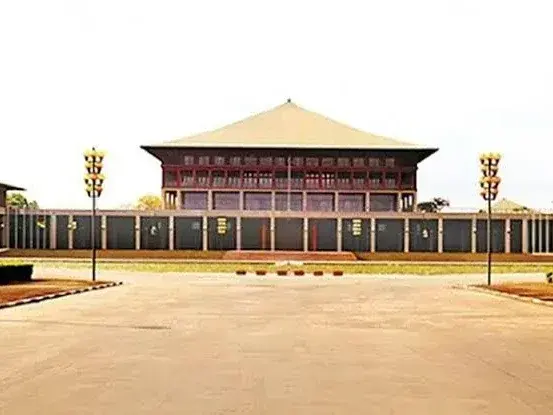
By the time Parliament assembled for its four-day sitting week, the only real suspense surrounding the 22nd Amendment (22A) was how much political theatre would be staged before the inevitable vote, which, as everybody knew, would be in the government’s favour.
The government had the numbers; in fact, more than enough. It had the constitutional Bills. It had a two-thirds majority in Parliament. And it had every intention of using that majority. 22A was not just a constitutional amendment for the government; it was at the centre of a political battle for dominance and as important as a financial bill.
So, in a sense, the parliamentary drama of September 22 to 25 was a little like watching a cricket match after the required runs had already been scored. There could still be arguments over the manner of victory, accusations about the umpire and plenty of noise from the spectators. But the result itself was hardly a mystery, and it was official.
22A and the Judicature (Amendment) Bill were passed on Friday, September 25, after two days of debate. The 22nd Amendment secured 158 votes in favour and 63 against, with no abstentions. The Supreme Court's recommendations were incorporated into the legislation before the final vote.
The Opposition, naturally, was not going to surrender quietly.
Thursday's proceedings provided the main stage for arguments that the amendment would undermine judicial independence by increasing the retirement age of judges. Outside Parliament, the SJB staged a protest against the legislation.
Inside the Chamber, Opposition Leader Sajith Premadasa and other Opposition politicians sought to portray the bills as part of a much larger constitutional struggle. The government, for its part, could simply point to the numbers.
And numbers, in Parliament, have an irritating habit of being more decisive than speeches and even reason.
There was nevertheless an interesting footnote to the vote: three Opposition MPs — SJB Badulla District MP Wasala Nayanathilaka and NDF National List MPs Ravi Karunanayake and Faiszer Musthapha — were absent. Absence speaks volumes during a crucial vote.
Their absence inevitably attracted attention because each had a different connection to the political circumstances surrounding the legislation.
Karunanayake, for instance, was seen on the day attending the launch of Kasun Pussawela's Sinhala translation of Raine Wickrematunge's book, Lasantha, at Tharangani Hall of the National Film Corporation. Among those present was CIABOC Director General Ranga Dissanayake, who delivered a lecture at the event.
The irony was difficult to miss. A former Finance Minister was attending an event associated with the memory of an assassinated journalist whose life and work remain deeply connected with questions of political accountability, while Parliament was simultaneously engaged in a constitutional battle over the country's institutions.
Faiszer Musthapha's absence had another layer of political curiosity. Years earlier, he had himself introduced a Private Member's Motion seeking an increase in the retirement age of judges. That makes his absence from a vote on legislation achieving precisely such an objective a particularly intriguing footnote.
Whether the absence of these two MPs represented deliberate political positioning, personal circumstances or otherwise is another matter. It would be unwise to manufacture motives where none have been publicly established. But politically, the empty seats were noticeable.
The bigger question, however, goes beyond three missing votes. 22A’s immediate practical effect is to increase the retirement age of Supreme Court judges, thereby extending the tenure of Chief Justice Preethi Padman Surasena, who was due to retire in December. He can now remain in office until 2028.
That has inevitably fuelled political speculation because constitutional rules concerning judicial tenure are never merely administrative matters. Today, an extension may benefit a judge whose record supporters regard as sound. Tomorrow, another government could find the same constitutional mechanism useful for a very different reason. That is the real institutional question.
It is also where the government's constitutional ambition deserves scrutiny.
With a two-thirds majority and years of political rhetoric about changing the country's system of governance, the government could have attempted something much larger: enforceable socio-economic rights, stronger institutional safeguards, greater judicial independence and an independent prosecutorial mechanism, among other structural reforms.
Instead, the country received what amounts to a constitutional patch.
There was nothing inherently wrong with Parliament addressing judicial administration. But for a government that possesses the constitutional muscle to undertake fundamental reform, the limited nature of the exercise is striking.
The Opposition, meanwhile, tried to turn the amendment into a broader political battle over democracy and the concentration of power. Some of its rhetoric undoubtedly went beyond the evidence. But beneath the political slogans lies a legitimate constitutional question: whether rules governing the tenure of judges should be changed in a manner that could create precedents for future governments.
And, so the four-day parliamentary week ended precisely as the arithmetic had suggested it would.
The government got its 22nd Amendment. The Opposition got its speeches and protests. And the public got another reminder that in politics, the most dramatic battles are sometimes fought long after the result has already been decided.
The real test of the 22nd Amendment will therefore not be the 158 votes that carried it through Parliament. It will be what those 158 votes have changed — and what future governments decide they can change with the precedent.
Share this story
RELATED NEWS
View all

Cover Story
Final Judgement (2642 pages) of Sri Lanka’s Easter Sunday Massacre: Released
Sep 30, 2026
Counterpoint Political Desk
Row over a bill: When hope springs eternal amid uncertainty
Sep 26, 2026

Mirror Wall
Deadly Deals in Dubai?
Jul 02, 2026
Politics by Vishvanath
NPP govt.’s “rice and stick” approach
Jun 30, 2026