Current Affairs
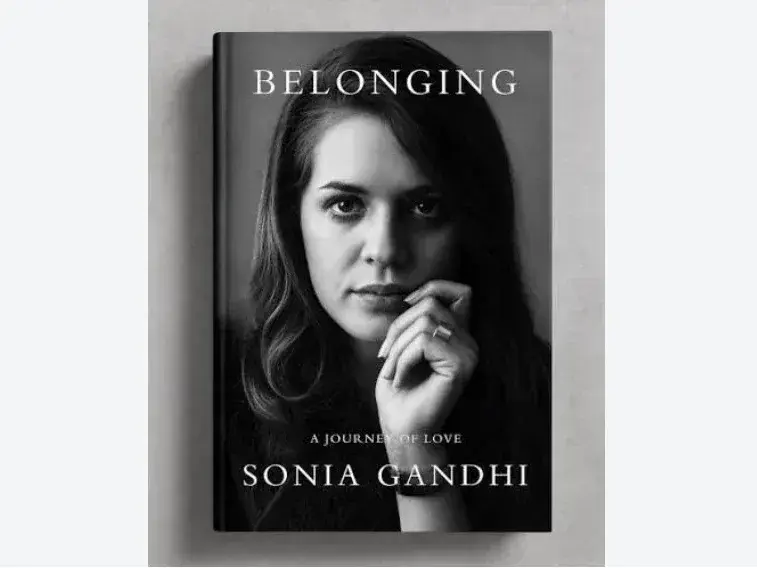
Rahul Gandhi questioned the wisdom of sending the IPKF to Sri Lanka, says Sonia in “Belonging – a journey of love”
By P.K.Balachandran
Colombo, November 28 – Sonia Gandhi writes in her autobiography “Belonging – a journey of love” that her son, Rahul, has a questioning mind and has often put tough questions to his father and Prime Minister Rajiv Gandhi.
She writes: “Rahul’s quest for understanding led him to probe and contest his father’s views and actions, sometimes incurring his ire. One such discussion had arisen when Rahul raised questions about the possible repercussions of sending Indian forces to Sri Lanka – a political decision that was to have tragic consequences.”
Rahul was also introspective and displayed unusual empathy. In 2018, years after the Liberation Tigers of Tamil Eelam (LTTE) killed his father using a suicide bomber, he said that he and his sister Priyanka had “completely forgiven” his father’s killers, the Tamil Tigers.
According to a PTI report on his interaction with Indian Institute of Management alumni in Singapore, Rahul said: “We were very upset and hurt and for many years, we were quite angry. But, somehow, completely…in fact, completely, we have forgiven them.”
Suggesting that Rajiv Gandhi’s violent end stemmed from his actions vis -à-vis the LTTE, Rahul said: “ When one realises that when these events (like the assassination) take place, it’s a collision of ideas, forces, confusion. That’s where you get caught.”
Felt for Prabhakaran and Family Too
Recalling his thoughts when he saw the body of LTTE Supremo Prabhakaran in Nandikadal, Rahul said: “I remember when I saw Mr Prabhakaran on TV lying dead, I got two feelings – one was why they are humiliating this man in this way. And the second was, I felt really bad for him and for his kids and I did that because I understood deeply what it meant to be on the other side of that thing.”
“So to me, when I see violence, regardless of who (the victim) is, I know that there is a human being behind that, there is a family behind that, a kid crying behind that. I have been through a lot of pain to get this, and it is something I consider very valuable. I find it difficult to hate people; even my sister (Priyanka) does,” he said.
“We knew that my father was going to die. We knew that my grandmother was going to die. In politics, when you mess with the wrong forces, and if you stand for something, you will die,” Rahul reasoned, reflecting on Indira Gandhi’s dealings with the Sikh militants and Rajiv’s dealings with the LTTE.
Sonia asked President K.R.Narayanan to Spare Conspirator
Nalini’s Life
On November 22, 2022, www.onmanorana.com reported that Sonia and her children came to the resolve that because of them, conspirator Nalini’s life should not be taken away as she too had a daughter. She met President K.R.Narayanan in 1999 and sought pardon for Nalini.
The gist of what Sonia told Narayanan was this: “Nalini, the woman who has been convicted in the case of the assassination of my husband, has been sentenced to be hanged. But neither I nor my children Priyanka or Rahul, want another life to be snuffed out. Nalini has a child. My children lost their father. No child should become an orphan because of us. We will not gain any peace by ending another person’s life. Therefore, we appeal to you to save her from the noose”.
She also handed over a letter which contained what she and her children had to say on the issue.
Sonia is Unhappy with Probes into Rajiv’s Assassination
In her autobiography, Sonia Gandhi is critical of the way Rajiv’s killers were hunted and how the two commissions of inquiry into the circumstances in which he was assassinated (on May 21, 1991) and the larger conspiracy behind it, did not lead to any follow-up action.
The Special Investigation Team (SIT) that was hunting the killers had found out where two principal suspects were holed up in a suburb of Bangalore, but that important discovery was mishandled.
In the morning after the discovery, “Priyanka barged into the room angrily, announcing that they had botched the operation. It transpired that more than thirty-six hours after the hideout had been discovered, messages were still going up and down the chain of command and no action was taken. Meanwhile, information had been leaked to the press and the activity around the hideout had alerted the terrorists. By the time the police acted, the media had gathered there – TV crews, vans and all. Realising they were about to be captured, the terrorists had taken their own lives, one by shooting himself in the head and the other by consuming a capsule of cyanide.”
“We were astonished by the magnitude of the blunder, and still wonder about it. This was no ordinary crime; it involved the murder of a former Prime Minister, who was expected to win the election, and a large number of people present with him. Was it a case of one-upmanship between officers of different agencies? Were some eager to be celebrated as heroes?”
“There were other failures too; amongst them, an important captured conspirator had been found hanging from a tree while in custody in suspicious circumstances. That has never been explained by his captors”.
“The questions multiplied, but the truth was never known. The investigation into the operational failure was sent to the capital, where it was predictably shelved. We were just told that there had been a divergence of views on how to proceed with the investigation.”
Available Intelligence Ignored
Sonia points out that available intelligence was not acted upon. “We learnt that close to a year before the assassination. An intercept of VHF communication often used by the LTTE had been picked up and translated from the old Tamil spoken by Jaffna Tamils. It said coldly. “Blow Rajiv Gandhi’s head off. Eliminate him. Kill him”. The IPKF head of intelligence had immediately alerted the Intelligence Bureau. But that chilling intercept, instead of being investigated and followed up, was ignored. V.P. Singh (then Prime Minister) removed Rajiv's security, sending a clear message from the top to the lowest level of governance: Rajiv’s safety was not a concern. There were further, later intercepts, but they had not even been decoded.”
Recommendations of Verma and Jain Panels Ignored
Sonia complains that governments ignored the recommendations of two commissions of inquiry.
“The Commission under Justice J.S.Verma had been tasked in 1991 with examining the sequence of events and security deficiencies leading to the assassination. It clearly held the central government responsible for not lifting a finger to protect Rajiv. It also chastised the state government and its local police force for ignoring repeated urgent messages of a possible attack. The local Congress functionaries came in for reproof for slackness in the arrangements they had made to receive Rajiv.”
“The Commission under Justice M.C.Jain that was to look into the conspiracy behind the assassination pinpointed several collaborators, among them a so-called godman, and a number of prominent politicians. It found that a large sum of money had been paid into the foreign account of an associate of the main LTTE assassin. Could there have been other players in the shadows apar the from LTTE, as the Commission reported?. On its recommendation, a Multi-Disciplinary Monitoring Agency (MDMA) was set up in 1998. Packed with high-level intelligence operatives from various branches, it was to have submitted its report on the larger conspiracy behind the assassination within two years. More than twenty-six years later, it hadn’t come forward with any findings, and in the interim many of the key suspects and witnesses had died. In 2022, the government shut down the MDMA and the truth behind the conspiracy has also been buried.”
Earlier Attempts on Rajiv’s Life
Rajiv had been a target of assassins twice before the blast which killed him in Sriperambudur on May 21, 1991. The first attempt was on October 2, 1986, the birth anniversary of Mahatma Gandhi at his “samadhi” or memorial. The gunman was waiting for Rajiv’s arrival for the morning prayers and fired several shots, one of which passed by Sonia and grazed the ear of a security officer. “Had the man not missed his shot by a foot or two, the outcome could have been a very different story,” Sonia writes.
The second attempt took place on July 30, 1987, in Colombo after Rajiv and President J.R.Jayewardene signed the India-Sri Lanka Accord on July 29. Rajiv was attacked by a naval rating who was part of the Guard of Honour contingent at the Presidential House (not at the airport as Sonia says in her book).
“As he (Rajiv) walked down the line, a cadet of the Sri Lankan Navy leapt forward and swung the butt of his rifle down with full force on his head, missing only because Rajiv glimpsed the coming blow from the corner of his eye. The naval rating, enraged by what he saw as a surrender of his country’s sovereignty to India, was determined to avenge the “insult” by killing the visiting Prime Minister.
“ I was standing with President Jayewardene, his wife and other officials when I noticed a scuffle, but I couldn’t make out what it was. Instinctively I stepped forward to rush to Rajiv but was held back – a ceremony was in progress, I was told. I asked President Jayewardene, who was right next to me, what was happening. He was concerned, but replied that perhaps one of the cadets had fainted out of exhaustion from standing too long in the hot sun. I felt reassured when, standing on tiptoe, I glimpsed Rajiv continuing with the departure formalities, but when he returned to our group I could see that he was noticeably pale. Sensing something amiss, I questioned him hesitantly. But he didn’t reply. It was when we walked onto the plane that he explained to us what had occurred. As he struggled to remove his jacket and short, I could see a large bruise and swelling on his shoulder. He took painkillers for a number of days, but the blow had been fierce, and while the pain lessened, it lingered to the end of his days.”
“As it happened, within a few months of the Accord, a full-fledged confrontation flared up, and the LTTE intensified their armed struggle. The IPKF had been sent to Sri Lanka, and many fierce battles were fought between the Indian soldiers and the Tamil Tigers. The IPKF was withdrawn in 1989 and 1990, but the LTTE chief had sworn revenge. It was this that led to Rajiv’s assassination in 1991.”
Other Terror Groups Also Plotted
Besides the LTTE, many other terrorist organisations were plotting to kill Rajiv, Sonia says and adds: “The head of the SPG (Special Protection Group) had even mentioned that they had intercepted numerous letter bombs sent to our home. We, his family, lived under the looming shadow of these threats.”
(From: Sonia Gandhi -Belonging, a Journey of Love, (Harper Collins (India) 2026, pp. 526)
END
Share this story
RELATED NEWS
View all

Current Affairs
Only an India-Sri Lanka deal on mining in the Afanasy Nikitin Seamount will end legal deadlock
Nov 26, 2026
Current Affairs
Perceived tilt towards Israel in a statement in the US dents Rahul Gandhi’s image
Nov 25, 2026
Current Affairs
Sri Lanka counts the cost of two failed Chinese deals
Nov 23, 2026
Current Affairs
The motion that went nowhere
Nov 16, 2026