Point of View, Counterpoint Political Desk
A week of Snakes and Ladders for the govt. amid trade union battles
By Counterpoint Political Desk
Deputy Minister of Finance Dr. Anil Jayantha Fernando indicated a couple of weeks ago that Sri Lanka was likely to consider entering into another agreement with the IMF after wrapping up its current arrangement. However, Minister Bimal Rathnayake has since said the government intends to complete Sri Lanka’s current IMF programme when the four-year extended fund facility arrangement expires in March 2027, while continuing the country’s normal engagement with the IMF thereafter. These conflicting signals could confuse investors and key government politicians ought to speak with one voice.
-------------
Sri Lankan politics was dominated by Budget 2027, growing public-sector labour unrest, controversy over proposed security legislation, rising household expenses, weather-related threats and continuing investigations into corruption and organised crime during the past week.
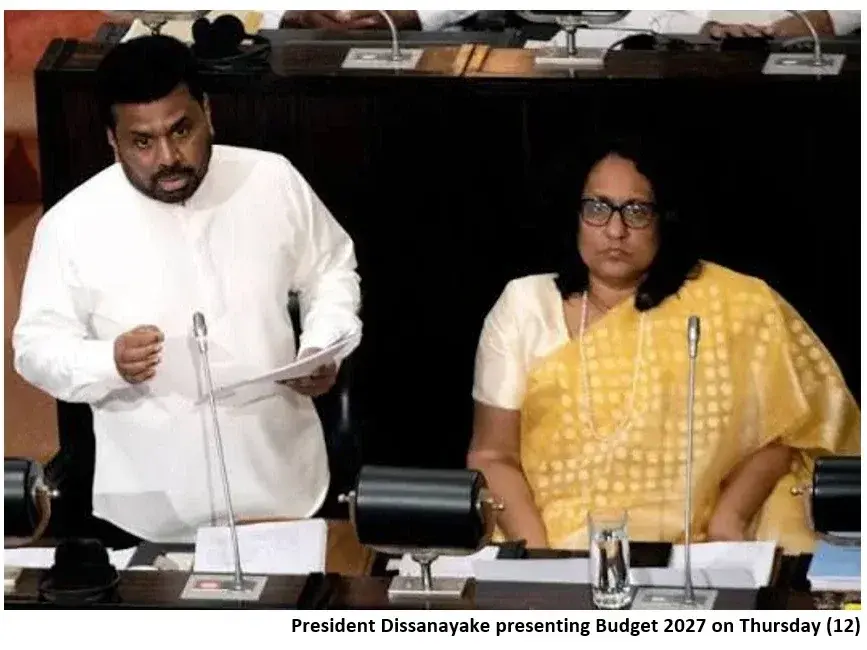
The government secured a significant parliamentary victory on November 20, when the Second Reading of Budget 2027 was passed by 157 votes to 60, giving it a majority of 97. However, it was obvious that the Ayes, given the NPP’s two thirds majority. The Appropriation Bill was then referred to the Committee of the Whole Parliament for the next stage of scrutiny, with the Committee Stage debate scheduled to continue until December 14, when the final vote is due. The Opposition continued questioning the adequacy of the Budget, particularly its failure to provide sufficient relief amid the rising cost of living and unresolved public-sector grievances.
Demand for relief
The government is facing mounting pressure to translate economic recovery into tangible improvements in living standards, while its Budget proposals came under scrutiny both in Parliament and on the streets. It was obvious that the government was asking for trouble months ago, when the NPP leaders, including President Anura Kumara Dissanayake, boasted that the state coffers were full and the government was not short of money. Experienced political leaders would have known better than to make such boastful claims and drive trade unions to ask for relief.
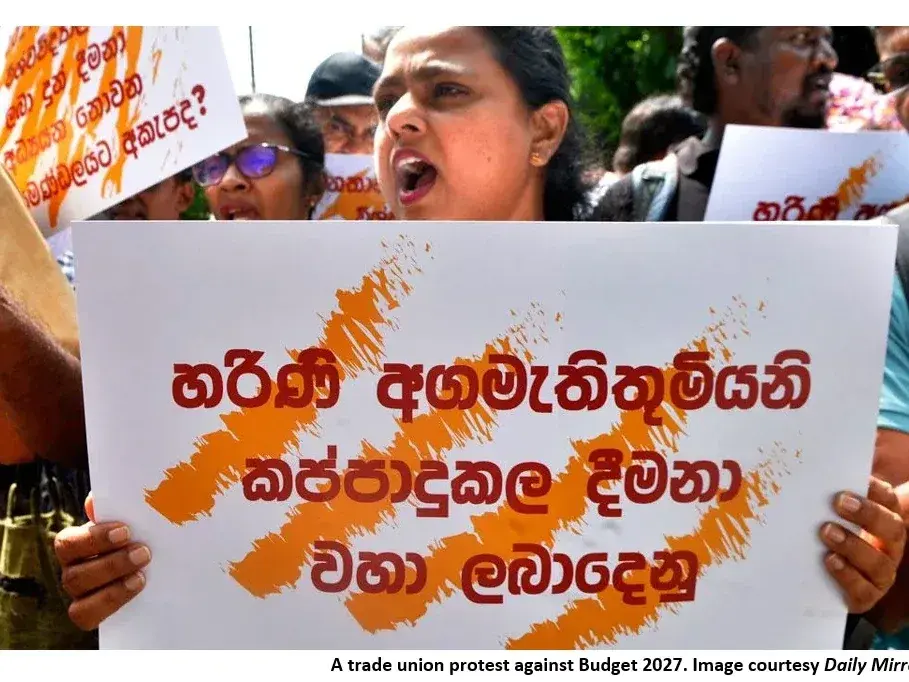
Trade union resistance to Budget 2027 is intensifying, with public-sector unions stepping up
protests over salary anomalies, inadequate allowances and the failure to provide meaningful cost-of-living relief. Engineers, irrigation technical assistants, disaster relief officers, veterinarians and university non-academic staff have already resorted to industrial action, while 20 unions representing executive officers staged a countrywide token strike. Teachers’ and principals’ unions are preparing further protests, demanding a Rs. 25,000 interim allowance and solutions to longstanding salary disparities. Government doctors have also decided to stage protests. Unions argue that selective allowance increases have widened disparities within the public service, while salary adjustments have failed to keep pace with rising living costs.
Insult added to injury
Adding insult to injury, Minister K. D. Lal Kantha, a JVP trade union leader, has urged the protesting workers to refer their grievances and suggestions to the Salaries Commission and await its recommendations, but mounting frustration threatens to trigger wider industrial unrest. Lal Kantha has asked the trade unions to wait until the next budget for relief. His statements have exasperated workers beyond measure. The irony is that the JVP, once a leading force in trade union agitation, now faces growing resistance from workers demanding that the administration honour its promises.
Government Executive officers staged a countrywide token strike on Friday, claiming that their grievances had gone unaddressed. They are a force to be reckoned with in that the government is dependent on them to carry out all its programmes.
The Frontline Socialist Party (FSP) is capitalizing on strained relations between trade unions and the JVP/NPP. It has pledged solidarity with the protesting workers and is actively championing their cause. Trade unions naturally lose confidence in the ruling party, and the FSP and other Opposition parties, such as the SJB, the UNP, the SLPP and the SLFP are in overdrive to eat into the NPP’s support base on the labour front. This is not something the JVP/NPP will take kindly to, but there is little it can do to retain the support of trade unions.
Legal front
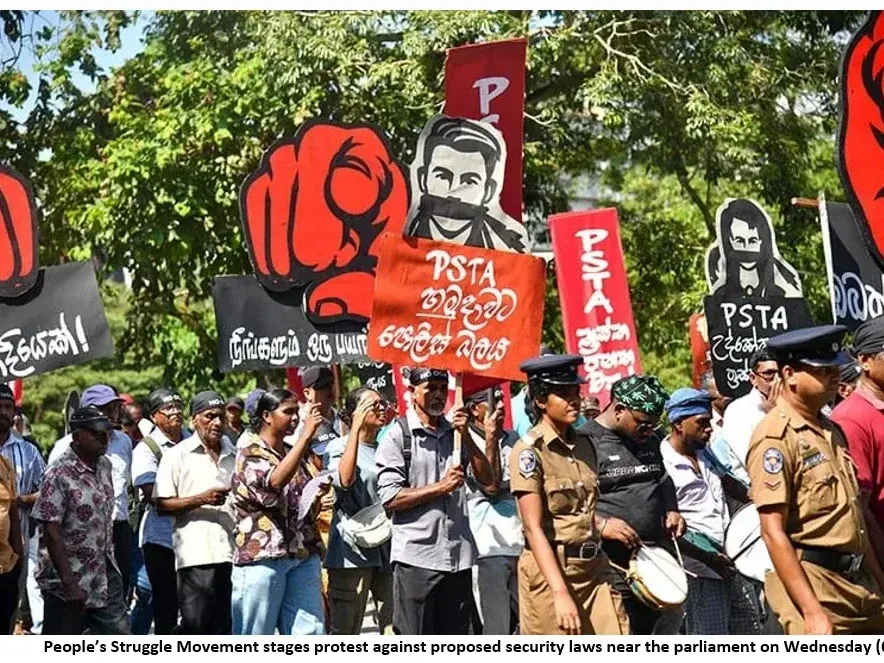
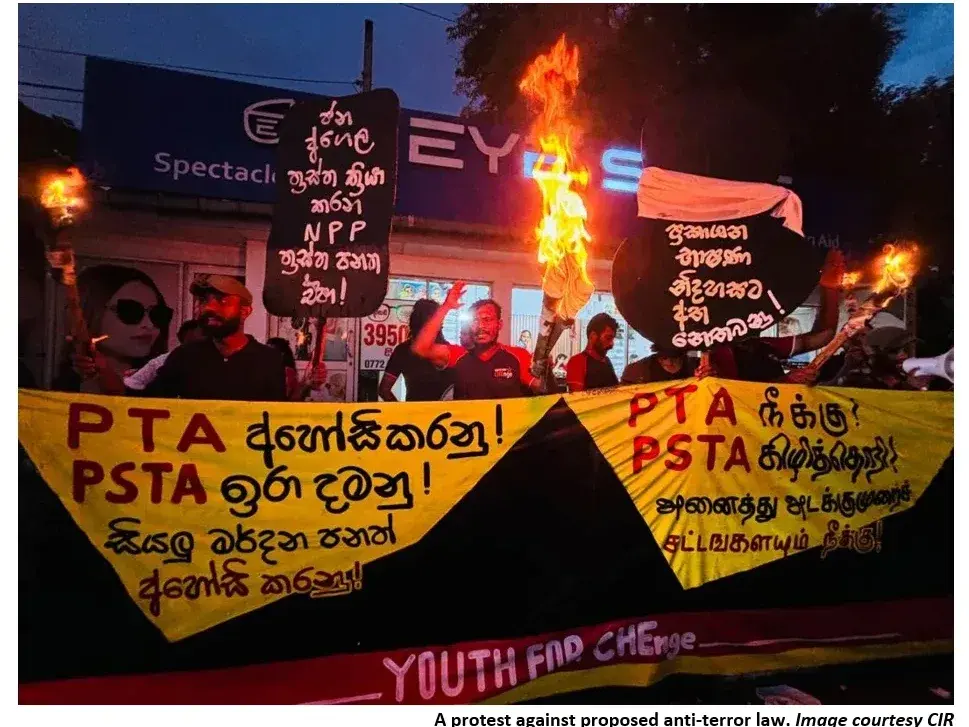
The proposed Prevention of Organised Crimes Bill and Protection of the State from Terrorism Bill remained contentious, with concerns over executive powers, detention provisions and safeguards against arbitrary arrest. The Supreme Court has determined that the Prevention of Organised Crime Bill (LDO 10/2026) is not inconsistent with the Constitution and may be passed by a simple majority in Parliament, subject to several amendments, Speaker of Parliament Dr Jagath Wickramaratne has informed Parliament, after hearing petitions by 26 parties, including the Bar Association of Sri Lanka. The government earlier indicated that amendments would be introduced to the proposed security Bills at the Committee Stage, including changes to detention provisions and the removal of certain clauses.
President Anura Kumara Dissanayake assured critics that the proposed security legislation would not be enacted without consultation and consensus among stakeholders, including civil society organisations. He acknowledged that some groups had genuine concerns about civil liberties and human rights and said provisions susceptible to arbitrary interpretation or abuse would be addressed. However, critics remained wary of the proposed legislation, arguing that it could undermine freedoms of expression, association and movement and enable excessive police powers.
Anuradhapura battle
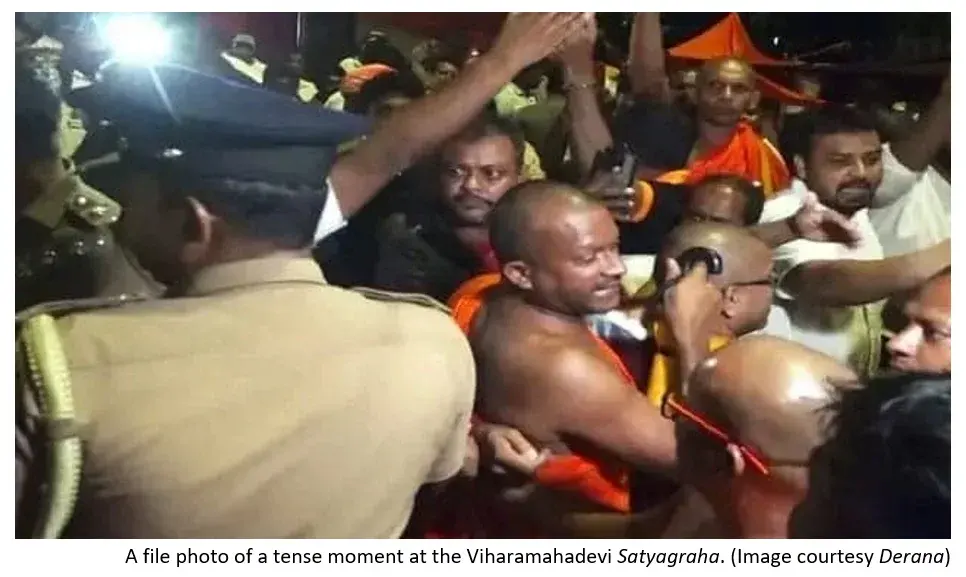
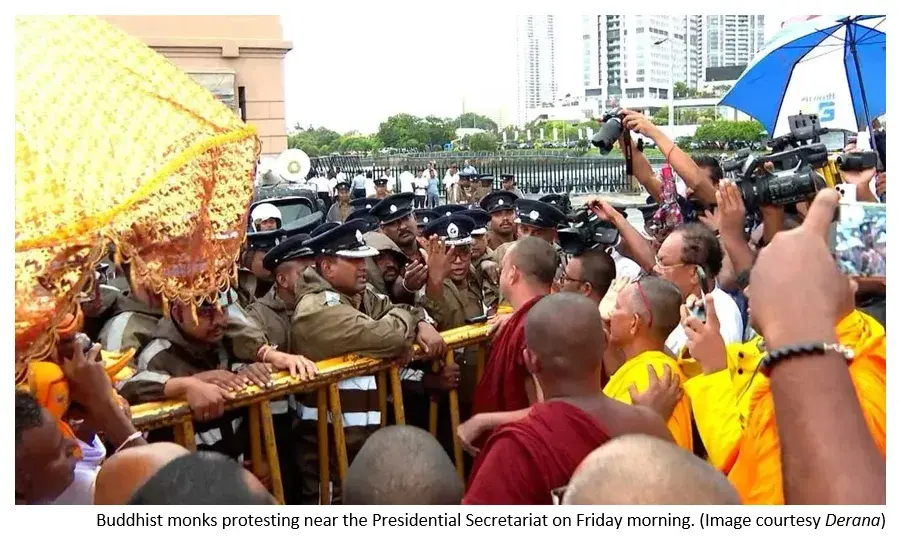
Developments surrounding the Anuradhapura Sacred City Development Plan continued to provoke public debate. The confrontation at Ruwanweliseya between groups supporting and opposing the proposed development resulted in the arrest of monks and civilians, following a protest and hunger
strike. The dispute highlighted the sensitivities surrounding the management of religious heritage, development activity and public participation in decisions affecting sacred sites. Subsequent efforts to reassure the public that residents would not be displaced and that controversial fencing proposals had been dropped failed to completely dispel the controversy.
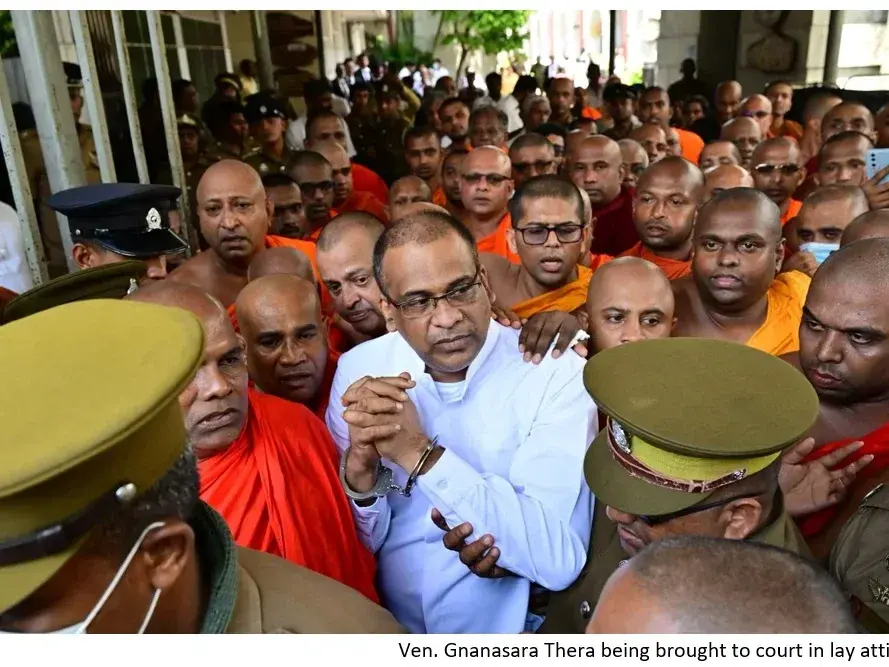
Venerable Balangoda Kassapa Thero was arrested again for staging a satyagraha, defying court orders, to protect the Anuradhapura sacred area. On that occasion, a man named Sadhdharatana of Rajangane, who had been expelled from the Ramanna Nikaya, got into a dispute with Kassapa Thero and a group of others who had gathered there.
The related case is being heard in the Anuradhapura Magistrate's Court. Yet Sadhdharatana had not been arrested. The lawyers for the other defendants complained to the Magistrate about this. The court then issued summons directing the area's Superintendent of Police to appear in court.
Following this, the police acted and arrested Sadhdharatana and his associates, who were staying in Anuradhapura. Sadhdharatana was then remanded in custody. The rest of his followers were released on bail.
Arrest of SJB trade union big gun
Investigations into alleged corruption and financial irregularities involving politicians, former officials and public-sector institutions continued. The arrest of trade union activist Ananda Palitha over an alleged Rs. 3.11 million overtime payment fraud at the Ceylon Petroleum Corporation brought renewed attention to accountability within state institutions. Several other cases involving former political officeholders and public officials remained before the courts, although arrests and remand orders alone do not establish guilt.
The SJB has accused the government of having launched a witch-hunt against the Opposition activists who pose political challenge to it. The Opposition also raised concerns over budget implementation, pointing to unutilised capital allocations and delays in development projects. The launch of an online platform to monitor government expenditure and progress on budget commitments was intended to strengthen public scrutiny. The debate over the effectiveness of public spending remained particularly relevant as the government sought to justify increased investment and development allocations.
The rising cost of living continued to be a major concern. LAUGFS Gas sharply increased domestic LPG prices, raising the 12.5kg cylinder by Rs. 1,775 to Rs. 6,740 and the 5kg cylinder by Rs. 732 to Rs. 2,720. The company cited exchange-rate depreciation, international prices, taxes, shipping and other costs. The Consumer Affairs Authority summoned company officials to explain the increases, which added to consumer anxiety and triggered concerns among restaurants and other businesses dependent on LPG. LAUGFS agreed to reduce the price of gas by Rs. 745.
Economy remains active
The economy nevertheless showed signs of activity in some sectors. Manufacturing and services purchasing managers’ indices (PMIs)for October indicated an expansion, with the manufacturing PMI rising to 55.3 and services PMI to 62.5, suggesting stronger business activity and expectations of continued improvement. However, the uneven nature of recovery, pressure on household budgets and the gap between macroeconomic indicators and lived experience remained major challenges.
The question of Sri Lanka’s post-IMF trajectory also gained prominence. The current Extended Fund Facility is due to conclude in March 2027, and the government is examining options for continued
engagement with the Fund. Analysts have argued that another arrangement could provide policy credibility, financing support and a cushion ahead of significant external debt repayments. Yet a further programme could also entail continued fiscal discipline and constraints on the scope for spending, making the policy debate increasingly consequential.
Deputy Minister of Finance Dr. Anil Jayantha Fernando has recently indicated that Sri Lanka is likely to consider entering into another agreement with the IMF after wrapping up its current arrangement. However, Minister Bimal Rathnayake has since said the government intends to complete Sri Lanka’s current IMF programme when the four-year extended fund facility arrangement expires in March 2027, while continuing the country’s normal engagement with the IMF thereafter. These conflicting signals could confuse investors and key government politicians ought to speak with one voice.
Meanwhile, public investment and infrastructure development featured prominently in Cabinet decisions. Projects included road construction, expressway development and a pumping station intended to mitigate flood risk in low-lying areas of the Kelani Ganga basin. Cabinet also approved increasing the maximum capital grant for eligible Aswesuma families from Rs. 150,000 to Rs. 200,000, while expanding coverage to 11,500 families under a World Bank-supported initiative. These measures sought to combine development spending with targeted social protection.
The government’s growth ambitions will depend on whether investment and public expenditure translate into productive capacity, employment, exports and higher household incomes. Opposition criticism that ministries have failed to utilise capital allocations effectively has added another dimension to the debate, as the administration seeks to demonstrate that Budget commitments will produce measurable results rather than remain figures on paper.
The week’s political, social and economic developments reveal that the government is facing several simultaneous challenges: securing parliamentary support for its economic programme, managing mounting labour unrest, handling controversy over security legislation, responding to cost-of-living pressures and improving public services. Although economic indicators suggest some recovery, the public’s expectations of tangible benefits remain high. The coming weeks will test whether the administration can convert its promises into results, contain growing discontent and maintain confidence in its economic and political direction.
Share this story
RELATED NEWS
View all
Point of View
Govt. presents its third Budget amid political turbulence Trade unions girding up their loins for confrontation
Nov 14, 2026
Point of View
The North-East in Sri Lanka’s budget for 2027 skips Palaly Airport and Kankesanthurai Port, but pledges to resettle 13,000 war-displaced families
Nov 13, 2026
Point of View
Eventful week: Judge’s lightning transfer, Colombo floods, controversial laws and protests
Nov 07, 2026
Point of View
Raging battle over no-confidence motion and intl. concern over proposed security legislation
Oct 31, 2026