Politics by Vishvanath, Cover Story
JVP losing a key pillar
By Vishvanath
The JVP is struggling to retain its hold on the trade union sector, which it once dominated. Quite a few trade unions and farmers’ associations have turned against the NPP government led by the JVP. They have begun to join forces with the trade unions with links to the Opposition. This trend augurs ill for the government.
The practice of political parties controlling trade unions has negatively impacted not only Sri Lanka’s labour movement but the national economy, for they are driven by political agendas and not the interests of workers they claim to represent. Divided between the party/coalition in power and the Opposition, these trade unions engage in political battles. Other trade unions that are not directly linked to political parties are also swayed by their leaders’ political allegiances, which often change, and compromise their independence by supporting politicians and parties in elections.
Time was then the LSPP and the Communist Party had powerful trade union arms from which tremendous bargaining power accrued to them. The LSSP-led forces almost succeeded in toppling a UNP government in 1953 by staging a hartal. But they lost their hold on the trade union movement with the passage of time due to being constituents of ruling coalitions. The UNP also had a strong trade union wing, the Jathika Sevaka Sangamaya (JSS), which is a shadow of its former self today. The UNP’s stay in power for 17 years from 1977 to 1994 took its toll on the strength of the JSS. The trade unions affiliated to the SLFP also went the same way.
The major parties’ loss on the trade union front became the JVP’s gain. The JVP used the disillusionment of the workers with the UNP, the SLFP and their allies to consolidate its control over the trade union sector. What enabled the JVP to remain a formidable a political force despite having a minute nationalvote share, amounting to 3 percent in 2020, was its strong trade union muscle. The JVP would organize strikes in vital sectors. It endeared itself to workers by taking up their grievances and aggressively taking on government and demanding redress. Successive governments mismanaged labour disputes and thereby lost support among workers, who gravitated towards the JVP. Their unpopularity, corruption, abuse of power and the 2022 economic crisis created conditions for the emergence of a collective of professionals fully supportive of the JVP-led NPP. Most of the professionals and intellectuals Gotabaya Rajapaksa mobilized under the Viyath Maga banner to win the 2019 presidential election and pave the way for a regime change switched their allegiance to the JVP-NPP combine. Their backing helped boost the image of the NPP and swing votes and enabled it to rise to power meteorically in 2024.
Today, most trade unions that threw in their lot with the JVP/NPP have broken ranks with the incumbent government, claiming that it has reneged on its campaign promises to them and made about-turns on key issues affecting them. Winning elections is one thing, but fulfilling the promises made to achieve that goal is quite another. Teachers and principals are on the warpath over the proposed educational reforms, which they say were drafted without their participation. The government’s move to extend school hours by half an hour exasperated them beyond measure, and their protests prompted the government to walk back its decision to keep schools open until 2.00 pm, claiming it had made that U-turn in view of the post-Ditwah situation.
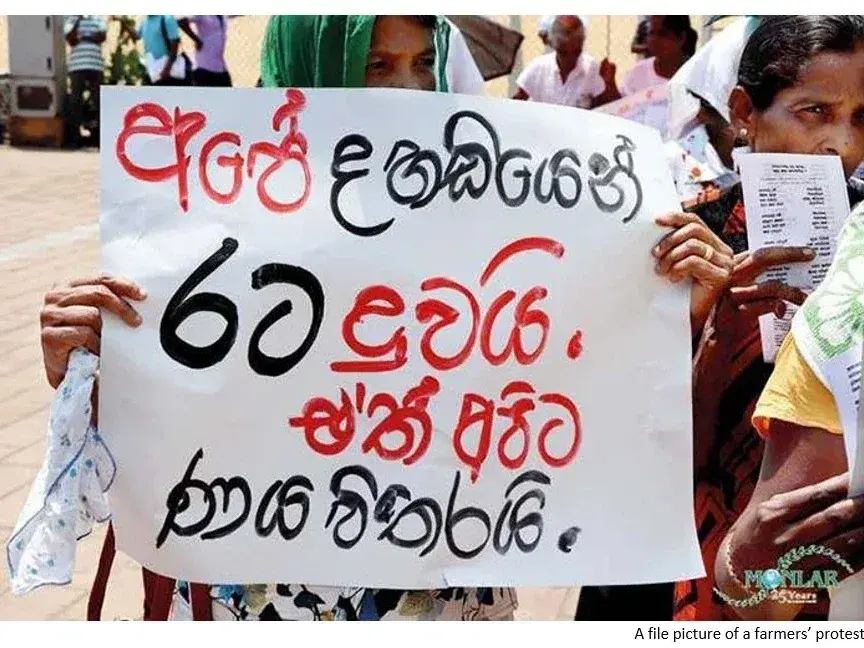
Farmers led the NPP’s election campaigns from the front, enabling the JVP to consolidate its power at the grassroots level. The JVP/NPP is no longer their darling. Farmers are demanding the fertilizer subsidy and an urgent state intervention to clear their paddy fields affected by sediment deposition due to recent floods. Paddy harvesting has commenced is some areas, and farmers are complaining that the Paddy Marketing Board does not buy their paddy and therefore private traders are exploiting them, and they are unable to pay back their loans.
Government doctors have also taken on the government. They launched a token strike on Friday, putting forth several demands including an increase in their allowances and a separate service minute for them. The government did not even invite them to talks, much to their consternation. Health Minister Dr. Nalinda Jayatissa lashed out at the striking doctor while speaking in the parliament on Friday. He has adopted a confrontational approach, provoking the doctors into threatening a continuous strike.
Fuel distributors are also up in arms, claiming that they receive only a 3% commission from the Ceylon Petroleum Corporation, and they are barely keeping their heads above water. They are demanding a 5.5% commission. Last year, the CID was called in when they protested; the government claimed there was a move to disrupt the fuel supply. The fuel distributors have not threatened a strike, but they have cast suspicion on the quality of some CPC products.
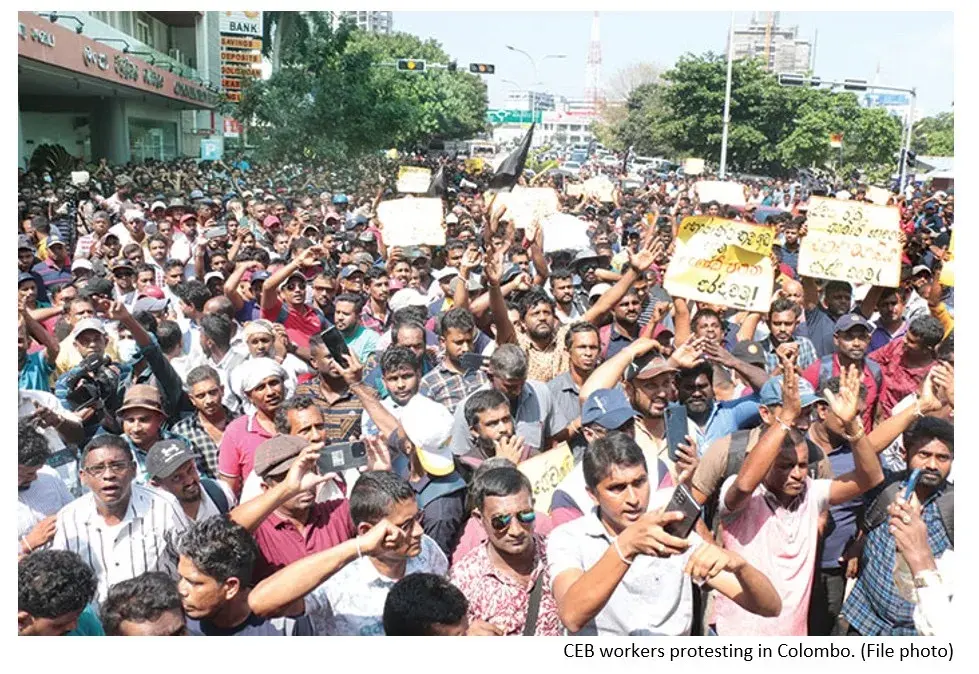
In the power sector, where the JVP’s trade union arm was very powerful, workers are protesting against the restructuring of the Ceylon Electricity Board (CEB). About 24 CEB unions, including powerful engineers’ and workers’ organisations, have rejected the restructuring move, warning that it could weaken institutional coordination, undermine job security and eventually place additional pressure on consumers. They have threatened to strike if the government goes ahead with the implementation of its restructuring plan.
University teachers, many of whom supported the NPP in the 2024 elections, have expressed their displeasure at the manner in which the government is running the university system and handling education reforms.
The JVP, which effectively used its trade union arm against previous governments to gain political mileage and shore up its electoral prospects, is now getting a taste of its own medicine. The incumbent administration is losing ground on the trade union front, just like its predecessors. The Opposition and the trade unions with links to it are on the offensive; so are other labour and professional associations without direct links to politicians and political parties. The boot is on the other foot for the JVP-led government.
RELATED NEWS
View all
Politics by Vishvanath
Has 22A become the govt.'s Catch-22?
Aug 27, 2026
Politics by Vishvanath
22nd Amendment: A huge political gamble for govt.
Aug 21, 2026
Politics by Vishvanath
Move to raise retirement ages of judges: Options before govt.
Aug 05, 2026
Politics by Vishvanath
‘Cockroach’ uprising and echoes of Aragalaya
Jul 26, 2026