Politics by Vishvanath, Cover Story
JVP-NPP govt. faces the Black Bridge fate
By Vishvanath
The JVP-NPP government is struggling to repair its image amidst several scandals that have rocked it in quick succession, and a hostile Opposition campaign to damage its good governance credentials. What one gathers from the various statements being made by government politicians about the current situation is that they are quite sanguine about getting their act together sooner than expected and turning the tables on their political opponents who are currently on the offensive. It is being speculated in political circles that the government might resort to some high-profile arrests of Opposition politicians to distract public attention from the scandals troubling it.
Meanwhile, a government pledge to repair the Black Bridge (or Yaka Palama, as it is popularly known), across the Mahaweli Ganga at Peradeniya, by stabilizing a damaged pillar of it, and restore the train service to Kandy before the mid-April 2026, has gone unfulfilled. The bridge rehabilitation work is still in progress, and when the train service will resume on that section of the main Kandy-Colombo line is anyone’s guess. The government itself seems to have faced a similar fate to that of the Black Bridge on the political front.
It can be argued that the moral pillar of the JVP-NPP government, which came to power, promising to eliminate corruption and abuse of power, restore the rule of law and usher in good governance, has suffered the same fate as the damaged column of the Black Bridge. A few months ago, the four-span, colonial era railway bridge withstood the ferocity of floods unleashed by Cyclone Ditwah, which also triggered a series of other natural disasters throughout the country, but one of its pillars began to lean, compromising the whole structure.
The Black Bridge pillar suffered extensive damage due a surge of water pummeling it allegedly due to failure on the part of those in charge of managing the Kotmale reservoir to release water gradually without waiting until the last moment to open the sluice gates suddenly. Similarly, the moral pillar of the JVP-NPP coalition is leaning because the government failed to handle the allegations of scandals against it properly.
When the coal procurement scandal came to light, with irrefutable evidence emerging that substandard coal had been imported for power generation at Norochcholai, the government went into denial mode. Worse, it opted to defend Energy Minister Kumara Jayakody, blamed for the scandal, and President Anura Kumara Dissanayake himself did so in the parliament, where a no-faith motion against Minister Jayakody was defeated. President Dissanayake appointed a presidential commission to probe all coal procurement issues since 2009, as a dilatory tactic, and Jayakody and Secretary to the Ministry of Energy Udayanga Hemapala had to resign. The government put the cart before the horse.
The government could have handled the coal scandal better. If it had asked Jayakody and Hemapala to step down immediately after the disclosure of the procurement irregularities, its good governance credentials would not have suffered so much damage, and the Opposition would not have been able to gain political mileage by bashing the JVP and the NPP, left, right and centre, and vowing to bring the culprits to book under a future government. Then came the news about Minister Lal Kantha’s newly-built house in a Colombo suburb, providing grist to the Opposition’s mill. The critics of the government are having a field day, demanding to know how the leaders of a political party, which claims to represent the proletariat and share in the woes of the public, have amassed so much wealth; they are calling for an investigation into the unexplained assets of the ruling party politicians. They are doing to the JVP/NPP what the latter has done to them. There has been a role reversal.
The HSBC CEO Georges Elhedery’s bombshell came next; Sri Lanka had paid as much as USD 286 per barrel of oil. The government had to admit that it bought diesel at that price to prevent a fuel crisis. The Opposition has pointed out that the government has had to purchase diesel at such exorbitant prices because power generation has dropped drastically due to the use of substandard coal at Norochcholai and hundreds of thousands of liters of diesel have to be burnt daily to keep the oil-fired power plants operational to meet the electricity supply shortfall. It has been a double whammy for the government, and the coal issue is bound to be one of the main planks of the Opposition’s next election campaign. It is said that misfortunes never come singly.
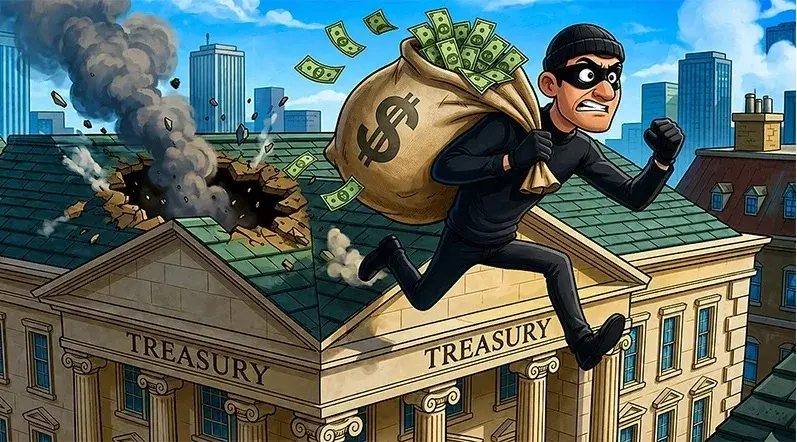
The government is now reeling under another scandal, an illegal diversion of Treasury funds (USD 2.5 million) meant for a creditor in Australia. It has not been able to explain convincingly why it kept the fund diversion under wraps for a couple of months, without informing the parliament. It has attributed the scandal to a hacking incident, but evidence has emerged that the Treasury officials blundered by sending money to an altered account number, and there has been a system-level hacking episode. The critics of the government have reminded the public of President Dissanayake’s campaign rhetoric; he made a solemn pledge that he would consider the Treasury funds as assets of the Maha Sangha and do everything in his power to protect them, if elected to power.
The JVP-NPP government is facing a perfect political storm, and it will have its work cut out to push back the oppositional forces on the offensive on the political and propaganda fronts.
The Black Bridge pillar may be straightened and the Kandy-Colombo train service may resume, albeit behind schedule, but it remains to be seen whether the government will be able to repair its moral pillar and good governance credentials, and forge ahead on the political front.
RELATED NEWS
View all
Politics by Vishvanath
Has 22A become the govt.'s Catch-22?
Aug 27, 2026
Politics by Vishvanath
22nd Amendment: A huge political gamble for govt.
Aug 21, 2026
Politics by Vishvanath
Move to raise retirement ages of judges: Options before govt.
Aug 05, 2026
Politics by Vishvanath
‘Cockroach’ uprising and echoes of Aragalaya
Jul 26, 2026