Politics by Vishvanath
Ranil’s comeback campaign gets underway in earnest
By Vishvanath
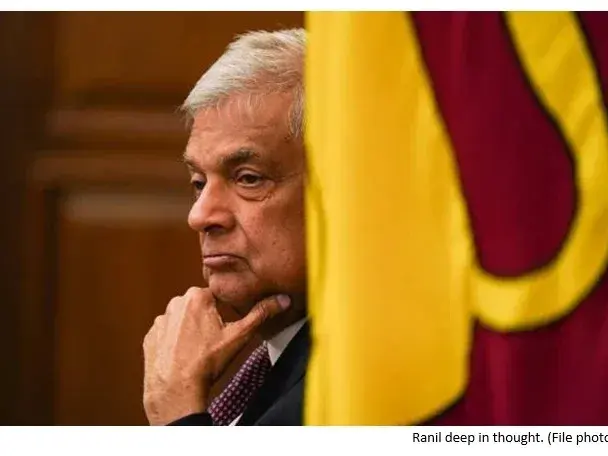
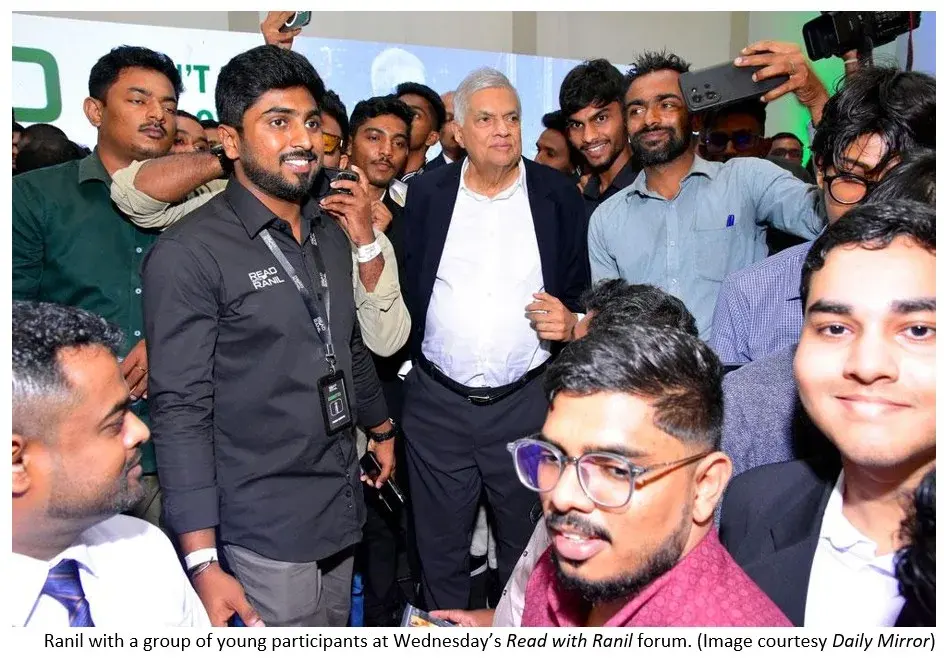
“Read with Ranil” (RWR), an initiative by the Smart United National Party Unit of the National Youth Front of the UNP, is reportedly gathering momentum. The programme aims to encourage young Sri Lankans to engage in discussions on governance, economic reform, and leadership, drawing on the insights of former President Ranil Wickremesinghe, according to the UNP youth wing.
Those who seek to participate at RWR events can register online and join guided reading sessions and debates on key policy issues. Limited in-person seats are available, with online options for others. Youth interested in participating are asked to submit their CVs through the official link. The inaugural RWR interactive event was held under the theme, “The New World Order: Geopolitics, Economic Shifts & Sri Lanka’s Future”, at Cinnamon Grand Colombo, on Wednesday (July 15), bringing together a group of young Sri Lankans below the age of 40 to discuss books, leadership, personal experiences, and contemporary issues. Organisers said the programme was aimed at providing a platform for youth to exchange ideas and explore perspectives on matters shaping society.
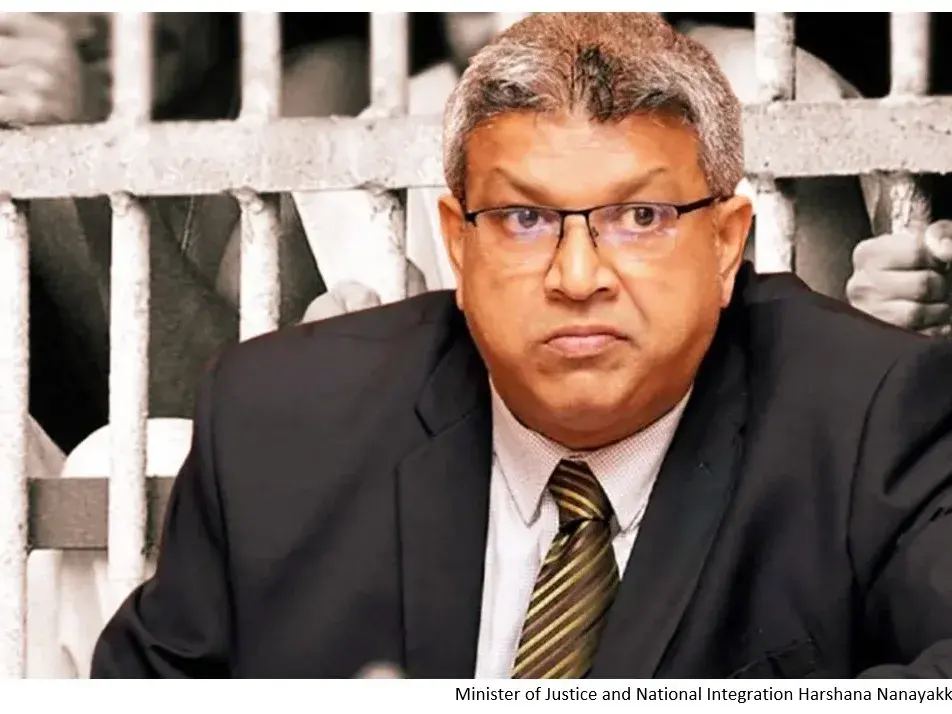
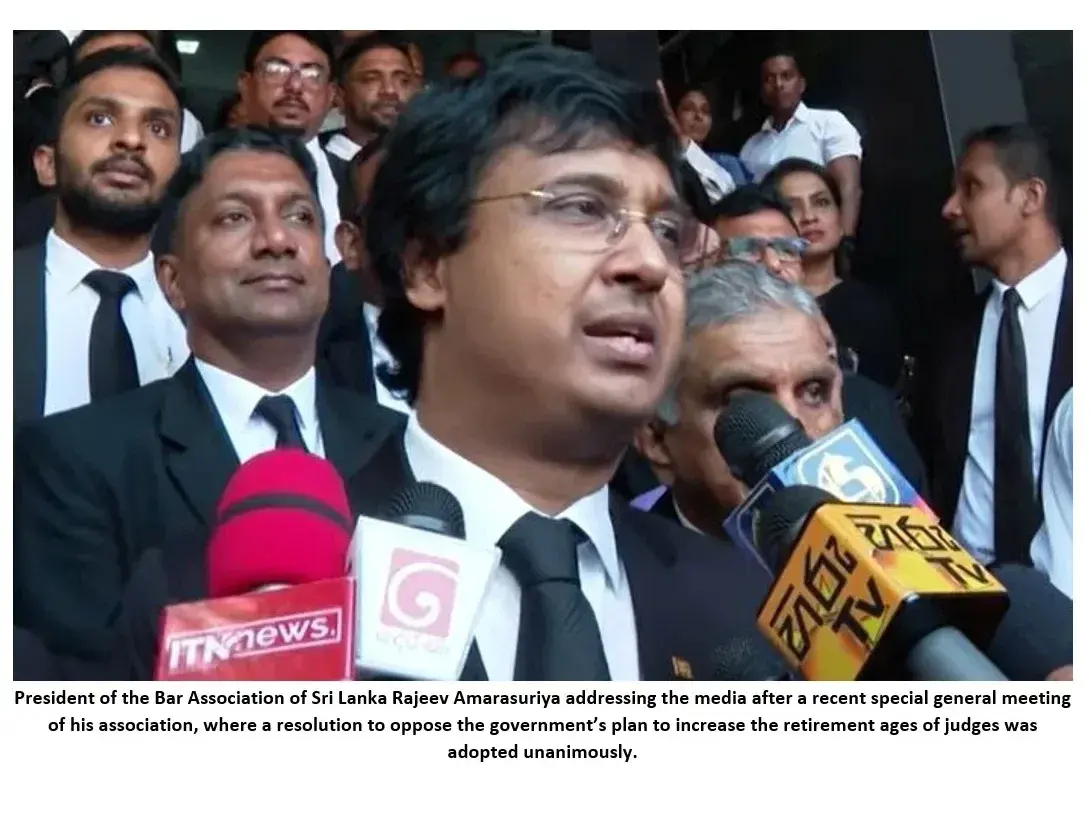
During his presentation, which dealt with economic, political and geopolitical issues, Wickremesinghe, a lawyer himself, warned that the government’s plan to extend the retirement ages of judges could undermine the independence and impartiality of the judiciary. Fielding questions at the end of his speech, he said most members of the legal profession, as well as judges themselves, were against the government move to extend the retirement age beyond 65 years, but the government appeared keen to push the proposal forward. “If they want to go ahead, I think there is going to be more and more opposition, both in the political sphere and the non-political sphere,” he warned.
Ranil’s survival skills
Wickremesinghe has a remarkable ability to survive in politics. After his defeat at the 2024 presidential election, where he came a poor third, many may have thought that it was curtains for his political career. But it is difficult to keep him down. President Kumaratunga sought to do so, after defeating him in the 1999 presidential race, but without success. He toppled her government in 2001 and became Prime Minister. She went so far as to dissolve the parliament and regain power.
The general consensus is that Wickremesinghe would have won the 2005 presidential election if the LTTE had not declared an election boycott and prevented the Tamil people in areas under its control from voting. Mahinda Rajapaksa won the election with a slender majority.
President Rajapaksa also sought to ruin Wickremesinghe’s chances of winning elections, but in vain. He divided and debilitated the UNPs systematically by engineering crossovers, so much so that cynics said his UPFA government had more UNP MPs than the UNP itself. Wickremesinghe forged a broad electoral alliance and returned to power as Prime Minister in 2015 after enabling Sirisena to defeat Rajapaksa in the presidential election in that year. President Sirisena fell out with him and sacked him as Prime Minister in 2018, but the latter bounced back after a few weeks, after winning a legal battle, and secured the premiership again.
Not even those who are close to Wickremesinghe may have expected him to make a political comeback, much less become Prime Minister or President, but he grabbed an opportunity that presented itself at the height of Aragalaya, in 2022, and went on to become Prime Minister and President in quick succession, just like Kumaratunga, who however secured the premiership and the presidency in August and November in 1994 by winning popular elections. Rajapaksa took a little longer to achieve that feat; he was appointed Prime Minister in 2004 and elected President in 2025.
Former Presidents with politics left in them
Of the former Presidents, only Sirisena, Wickremesinghe and Gotabaya Rajapaksa can run for President again. President Kumaratunga served two terms. So did Mahinda Rajapaksa. Sirisena served only one term, but he has retired from politics for all intents and purposes. The Easter Sunday terror attacks, under his presidential watch, ruined his chances of contesting a presidential election again. Gotabaya could not complete his first term, and can run for president again, but it is highly doubtful whether he will ever come forward as a presidential candidate. Wickremesinghe has no such problems.
Wickremesinghe helped Sri Lanka emerge from its worst-ever economic crisis but could not win the last presidential election because he was identified with the Rajapaksas and some of his economic decisions were not popular however necessary they were at that time. They included sharp tax and traffic increases and the curtailment of welfare expenditure. He also failed to manage his political windfall. The incumbent government, which came to power, promising to upend Wickremesinghe’s economic policies, which its leaders condemned in the strongest possible term, has adopted them for all practical purposes.
Wickremesinghe and the economy
Economic management is Wickremesinghe’s long suit, which he is apparently leveraging to remarket himself politically. His focus is on the economy, which he says needs to be managed better to achieve growth and build foreign currency reserves, which the NPP has not been able to shore up at the rate it promised during its election campaigns. He is obviously telling the public that he can do a much better job where the economy is concerned and he proved his ability to do so during his brief stint as the President and Finance Minister from 2022 to 2024.
Sri Lankans have learnt the hard way that what matters most for the country and them is economic growth, which alone can ensure that they will not undergo untold hardships again.
Above all, Sri Lanka is required to resume substantial sovereign external debt repayments in 2028, after a debt-service relief period covering 2023-2027. One of the main IMF conditions is that Sri Lanka will have to build foreign exchange reserves, one of its central goals being the accumulation of international reserves to provide a buffer when debt repayments resume in 2028. The IMF has repeatedly stressed that reserve accumulation remains essential.
Rallying the support of young professionals and entrepreneurs was one of main prongs of Gotabaya Rajapaksa’s strategy to win the presidential election in 2019. He founded Viyathmaga for that purpose, and effectively reached out to the youth. The JVP-led NPP did something similar by organizing various events focussed on winning over professionals and entrepreneurs to win elections. Wickremesinghe is apparently doing likewise. What the government’s reaction to his initiative remains to be seen.
RELATED NEWS
View all
Politics by Vishvanath
Has 22A become the govt.'s Catch-22?
Aug 27, 2026
Politics by Vishvanath
22nd Amendment: A huge political gamble for govt.
Aug 21, 2026
Politics by Vishvanath
Move to raise retirement ages of judges: Options before govt.
Aug 05, 2026
Politics by Vishvanath
‘Cockroach’ uprising and echoes of Aragalaya
Jul 26, 2026