Politics by Vishvanath
LG polls: Worries will haunt winners and losers alike
by Vishvanath
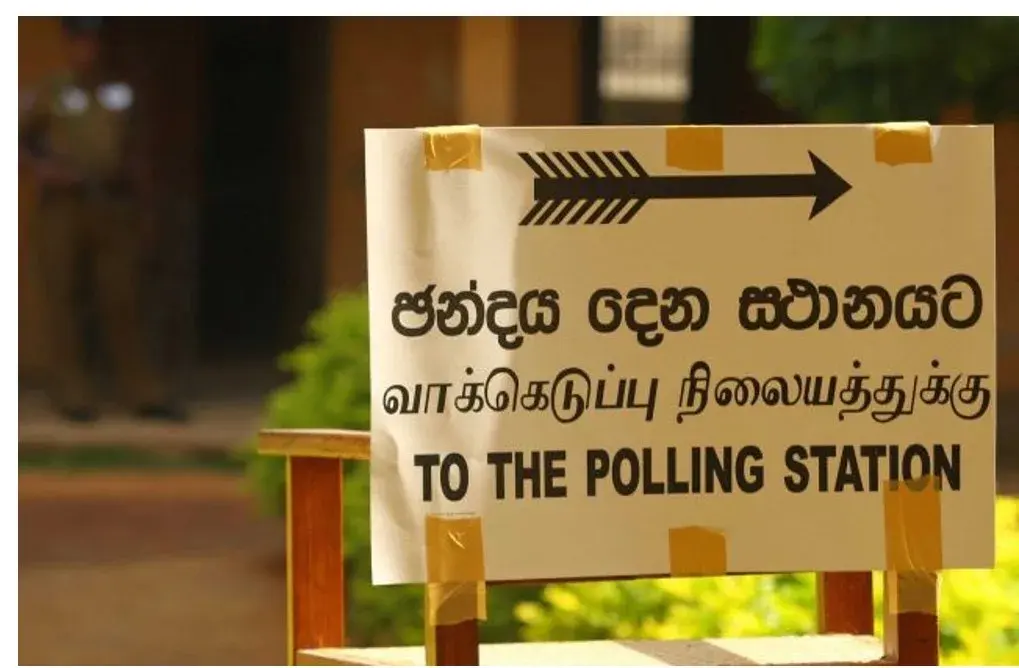
The much-awaited local government (LG) elections are scheduled to be held tomorrow at 13,759 polling stations countrywide. More than 75,000 candidates are in the fray. Stakes in the contest are extremely high for all political parties, especially the ruling NPP and the main Opposition party, the SJB.
The challenge before the JVP-led NPP government is not just to win tomorrow’s elections but to match its own performance in last year’s parliamentary polls or surpass itself. It is like a defending champion in a sports tournament. The Opposition’s electoral performance was abysmal last year, and it cannot get worse. So, all the parties like the SJB, the UNP and the SLPP will be able to flaunt whatever improvement in their performance tomorrow, if any, as an achievement. But even a small drop in the NPP’s votes will be construed as the beginning of the end of the current dispensation. So, why President Anura Kumara Dissanayake himself led the NPP’s election campaign is not surprising.
President Dissanayake no doubt gave the NPP’s election campaign a turbo boost, and the credit or the blame for the NPP’s performance tomorrow will go to him.
Tomorrow’s contest will also serve as a referendum on the government’s performance since late last year. It may not be fair to judge a government even before the expiration of its first seven months, but that is the way the cookie crumbles.
The NPP finds itself in an economic straitjacket of IMF making, in a manner of speaking. This has stood in the way of the government’s efforts to carry out its election promises and engage in vote-catching exercises to the extent it desires. The political parties that faced elections before the onset of the current economic crisis in mid-2022 were lucky that they could allocate enough funds for projects and programs aimed at boosting their images and shoring up their electoral prospects. The NPP, too, has given state employees a pay hike, which, however, has fallen short of expectations. It has made some promises such as the proposed recruitment of 35,000 more individuals into the state service, and expanding the Aswesuma social welfare programme to include 400,000 more families. But their implementability is in doubt. It is also doubtful whether the public has taken those pledges seriously, given the IMF aid conditions.
The government has had to increase the fertilizer prices and admit that it is under IMF pressure to increase the electricity tariffs; a water tariff increase is also believed to be in the pipeline. If the government does not fulfil the IMF conditions to the letter, the country will run the risk of losing the next tranche of the IMF extended fund facility.
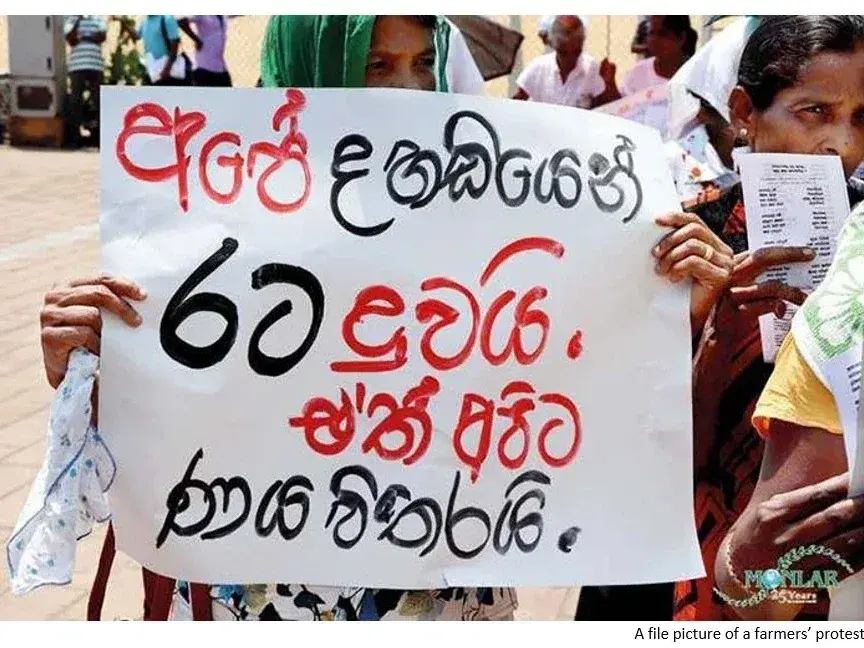
The IMF conditions require the government to factor in legacy debt of state institutions when calculating cost-reflective tariffs while the public expects tariffs to be determined on the basis of operational profits of the Ceylon Electricity Board, the Ceylon Petroleum Corporation, etc. The Opposition is trying to gain political mileage by asking the government to reduce electricity tariff and fuel prices in keeping with the latter’s election promises. The public, struggling to make ends meet, is impervious to reason, and wants relief.
Even if the NPP succeeds in scoring another impressive win tomorrow, it won’t be plain sailing for the government, for the much-delayed Provincial Council elections will have to be held thereafter. India has been ratcheting up pressure on the government to hold the PC polls as soon as possible, and the country is likely to go to the polls again towards the end of this year or early next year. This must be a disquieting proposition for the government, which will have to redouble its efforts to complete the ongoing IMF programme, and be ready to resume external debt repayment in 2028.
If the Opposition succeeds in bagging any local councils, it will have its work cut out to run those institutions to the satisfaction of the public, whose expectations are very high. The LG bodies experience financial problems perennially even if they are under the control of the party in power. The situation will be much more difficult owing to the current economic crisis.
The government’s worries will be even more serious. Sri Lanka achieved a 5% economic growth in 2024, and this is no mean achievement. It will have to maintain a high growth rate to be able to service foreign debt, but according to the latest edition of the Asian Development Bank’s, Asian Development Outlook, which analyses economic and development issues in Asia and the Pacific, Sri Lanka’s GDP grow is expected to be at 3.9% in the current year and 3.4% in 2026.
Unless the NPP government succeeds in staging a surprise turnaround and increasing the growth rate up to 5% or above until 2028 and beyond, it will face difficulties in paying back debt. This is what the SBJ has been stressing during the past several months.
Opposition and SJB leader Sajith Premadasa elaborated on the difficulties the country might face in honoring its commitments to external creditors, while taking part in an interview with Derana TV on May Day. He claimed that the IMF had been amenable to a grace period until 2033, but President Ranil Wickremesinghe had agreed to resume debt repayment in 2028 in a bid to strike the IMF deal before the last presidential election and gain political traction. Unless the economy expanded at a health rate, Sri Lanka might have to opt for another debt restructuring programme, he warned, claiming that even those who had facilitated the current DSA (Debt Sustainability Analysis) had said the country would have to start working towards another IMF programme. He said he had been present at a meeting where they came up with that proposal, but refused to be drawn in on who they were, saying that he had to abide by the Chatham House rule, which the participants at that conference had agreed to honor. *
Thus, the NPP government will have a hard time, strengthening the economy, while granting the public promised relief, and, most of all, retaining its popularity. It cannot be unmindful of the fact that the NPP does not have a traditional support base and relies on floating votes to win elections. The JVP has a dependable vote bank, but is only about 3% of the total number of voters. Floating voters are like birds of passage; they backed Mahinda Rajapaksa and the UPFA in 2004 and 2010, Maithripala Sirisena and the UNP-led UNF in 2015, Gotabaya Rajapaksa in 2019 and the SLPP in 2020, and Anura Kumara Dissanayake and the NPP in 2024. There is no guarantee that they will go on supporting President Dissanayake and the SLPP indefinitely. This reality will haunt the NPP government whatever the outcome of tomorrow’s LG polls may be.
*The Chatham House Rule is a principle, developed by the Royal Institute of International Affairs (Chatham House), that allows participants in a meeting to share information discussed without revealing the source or affiliation of the speaker. It's essentially a method for encouraging open and honest discussion by providing a "safe space" where individuals can express their views without fear of public attribution or reputational risk.
RELATED NEWS
View all
Politics by Vishvanath
Has 22A become the govt.'s Catch-22?
Aug 27, 2026
Politics by Vishvanath
22nd Amendment: A huge political gamble for govt.
Aug 21, 2026
Politics by Vishvanath
Move to raise retirement ages of judges: Options before govt.
Aug 05, 2026
Politics by Vishvanath
‘Cockroach’ uprising and echoes of Aragalaya
Jul 26, 2026