Politics by Vishvanath, Cover Story
Govt. in a cleft stick over no-faith motion against Jayakody

By Vishvanath
Hardly anything could be more demeaning for a government that has come to power, promising to eliminate bribery and corruption and usher in good governance, than to be accused of corruption and shielding the corrupt. This has been the predicament of the JVP-NPP government.
A vote of no confidence submitted by the Opposition to Speaker Dr. Jagath Wickremaratne, recently, against Energy Minister Kumara Jayakody, is scheduled to be taken up for debate on April 10. The Opposition insists that Jayakody is responsible for the procurement of low-grade coal, which has led to a substantial decrease in the generation of electricity at the Norochcholai power plant, and caused staggering losses to the state coffers, amounting to Rs. 8 billion, and counting.
The government has been left with no alternative but to allow the motion of no confidence against Jayakody to be debated. with a view to defeating it. It scuttled a motion of no confidence against Deputy Minister of Defence Maj. Gen. (Ret.) Aruna Jayasekera for his alleged lapses as the Eastern Commander in 2019, in respect of the Easter Sunday terror attacks, carried out by the National Thowheed Jamaath, based in the Eastern Province. It said a no-faith motion could not be moved against a non-Cabinet minister and the Speaker refused to allow it to be taken up. The Opposition contested the government’s claim, with cogent arguments, but the Speaker stood his ground.
The JVP-NPP government has a two-thirds majority in the parliament, and the motion of no confidence at issue has no chance whatsoever of passage. The Opposition is aware of this reality, but its goal is to create a situation where all government MPs will have to defend Minister Jayakody so that all of them can be branded as defenders of the corrupt. There is prima facie evidence to prove that the coal procurement during the past several months has been riddled with irregularities; at least 10 coal shipments supplied by a company allegedly with links to the ruling JVP/NPP have been found to be substandard. The government allegedly manipulated the tender process to award the coal contract to that company with no experience in the coal trade.
The Opposition’s battle plan is clear. The JVP/NPP came to power, vilifying all its political opponents as crooks who had to be defeated for the parliament to be cleansed. In fact, that became its main campaign slogan. But less than two years on, it is facing very serious allegations of corruption, the coal scandal being only one of them.
The Opposition has targeted the government’s anti-corruption platform, which the current leaders were planning to use in future elections as well. There is no way the government can wish away the economic fallout from the coal tender irregularities. The Norochcholai generation shortfall due to the use of substandard coal ranges up to 170 MW daily, the Opposition and independent power and energy experts have pointed out. Opposition Leader Sajith Premadasa has presented to the parliament facts and figures about the generation shortfall. The Ceylon Electricity Board (CEB) has had to increase power generation by oil-fired plants and use tens of thousands of litres of diesel for that purpose. It is extremely costly to use diesel for power generation, and therefore the government has been compelled to increase the electricity tariffs, and divert huge amounts of diesel for power generation at the expense of the transport sector amidst a crippling energy crisis.
As if the soaring fuel prices were not enough, an electricity tariff hike is said to be in the pipeline. When electricity tariffs increase, the prices of all other goods and services go up. The challenge before the government is to convince the public, if possible, that the power supply shortfall caused by substandard coal has not driven the cost of electricity generation and power tariffs up.
Most of all, the Opposition has claimed in Parliament that the latest coal tender has been granted to a company run by a person connected to the NPP. Names have been named. This fact is very likely to be highlighted during the upcoming no-faith motion debate.
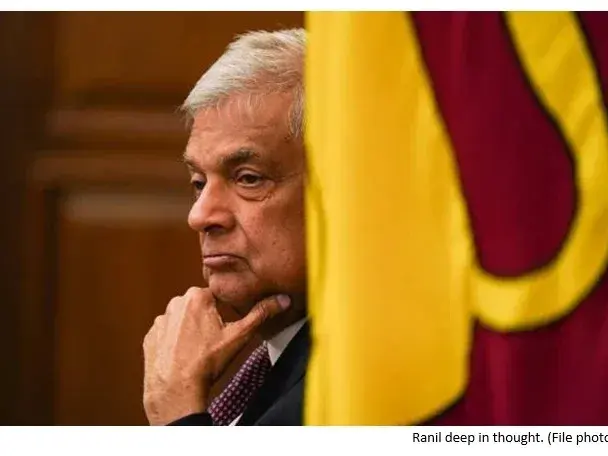
The no-confidence motion against Minister Jayakody is bound to have the same political fallout as the one against Minister Keheliya Rambukwella during the previous government. When the then Opposition, including the JVP/NPP, demanded action against Minister Rambukwella over the procurement of a stock of fake immunoglobulin and low-quality drugs, President Ranil Wickremesinghe dared it to move a no-confidence motion against Rambukwella and try to have him removed. Wickremesinghe was confident that the SLPP-UNP government had a majority to shoot down no-confidence motions in the parliament, and he was impervious to the fallout from a debate on such a no-confidence motion. The Opposition moved a no-faith motion against Rambukwella, and the SLPP-UNP government defeated it, as expected, and even scoffed at its political rivals. But in doing so, it made a fatal political mistake; all government MPs were exposed as defenders of the corrupt, and by voting against that no-confidence motion, they unwittingly helped bolster their opponents’ argument that all of them had to be ‘sent home’. The subsequent arrest, remand and prosecution of Rambukwella ruined whatever chances the SLPP and the UNP may have had of avoiding a humiliating defeat in the elections that followed.
The April 10 debate will help the Opposition lump all JVP/NPP MPs with Jayakody, who is under a cloud and strengthen its argument that the incumbent government is no better than its predecessors despite its leaders’ anti-corruption rhetoric and allegations against others. This is certainly something unsettling for the government being weighed down by many unresolved issues, unfulfilled promises and the so-called anti-incumbency factor. It will be demeaning for the government MPs to be bracketed with a minister accused of corruption, and defending him will be seen as a validation of the Opposition’s claim that the whole government has benefited from the coal scandal.
The JVP-NPP government finds itself in a dilemma. It cannot throw Jayakody to the wolves at this juncture, having defended him to the hilt, claiming that he is innocent and the allegation of coal tender irregularities are baseless and malicious. At the same time, defending him is fraught with the danger of becoming its undoing.
RELATED NEWS
View all
Politics by Vishvanath
Has 22A become the govt.'s Catch-22?
Aug 27, 2026
Politics by Vishvanath
22nd Amendment: A huge political gamble for govt.
Aug 21, 2026
Politics by Vishvanath
Move to raise retirement ages of judges: Options before govt.
Aug 05, 2026
Politics by Vishvanath
‘Cockroach’ uprising and echoes of Aragalaya
Jul 26, 2026