Politics by Vishvanath, Cover Story
No-faith motion, NPP group dynamics and rumors of dissension

By Vishvanath
A statement made by JVP General Secretary Tilvin Silva at an event to commemorate the JVP members killed during the 1971 JVP uprising has caused quite a stir in political circles. Addressing a gathering of party members, on Sunday, he said substandard coal used for power generation at the Norochcholai plant had caused a drop in the national electricity supply. He sought to clear the name of his party. But his remark has come at a time when the Opposition is in overdrive to use the coal issue to inflict maximum possible political damage on the government.
Group dynamics in political parties, which are usually full of individuals with competing ambitions and agendas, are such that parliamentary majorities are no guarantees of the stability of governments, especially when they happen to be coalitions consisting of ideologically different constituents. Whoever would have expected the mighty UPFA government under President Mahinda Rajapaksa’s stewardship to suffer debilitating splits in 2014, and collapse the following year? That administration had a two-third majority, and the Opposition was weak at the time.
All powerful governments with two-thirds majorities in this country have collapsed due to internal problems rather than their rivals’ efforts, as evident from the fate that befell the SLFP-led United Front government, which suffered a crippling split in 1975, with the LSSP breaking ranks. The SLPP government led by President Gotabaya Rajapaksa also committed political hara-kiri. This happens because powerful governments become cocky and impervious to reason.
So, it is only natural that various stories about internal problems of the ruling JVP-NPP government are doing the rounds on social media. It is being claimed in some quarters that some JVP stalwarts are demanding that Energy Minister Kumara Jayakody, indicted for corruption and held responsible for what is described as a coal procurement racket, be suspended, if not sacked, from the Cabinet forthwith. Their efforts have not reached fruition due to resistance from the NPP and a section of the JVP itself, according to media reports. It is against this backdrop that a statement JVP General Secretary Tilvin Silva made at an event to commemorate the JVP cadres slain during the 1971 insurgency, on Sunday (05), should be viewed. He could have left that sensitive issue out at a commemorative event. His statement is widely seen as an instance of internal rivalries of the JVP-NPP coalition manifesting themselves.
The no-faith motion against Minister Jayakody is a smart move by the Opposition. It has no chance of passage whatsoever. However, the government MPs will have to defend Jayakody under a cloud and defeat the no-faith motion. This is exactly what the Opposition wants them to do so that it can lump them and Jayakody together and paint them with the same brush. The JVP/NPP is given to moral grandstanding, calling all its rivals corrupt. Therefore, defending someone accused of a corrupt procurement deal and indicted for corruption is the last thing it wants to do. When the SLPP-UNP government defended Keheliya Rambukwella, accused of his involvement in a pharmaceutical procurement racket and defeated a no-faith motion against him, he had not been indicted. He was arrested and prosecuted later. The JVP/NPP however branded the MPs who defended him as a bunch of crooks and urged the public to reject them in elections. So, the public expected the JVP/NPP to remain above suspicion.
The government has now crossed the point of no return in defending Minister Jayakody, and there is no way it can turn around and throw him to the wolves at this juncture. Such a move will make matters worse for the government. At the same time, defending him the parliament and defeating the no-faith motion against him entail huge political risks for the JVP/NPP. The manner in which Jayakody was indicted and bailed out recently has come under severe criticism. He was not arrested and remanded for extended periods, unlike other suspects facing similar charges, and the government stands accused of having created a situation where its members are above the law while claiming to have restored the rule of law.
The possibility of the government trying to prevent the no-faith motion from being taken up for debate on April 10 cannot be ruled out. Some political analysts have argued that the government is likely to use the indictment of Jayakody and the ongoing judicial process as a pretext to refuse to take up the no-faith motion. But it will be politically counterproductive for the government to do so, for such a course of action will become grist for the Opposition, which is likely to shift its battle against Jayakody and his defenders out of the parliament to the streets if the no-faith motion is blocked.
The JVP/NPP is aware that the Opposition is targeting one of the main pillars of its election platform—its crusade against corruption. It will forfeit its moral right to campaign against bribery and corruption if it continues to back a tainted minister. It has been caught in a cleft stick, and it remains to be seen whether it will be able to wriggle out of the current political imbroglio. It must now be regretting that it did not ask Minister Jayakody to step down and probe the alleged coal scam. Had it done so, it would have been able to boost its approval rating.
RELATED NEWS
View all
Politics by Vishvanath
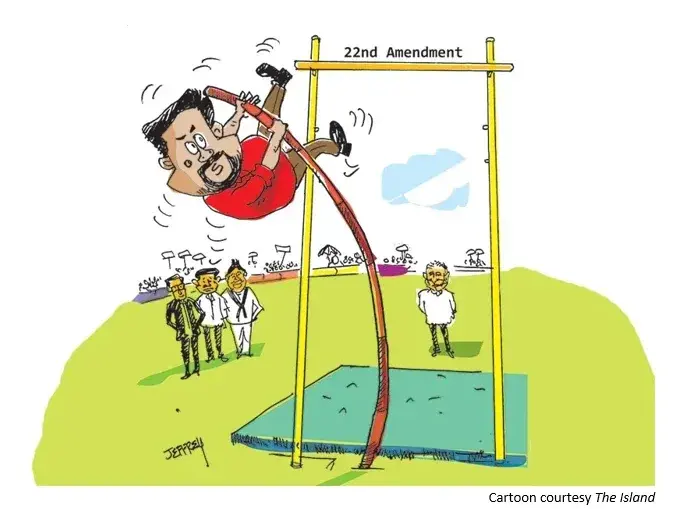
Has 22A become the govt.'s Catch-22?
Aug 27, 2026
Politics by Vishvanath
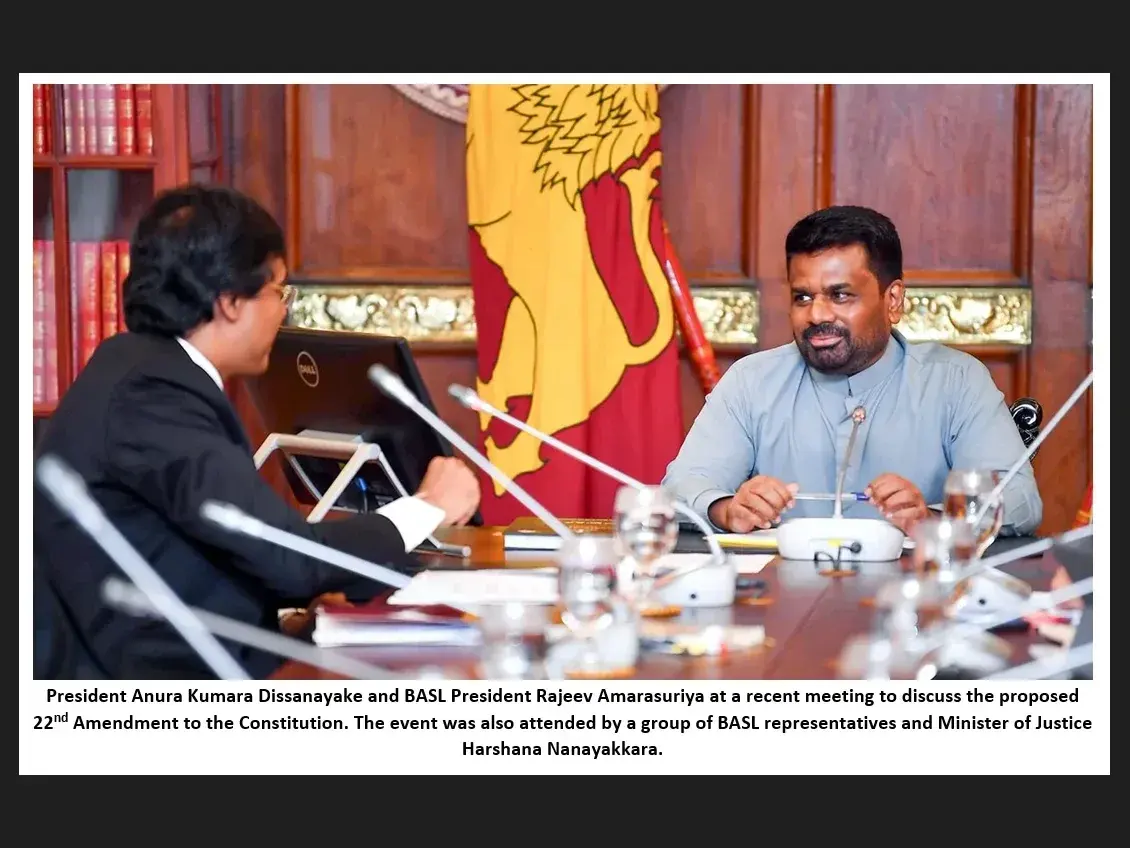
22nd Amendment: A huge political gamble for govt.
Aug 21, 2026
Politics by Vishvanath
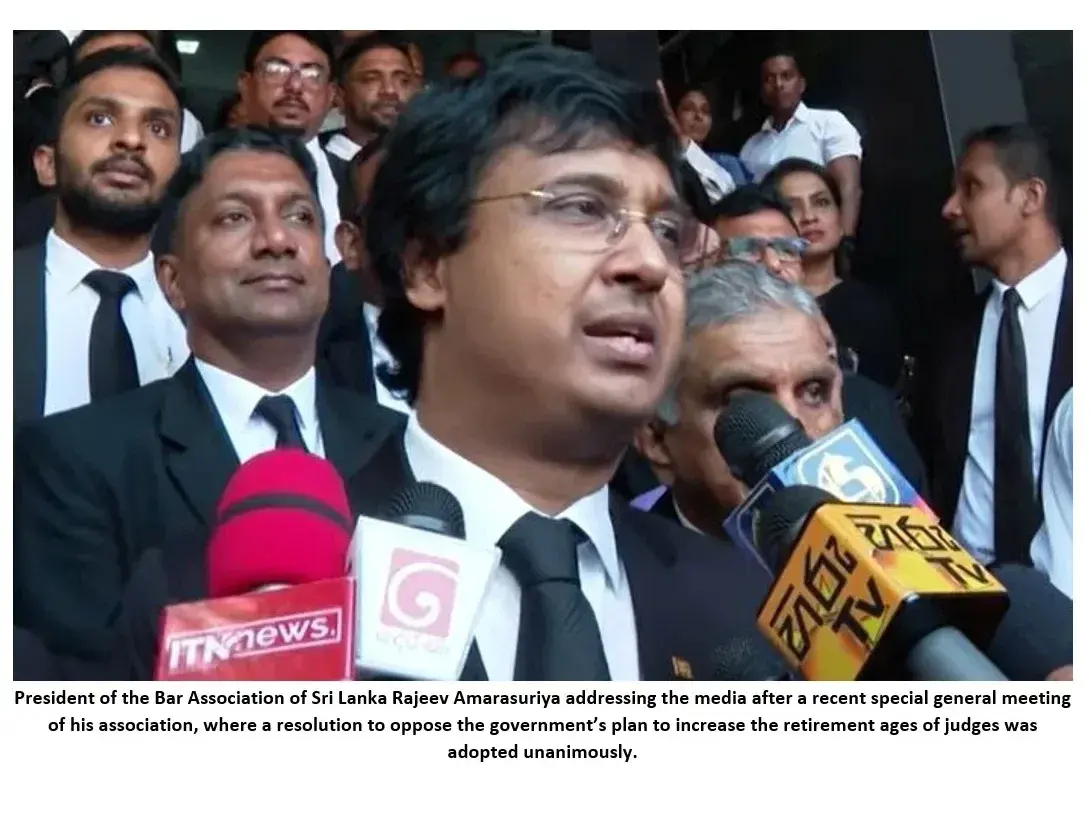
Move to raise retirement ages of judges: Options before govt.
Aug 05, 2026
Politics by Vishvanath
‘Cockroach’ uprising and echoes of Aragalaya
Jul 26, 2026