Mirror Wall
The ‘Anura Meter’ starts ticking…

By kassapa
The launch of the so-called ‘Anura Meter’, a measure of the election promises kept by President Anura Kumara Dissanayake and his Jathika Jana Balavegaya (JJB) government has caused ripples in political circles. This index, initiated by a popular website, suggests that only five percent of the key promises have been kept, 36 per cent have been partially met and 14 per cent have been initiated.
The focus of this column is not to debate the merits of the ‘Anura Meter’ but to assess how the success or failure of the present government will be viewed by voters, especially in light of the experiences of Dissanayake’s predecessors Gotabaya Rajapaksa and Maithripala Sirisena.
In fact, the same website launched similar measures for both Sirisena and Rajapaksa for the former’s 100-day programme and the ‘Gota Meter’ got the latter. Regardless, both presidencies were unmitigated disasters with Sirisena stooping so low as to appoint his rival Mahinda Rajapaksa as Prime Minister and Gotabaya Rajapaksa fleeing in disgrace. Dissanayake, hopefully, will not descend to such depths of political depravity.
Dissanayake and the JJB made many exhilarating promises from their election platforms. One has to do so to win elections. The masses will realise that some of those may never be kept. However, they will expect certain key pledges to be honoured. The trick is to figure out what these are and try to achieve them.
Such commitments also arise because of the incompetencies of their predecessors. Sirisena was elected to abolish the Executive Presidency and eliminate corruption because it was felt that Mahinda Rajapaksa was becoming extremely autocratic and his administration was becoming manifestly corrupt. Gotabaya Rajapaksa was elected to restore law and order and efficiency because the Sirisena-Ranil Wickremesinghe combine had messed up national security and was also grossly inefficient.
What then is the mandate of the Dissanayake and the JJB? At first glance, a few critical issues emerge: the elimination of corruption and abuse of power and penalising those who are corrupt and criminal, the abolition of the Executive Presidency (promised yet again!), the restoration of the rule of law with everyone being treated equally and of course, the resurrection of the economy. There are many other pledges but those will be drowned in the small print of the manifesto; these are the key issues the people will remember and reflect on.
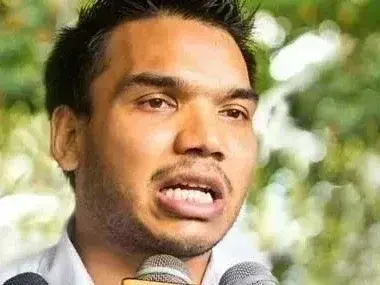
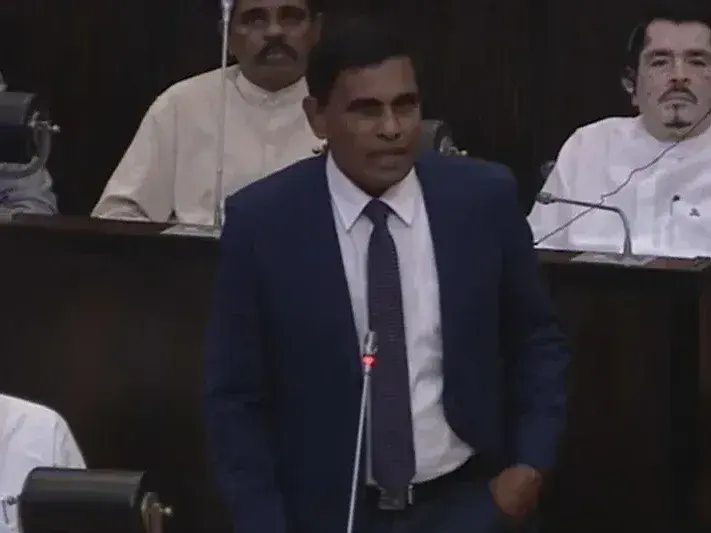
Eliminating corruption and punishing criminals cannot be achieved overnight and not even in the ten months that Dissanayake has been in office. It can be said that the process has begun. At least two previous ministers, Mahindananda Aluthgamage and S.M. Ranjith have been convicted and the prospects for Keheliya Rambukwella are not great. Both Namal and Yoshitha Rajapaksa have been indicted though there can be many a slip between indictment and the final verdict. The Commission Investigating Allegations of Bribery or Corruption (CIABOC) appears to be working at a hectic pace to bring culprits to book.
Key criminal investigations, we hope, will also gather momentum. Investigations into the attacks on Lasantha Wickrematunge, Prageeth Ekneligoda and Keith Noyahr are still works in progress. Despite many public promises, the Easter attacks mystery is yet to be unravelled. The appointment of Shani Abeysekera to head the Criminal Investigations Department should expedite these inquiries which we understand cannot be hurried and must be thorough but there will come a time when the public will demand answers.
Where there has been deafening silence on a crucial election promise from Dissanayake and the JJB is on the abolition of the Executive Presidency and the introduction of a new Constitution. Dissanayake waxed eloquent from campaign platforms about how his predecessors abused their powers and pledged to tear up the Presidency, replacing it with a non-Executive President responsible to Parliament. Since his election however, we have not heard even a whimper about this.
Changing Constitutions are best done in the early years of a government. Sirima Bandaranaike, elected in May 1970, changed the Constitution in May 1972. J.R. Jayewardene, elected in July 1977, changed the Constitution in September 1978. Both of them had draft Constitutions ready and the consultation process began early in their terms of office. What we hear from the JJB is radio silence on the issue. Is it that the government has been caught unprepared or is it that they do not want to pursue this further? Either way, this will be a critical issue on which they will be judged. The sooner Dissanayake ands the JJB realises this, the better.
It appears as if the rule of law and order is being restored, albeit slowly. However, two pieces of legislation- the Prevention of Terrorism Act (PTA) and the Online Safety Act (OSA)- stick out like sore thumbs. These were vehemently opposed by the JJB while in the opposition with promises to repeal them when in office. The JJB was party to petitions against this legislation when they were introduced by Ranil Wickremesinghe. Yet, they are being retained and the tune is slightly different now: they won’t be repealed, they will be amended. The peoples’ verdict on this will depend on how the ‘amended’ version will be used or abused.
Last but not least is the resurrection of the economy. This is the one issue where the public will not mind if the JJB goes back on its word- of abrogating the deal with the International Monetary Fund (IMF) and adopting a different approach on the economy. To his credit, Dissanayake has swallowed his words and his pride and stuck with the IMF, retained most of Wickremesinghe’s economic pundits and is being cautious in his decisions. He is aware that if the economy plummets again, so will he.
Dissanayake has been in office for ten months, the JJB for eight. It is clearly too early to judge them. There have been some positive aspects and there certainly has been a difference in the way in which this government and Dissanayake in particular has gone about making decisions. Obviously, more needs to be done. Yet, there are some significant dark clouds too: the lack of a dialogue on constitutional changes and sticking with obnoxious legislation are the main complaints.
The JJB must know that the people are waiting and watching for the change they promised. They can’t be fooled all the time.