Mirror Wall
The NPP at One Year: Miles to go, Many promises to keep
By Kassapa
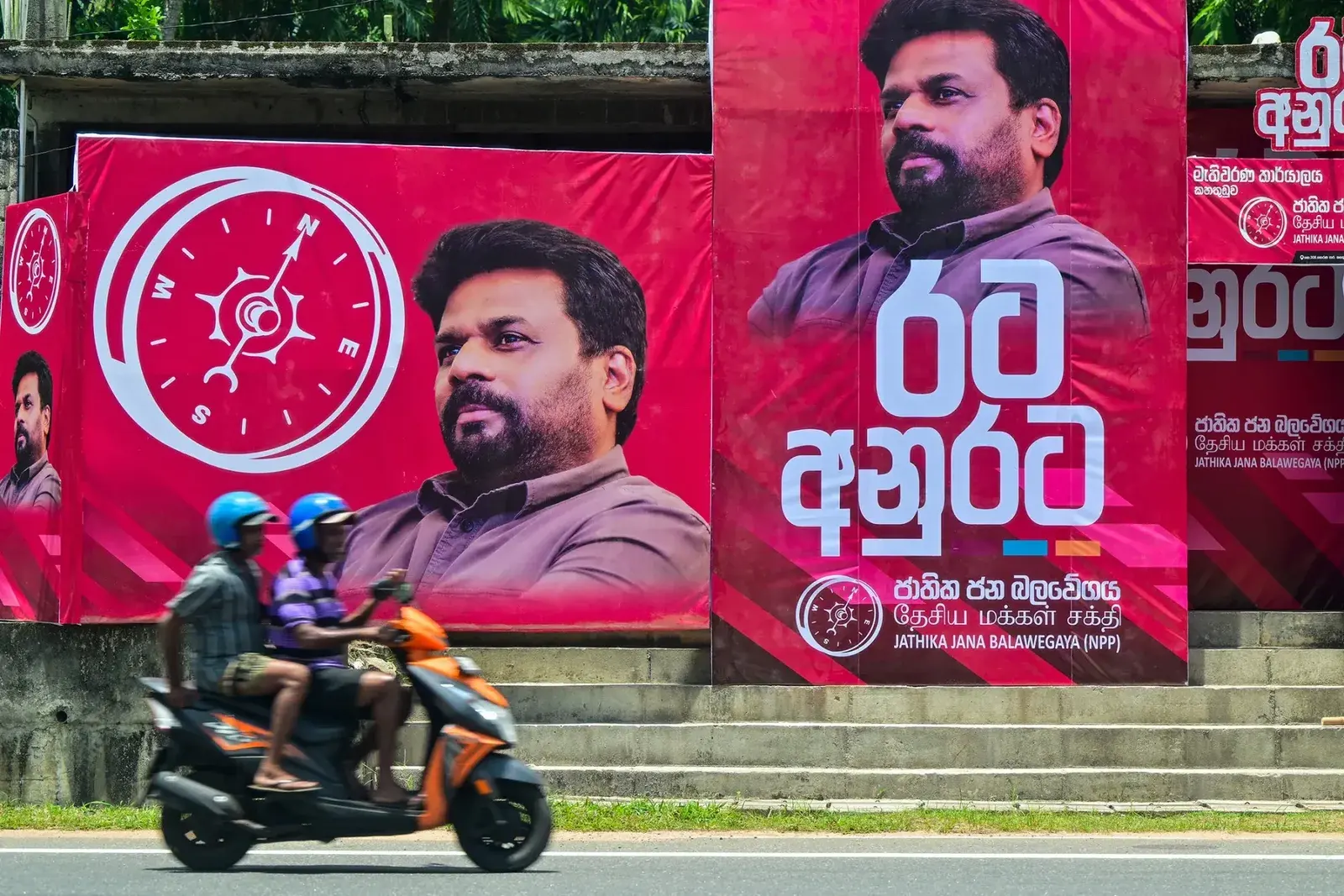
Preoccupied with the Budget, there was hardly any fanfare to celebrate the government’s first year in office. Anura Kumara Dissanayake won the presidential poll in September last year but it was on November 14 that the Jathika Jana Balavegaya (JJB), oddly better known by its English acronym NPP (for the ‘National Peoples’ Power’) swept into power with an unprecedented mandate of 159 seats in the 225-seat legislature.
It was an unparalleled mandate for several reasons. It was the first time that a single party, without forming alliances, had secured a two-thirds majority in Parliament in elections conducted under the proportional representation system. It was also the first time that a southern based party had swept the board in the North and East, no mean achievement indeed.
With this great power came expectations. Has the NPP lived up to those expectations and delivered on the promises they made? The end of the first year in a five-year term is probably not the best time to pass judgment but it is as good a time as any to foreshadow what is to come.
On the plus side, the NPP government has earned plaudits for its crackdown on crime- despite the deadly ongoing underworld killings which Minister of Public Security Ananda Wijepala says is ‘not a threat to national security’ because they are ‘isolated incidents’. The NPP has achievements to showcase on this aspect: the deportation of alleged underworld leaders from Indonesia and Nepal, whose detention and interrogation is leading to a spate of arrests linked to the narcotics trade.
Also earning praise is the government’s efforts to punish corrupt politicians. The judiciary has been allowed to function without fear or favour and, as a result have been meting out justice with renewed fervour. Former ministers Mahindananda Aluthgamage, Nalin Fernando and S. M. Ranjith are behind bars and many feel that it is only a matter of time several others- including the notorious Keheliya Rambukwella- will join them. For this, the government also has to thank the ‘other’ Dissanayake, the Director General of the Commission to Investigate Allegations of Bribery or Corruption (CIABOC), Ranga Dissanayake, who is spearheading the offensive against corruption despite baseless personal allegations levelled against him.
The government and President Dissanayake who is also Finance Minister also deserve credit for staying the course with regard to the economy instead of diverting it in response to party slogans. Former Finance Minister Ali Sabry put it eloquently when he said, “Leadership is also measured in continuity, in the ability to recognise what must endure beyond political rivalry. And that is where President Anura Kumara Dissanayake deserves genuine credit,” Sabry said in his review of the Budget.
Indeed, Dissanayake’s second Budget, delivered a week ago, shows promise. State revenues have increased and debt ratios have declined. Even the Opposition’s Harsha De Silva, an economist, concedes that some macro-economic indicators are showing a degree of stability that was not expected to materialise.
Where then has the NPP faltered? Contrary to it promises prior to the election, it has fallen short in accountability. The first (and probably the worst) example of this is the case of former Speaker Ashoka Ranwala who was asked to substantiate his claims of holding a doctorate. After much dilly-dallying, he resigned but only as Speaker. He remains a Member of Parliament, when the party should have asked him to resign in keeping with the lofty ideals the NPP promised.
The government also clearly lacks ministers who are both pragmatic and charismatic. One does not find Athulathmudalis, Gamini Dissanayakes or Kadirgamars in this Cabinet. It is more or less a one man show, that man being President Dissanayake who also has to undo the damage of many of his Cabinet colleagues do to the government. Prime Minister Harini Amarasuriya, ministers Vijitha Herath, Nalinda Jayatissa and K.D. Lalkantha are value for money but are unlikely to make history. The less said about the rest, the better, Sunil Handuneththi being the worst example, to the extent that one must wonder whether he is an opposition ‘plant’ within the government: such is his talent to bring the government into ridicule whenever he makes a statement.
Then there are a plethora of unfulfilled promises mostly relating to the ‘system change’ that the NPP promised. Abolition of the Executive Presidency, repealing offensive legislation such as the Prevention of Terrorism Act (PTA) and the Online Safety Act (OSA) which the NPP fought for fiercely when it was in the opposition and conducting provincial council elections are just a few of these.
Apologists for the government will argue that these are early days and more time is needed for sweeping changes such as these. With a two-thirds majority in Parliament the PTA and OSA can be dispensed with promptly, if only the government has the motivation to do so. In his budget speech, Dissanayake appeared to link the postponement of provincial polls to a legislative hiccup which he can again undo using his steamroller majority in Parliament.
As for abolishing the Executive Presidency, the silence is deafening. Sirima Bandaranaike, elected in May 1970, enacted the Republican Constitution in May 1972. J. R. Jayewardene, elected to office in July 1977, changed it to a presidential form of government in September 1978. Major constitutional changes are best done in the early days of a government when the incumbency factor does not impact on its popularity. So far, we have not seen or heard any meaningful discussion in this regard and if Dissanayake does not keep his promise of abolishing the Executive Presidency in his first term and opts for a second tilt at the job, he will lose that massive element of trust that propelled him into office last year.
So, it is a mixed report card for the NPP government. Two major factors still sustain it. Firstly, its leaders have still managed to steer clear of allegations of corruption. Secondly, the opposition is in a constant state of great disarray. At the end of years of five years though, that won’t be enough. People will look for results, especially about the promises that were made. If they don’t find any, the NPP could be back at three per cent, give or take a few per cent more.