Politics by Vishvanath, Cover Story
Abolition of the executive presidency pie in the sky?
By Vishvanath
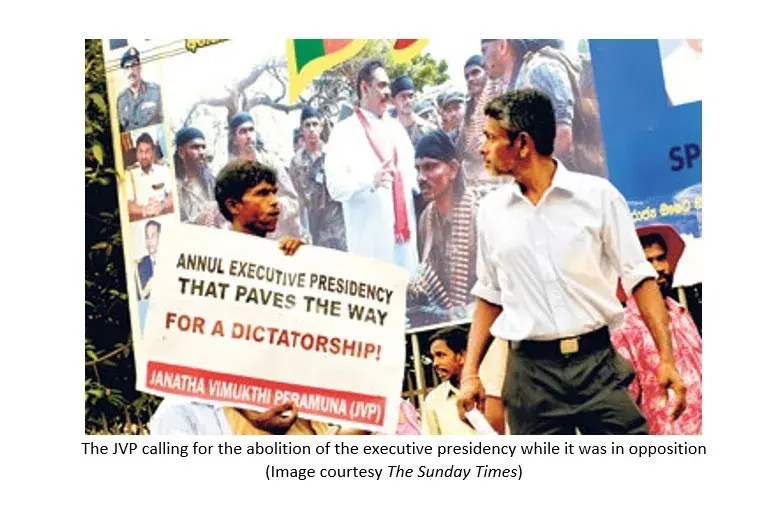
Prime Minister Dr. Harini Amarasuriya has reaffirmed the JVP-led NPP’s commitment to abolishing the Executive Presidency. In answer to a question from Opposition Leader Sajith Premadasa, she told the parliament on Friday (19) that the NPP was determined to fulfil its pledge, and a new Constitution would have to be introduced for that purpose. Without specifying a timeframe for the constitution-making project, she said steps were being taken to abolish the Executive Presidency and establish a parliamentary system of government, including the appointment of a President without executive powers. She said measures are currently underway to hold the Provincial Council elections, which have been stalled due to provisions in the Provincial Councils Elections (Amendment) Act No. 17 dated 2017.
The Prime Minister said: “As stated on page 194 of the policy statement “A Thriving Nation – A Beautiful Life”, the government intends to draft a new Constitution. This draft will be presented to the public, followed by dialogue and discussion, after which necessary amendments will be made. The Constitution is then expected to be approved through a referendum. At present, reports of committees previously appointed to draft a new Constitution, along with other constitutional reform proposals, are being considered. Thereafter, a basic concept paper will be submitted to the Cabinet of Ministers.
“The necessary steps are being taken to abolish the Executive Presidency, and establish a parliamentary system of government, and appoint a President without executive powers will be undertaken in the process of drafting the new Constitution. It is not possible to abolish the Executive Presidential system without introducing a new Constitution. A study is currently underway on the abolition of the Executive Presidency and the possible methods of the process. While giving due attention to resolving the country’s pressing issues, focus has also been placed on abolishing the Executive Presidency. Relevant timelines will be announced in due course.”
It is obvious that the government is buying time.
There is hardly any party that has not advocated the abolition of the executive presidency, calling it a wellspring of evil that has to be got rid of for the sake of democracy and good governance. Some political parties have held the executive presidency, and others have either helped elect Executive Presidents or savored power as constituents of coalitions led by the Executive Presidents. The Executive President has been in existence for about 47 years. The UNP, which created it in 1978 could hold it only for 18 years nonconsecutively—from 1978 to 1994 and from 2022-2024 (under fortuitous circumstances). It produced four Executive Presidents—two elected by the people (J. R. Jayewardene and Ranasinghe Premadasa) and two others elected by the parliament (D. B. Wijetunga and Ranil Wickremesinghe).
Interestingly, only a single Executive President served his term fully. Mathiripala Sirisena is his name. He could do so because he did not seek a second term and had no need for advancing a presidential election and lose part of his term. President Ranasinghe Premadasa, who was elected in 1988 was assassinated in 1993 before the end of his first term. President Gotabaya Rajapaksa, elected in 2019, had to resign in 2022 due to a popular uprising against his government. Others, J. R. Jayewardene, Chandrika Kumaratunga and Mahinda Rajapaksa, advanced presidential elections and thereby lost parts of their first terms.
President Jayewardene’s two terms lasted for about 11 years although he was elected to serve two six-year terms. So did President Kumaratunga’s two terms. Rajapaksa faced two presidential elections prematurely twice while in office; he lost more than one year each in 2010 and 2015, when he advanced a presidential election. He sought a third term by amending the Constitution. He held the presidency only for nine years and one month. President D. B. Wijetunga and President Ranil Wickremesinghe served the remainder of the terms of Premadasa and Gotabaya. President Anura Kumara Dissanayake has been in power since 2024. He is the only President to have failed to secure an outright majority in a presidential election; he won the presidency in the second round by polling only about 42% overall.
All political parties that have held the executive presidency have pledged to abolish it. They are the UNP (under Ranil Wickremesinghe’s leadership), the SLFP, the SLPP and the JVP/NPP. The UNP, the SLFP and SLPP leaders reneged on their promises after realizing their presidential dreams, and what is really up the JVP’s sleeve remains to be seen.
The JVP is the only party that has consistently campaigned for the abolition of the executive presidency since 1978. It brought pressure to bear on Kumaratunga in 1994 to promise to scrap that institution, and it made that a condition for joining the SLFP-led United People’s Freedom Alliance (UPFA) in 2004. It threw its weight behind Mahinda in the 2005 presidential election on the strict condition that he undertake to do away with the presidency after securing it. Both Mahinda and Chandrika took the JVP for a ride. So did Sirisena, who also won the 2015 presidential election with the help of the JVP, the UNP and other Opposition parties by promising to abolish the executive presidency. Now, the JVP has got an opportunity to make good on its pledge without help from others. It has a two-thirds majority in the parliament and says it is confident of popular support for implementing its election manifesto, “A thriving nation: A beautiful life”, which makes a solemn pledge to that effect. There is no way it can justify delaying the commencement of the process of doing away with the presidency.
All signs are that the JVP/NPP will not initiate the process of writing a new Constitution, which is a prerequisite for abolishing the executive presidency, until the next presidential election draws near so that it can renew its pledge at issue and field President Dissanayake as its candidate. But if it does so, it will compromise its credibility hugely and provide political ammunition to its rivals. What propelled it to power was its pledge to be different from the previous governments, which it said had been a curse to the country.
The Executive Presidency has survived nine governments, including those which came to power, vowing to scrap it and ‘save democracy’. Going by the prevarications of the JVP/NPP on the abolition of the Executive Presidency, one need not be surprised if it outlasts the current dispensation as well.
RELATED NEWS
View all
Politics by Vishvanath
Has 22A become the govt.'s Catch-22?
Aug 27, 2026
Politics by Vishvanath
22nd Amendment: A huge political gamble for govt.
Aug 21, 2026
Politics by Vishvanath
Move to raise retirement ages of judges: Options before govt.
Aug 05, 2026
Politics by Vishvanath
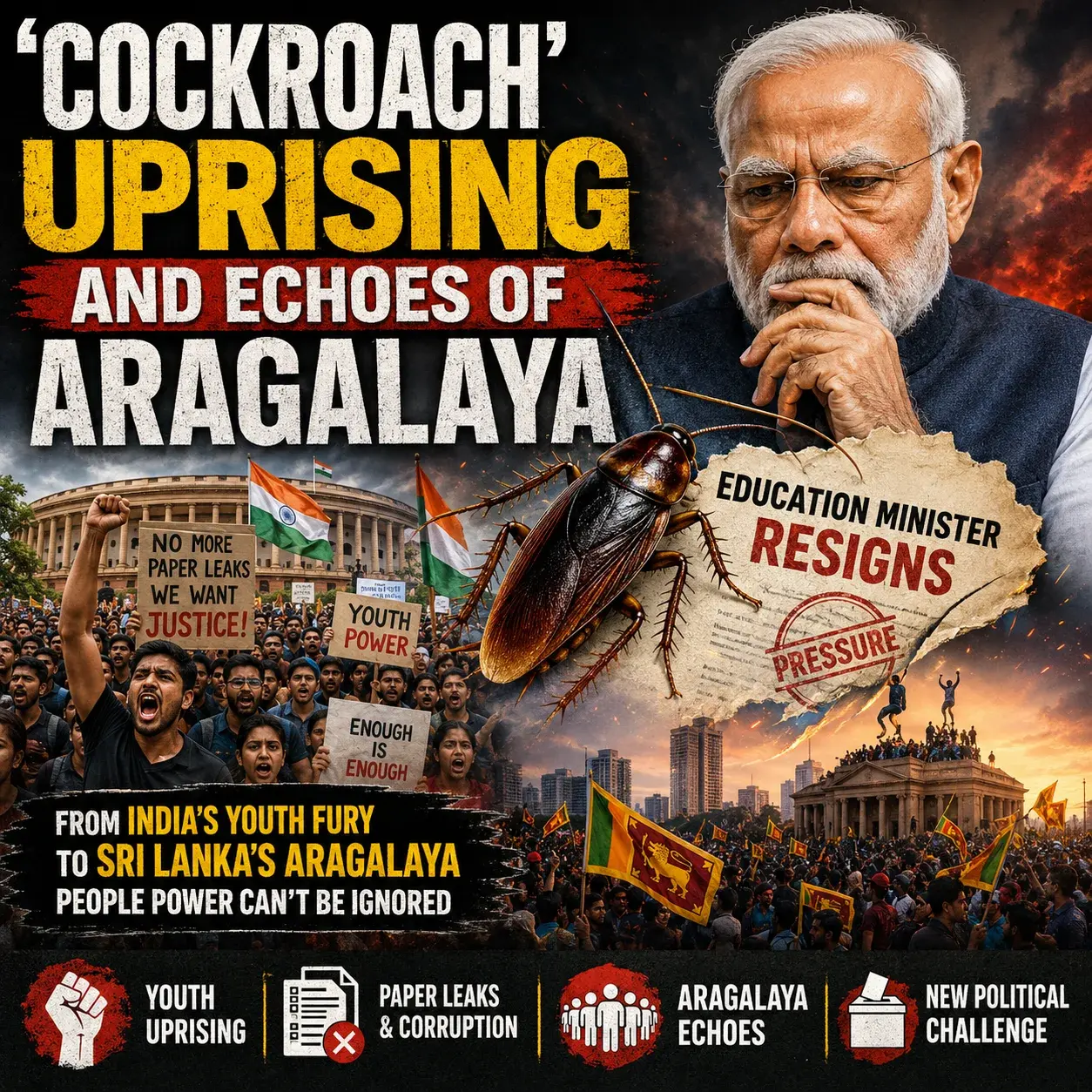
‘Cockroach’ uprising and echoes of Aragalaya
Jul 26, 2026