Politics by Vishvanath, Cover Story
Adaptability and resilience of the old brigade
By Vishvanath
Social media is awash with posts denigrating elderly individuals in politics and key government positions in Sri Lanka as well as in other countries. During the 2022 Aragalaya, protesters went so far as to use derogatory terms to describe the then Prime Minister Mahinda Rajapaksa, 79. They set up a protest site called Mina Go Gama near Temple Trees, ‘mina’ being a pejorative term for an old individual.
One of the reasons given for the resentment of the Nepalese youth, who took to the streets and toppled a leftist government, is their antipathy towards gerontocracy, a political system where power is held by older people. It was claimed by some political analysts that the youth in Nepal were fed up with having politicians of their grandparents’ age at the helm of the government and desired to see the back of them. There were no doubt two competing worldviews, represented by a group of ageing rulers resisting change and the modern youth seeking change in Nepal.
The true digital natives belonging to Gen Z in Nepal, inspired by popular uprisings elsewhere, especially in the South Asian regions during the past two years, boldly resisted the decrepit, discredited system, corruption and opulent lifestyles of the rulers and their family members and cronies. The rulers refused to heed the voice of the youth, and instead of making a course correction, resorted to force, in a bid to crush the protests triggered by a social media ban. They dug their political graves in the process.
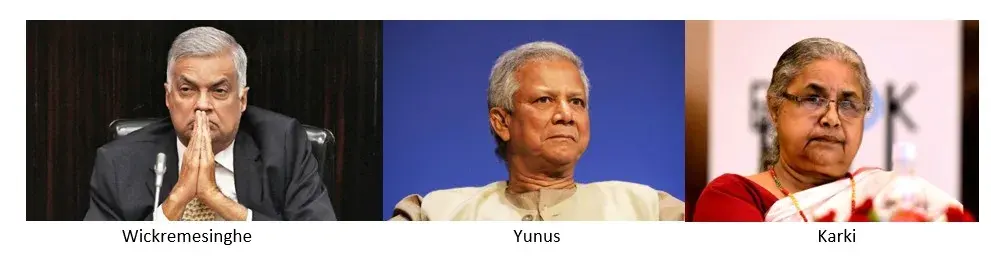
Paradoxically, having brought down the government of Prime Minister Sharma Oli, 73, the young rebels chose a female of their grandmothers’ age to bring order out of chaos. There were several contenders for the post of Prime Minister, but the youth had retired Chief Justice Sushila Karki, 73, appointed the Interim Prime Minister. Karki said, after assuming duties as the first-ever female Prime Minister in Nepal: “I did not come to this position because I had sought it, but because there were voices from the streets, demanding that Sushila Karki should be given the responsibility.” What she has said is true.
In Bangladesh, a youth-led uprising led to the collapse of the government of Prime Minister Sheikh Hasina, 77, last year. The young rebels made no bones about their antipathy towards the ageing politicians hogging positions of power, and wanted a government that was responsive to their grievances, concerns and aspirations. Instead of having one of the young rebels elevated to the post of Chief Advisor—the Interim Prime Minister in all but name—of the caretaker administration, they handpicked Prof. Muhammad Yunus, 85.
Thus, what the outcomes of the youth-led uprisings in Bangladesh and Nepal signify is that the rebellious youth have clear goals, but they would rather have someone mature and experienced at the wheel than try their hands at driving. Their aversion to elderly politicians holding on to power emanates not from ageism as such; they execrate only those who are associated with regimes characterized by incompetence, corruption, waste, abuse of power and lack of empathy. The youth are not naïve or far removed from reality; they are realistic and pragmatic enough to seek the guidance of the elders of integrity, as was seen in Bangladesh and Nepal. In Sri Lanka, the situation was different, but it took a member of the old brigade to make tough decisions and straighten up the economy.
The situation in Sri Lanka in 2022 was different from what was witnessed in Bangladesh and Nepal subsequently. Sri Lankans rose against the SLPP government due to economic hardships and shortages of essentials. In fact, they did not have to take to the streets, unlike in Nepal and Bangladesh. They were already on the streets, waiting in winding queues for fuel, cooking gas, etc. Extended power cuts made their lot even more unbearable. The uprising began as an unorganized, leaderless movement, with protests erupting in various parts of the country. Then, they converged on the Galle Face Green. Even the JVP was critical of the leaderless protest movement initially. Aragalaya was a coming together of disparate groups with various agenda. The youth played a pivotal role in keeping the protest going, and subsequently surrounding the Presidential Secretariat, the President’s House, Temple Trees and the Prime Minister’s Office. But following an SLPP-led goon attack on the Galle Face protesters in May 2022, retaliatory violence erupted, and political groups mingling with young protesters shifted from rearguard resistance to leading vanguard action, the JVP standing out among them, and trying to capture the parliament.
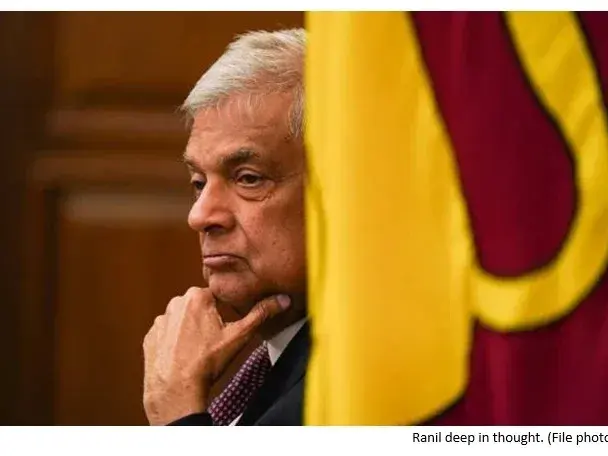
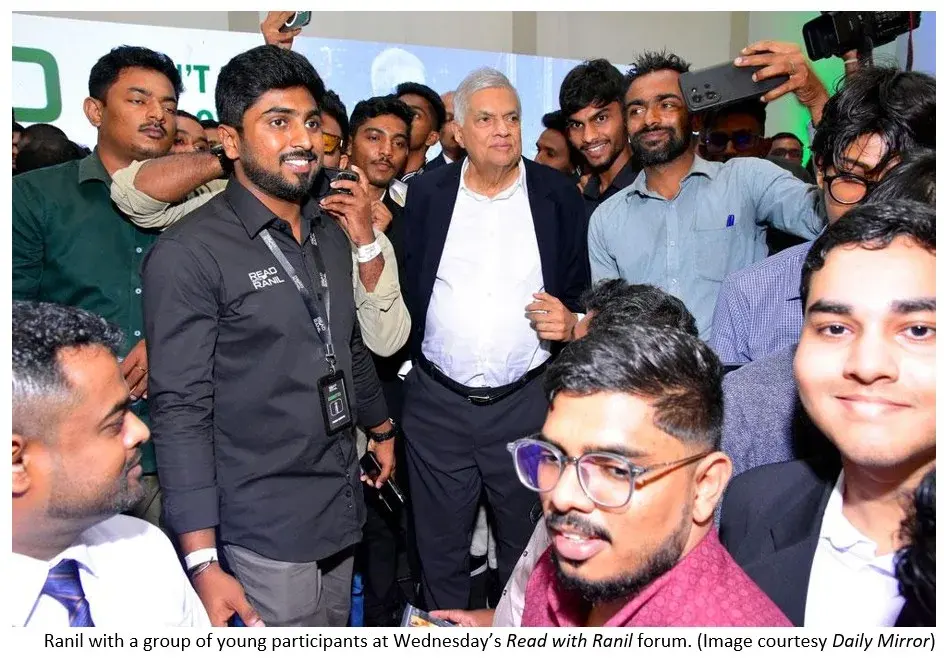
Protesters succeeded in ousting President Gotabaya Rajapaksa and making other members of his family leave the Cabinet, but the SLPP made an unexpected countermove by elevating the then Prime Minister Ranil Wickremesinghe, 76, to the presidency via a parliamentary vote, and crushing what remained of Aragalaya afterwards. Obviously, Wickremesinghe was not the choice of the rebellious youth unlike Yunus (Bangladesh) and Karki (Nepal), but he provided political leadership for the country’s economic recovery process, making as he did a large number of unpopular yet critically important decisions to turn the economy around and make essentials freely available, albeit at higher prices. He kept the IMF programme on track, and the current government is continuing what he did by way of reviving the economy. However, his political wrongdoings turned public opinion against him, causing his defeat in last year’s presidential election. He also failed to revive his party, the UNP.
Interestingly, the choice of those who turned against the SLPP-UNP administration led by President Wickremesinghe was the JVP, which won an election landslide and secured a two-thirds majority in the parliament last year. The Aragalaya youth, who also contested the 2024 general election, was left without a single seat. The people looked for an alternative to all established political parties, which the JVP demonized effectively. The JVP leaders are far from young. President Anura Kumara Dissanayake is 56 years old. The General Secretary of the JVP, Tilvin Silva is 68 years old while the NPP General Secretary Dr. Nihal Abeywinghe is in his early 70s.
The youth are rebellious and are capable of unsettling and dislodging unpopular governments. Unlike in the past, they can mobilize support for their campaigns via social media. Incompetents, corrupt gerontocratic regimes collapse, but the old brigade adapts to emerging situations, coexists with the political active youth and refuses to fade away while the misfits within its ranks head for the hills.
RELATED NEWS
View all
Politics by Vishvanath
Has 22A become the govt.'s Catch-22?
Aug 27, 2026
Politics by Vishvanath
22nd Amendment: A huge political gamble for govt.
Aug 21, 2026
Politics by Vishvanath
Move to raise retirement ages of judges: Options before govt.
Aug 05, 2026

Politics by Vishvanath
‘Cockroach’ uprising and echoes of Aragalaya
Jul 26, 2026