Current Affairs
After last year’s Gen.Z revolution, will Thursday’s Nepal elections usher in change?
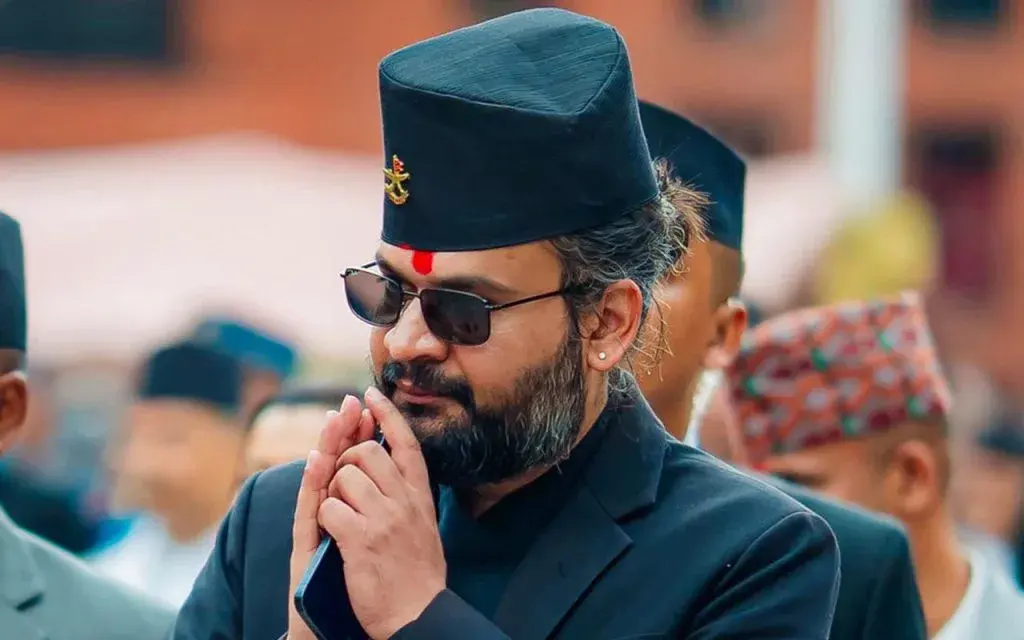
By P.K. Balachandran
Colombo, March 4 – Following the September 2025 Gen Z revolution in Nepal, it was anticipated that the next parliamentary elections would witness a clash between the new ideas generated by the revolution and the established order. But it appears that the contest is between old warhorses.
Unlike in Bangladesh, where the Gen Z (University students) contested the February 12 elections as the National Citizens’ Party (NCP), the revolutionary Gen.Z of Nepal is totally missing in the March 5 2026 poll arena. The contestants are all established parties that had been in the game for decades. Some of the Prime Ministerial candidates are old faces who have been in office several times before.
And yet, the Nepalese public do not seem to be disheartened. Public enthusiasm for voting has not dimmed. People have taken great pains to reach where they are registered for voting, however great the distance and however arduous and expensive the journey may be. Clearly, people expect the September 2025 revolution to have an effect.
The Nepalese media has pointed out a major flow in the electoral list. While the Election Commission touted a registered voter base of over 18.9 million, historical trends and contemporary grievances suggest that a staggering 35% of these individuals might not be able to vote.
For citizens residing in Kathmandu but registered to vote in a remote constituency, the act of voting is an economic burden that threatens the family’s monthly budget. When a single journey to a home village can cost upwards of Rs.30,000, voting is a luxury. It is an administrative failure of the highest order that hundreds of thousands of internal migrants remain unregistered in their current locations, trapped by a rigid bureaucracy, that forces them to choose between livelihood and voting rights. Many Nepalese work abroad. They too find it too expensive to travel to vote.
In an era of digital advancement, the place of residence could be easily updated for the sake of voters’ convenience and democracy.
Parties and Personalities in the Fray
The March 5 election will choose 275 members of parliament, with 165 elected under the first-past-the-post system and 110 through the proportional representation system.
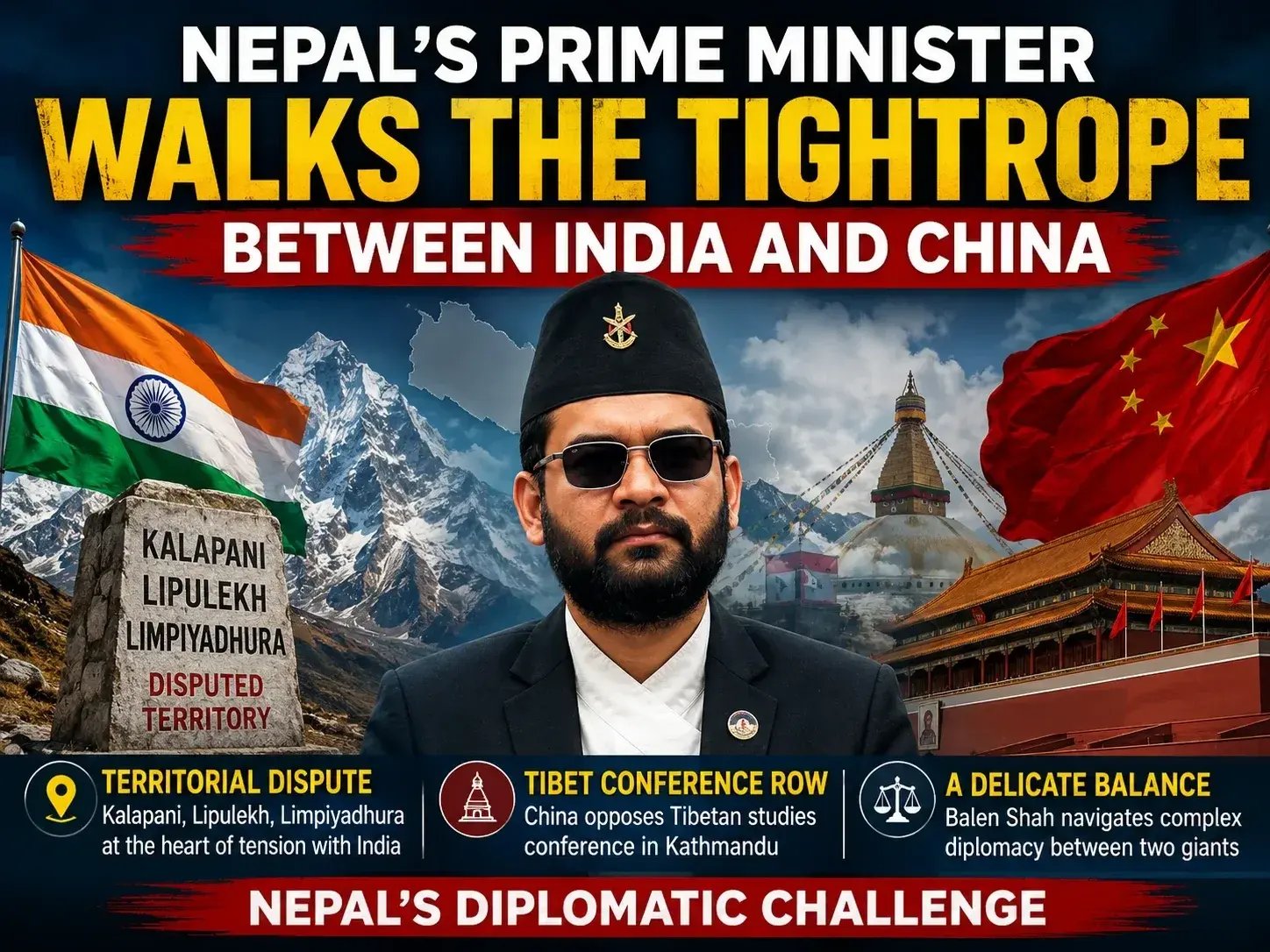
Rapper-turned-politician and former Kathmandu mayor Balendra Shah (35), of the centrist Rastriya Swatantra Party (RSP), is among the frontrunners for Prime Minister. Facing him in the Jhapa 5 constituency is four-time Prime Minister K.P. Sharma Oli (74), of the Communist Party of Nepal (Unified Marxist–Leninist). Oli is facing an uphill task as it was he who was overthrown by the Gen Z in 2025. Oli has been a communist leader since the 1990s.
Other contenders include a leader of the centrist Nepali Congress (NC) - the 49-year-old Gagan Thapa, and the three-time Prime Minister Pushpa Kamal Dahal, alias Prachanda (71), who now leads the new outfit, Nepali Communist Party (NCP).
Dahal had led a bloody Maoist insurgency for a decade before joining mainstream politics. But he is currently unpopular, along with his NCP.
In contrast, the chances of the Nepali Congress (NC) seem bright. Its time-tested leader and many times Prime Minister, Sher Bahadur Deuba, was replaced by Gagan Thapa and Bishwa Prakash Sharma, two relatively young General Secretaries of the party, with massive support from younger party cadres. Gagan is the Prime Ministerial candidate of the NC. Gagan has been in politics for 30 years since he was a high school student. He is identified as Gen.Z and considered capable of delivering on promises.
There is also a desire to place a new party in power, which has given the Rashtriya Swatantra Party (RSP) a significant competitive edge in the election. Though the party’s chair, Rabi Lamichhane, has been embroiled in several legal complications, people view him favourably.
The RSP’s popularity has increased after Balen joined the party as a senior leader. He is now RSP’s Prime Ministerial face. Balen was an independently elected mayor of Kathmandu Metropolis and has a huge fan following despite his mediocre performance as Mayor and his unruly behaviour.
Election analyses of 10 constituencies conducted by Setopati, a popular online news media in Nepal, whose earlier election analyses had mostly been correct, show that the RSP’s candidates might win in all ten constituencies. The RSP might even win the parliamentary elections, some reports say.
Heavy Tasks Await the Winning Party
Be that as it may, whoever wins the elections, will have a whole lot of problems to tackle and that too under the public’s glare.
According to the Atlantic Council, Nepal’s uprising last year revealed the fragility of a remittance-driven economy. Remittances contribute more than a quarter of Nepal’s GDP, masking the weakness of domestic job creation. Remittance dependence leaves Nepal vulnerable to external shocks. Any downturn in Gulf economies or tightening of labour migration policies (or disruption due to war) directly translates into lost income for many households.
“High youth unemployment and underemployment in the informal sector have left recent Nepalese graduates disillusioned, as a weak education system, poor vocational training, and ineffective public employment services have left them mismatched to labour market needs,” the Atlantic Council says.
Further, the “government’s inability to diversify beyond remittances and tourism meant that when political instability hit, the economic fallout was catastrophic. Protests and riots have inflicted unprecedented economic damage, with losses worth an estimated at US$ 22.5 billion—nearly half of Nepal’s GDP. The tourism sector, which should have been thriving during the festive season in 2025, was devastated as cancellations poured in. Investor confidence evaporated, and national growth projections was expected to fall below 1 percent. For Nepalis, this meant not just fewer jobs but also a sense that their future had been stolen.”
What began as anger over inflation, joblessness, and shortages of food and goods became a full-blown political crisis because entrenched elite proved unable—or unwilling—to respond, the report say about the 2025 GenZ agitation.
Three parties rotated in and out of power in Nepal for over a decade without delivering jobs or stability. When Prime Minister K.P. Oli attempted to muzzle criticism by banning social media, he miscalculated. Instead of silencing dissent, the ban fuelled it. The rest is history.
The prospect does not look any better in 2026. In January, the World Bank issued a report which said Nepal’s GDP growth would plummet to 2.1% for the fiscal year 2025/26, a significant downgrade from the 4.6% growth recorded in the previous fiscal year. Therefore, Nepal’s new rulers have their task cut out.
END
RELATED NEWS
View all

Current Affairs
Sri Lankan Presidential pardons- the good and the bad
Sep 11, 2026
Current Affairs
The pros and cons of joining BRICS- the dilemma of Pakistan and Bangladesh
Sep 09, 2026
Current Affairs
Disaster in Nepal gets embroiled in geopolitics.
Sep 08, 2026
Current Affairs
Why Mecca Pact, and what does it imply for its members, Israel and India?
Aug 18, 2026