Current Affairs
Asia's ticking debt bomb: Sri Lanka crisis sounds alarm bells across region
September 28, 2022
CHANDANA POKUNA, Sri Lanka -- Every day after 4 p.m., residents in this quiet, leafy village listen for the putt-putting of motorbikes on the sandy road next to their homes. When they hear it, they know to shut their doors and turn off their lights. Their children are instructed to run inside and not let anyone in.
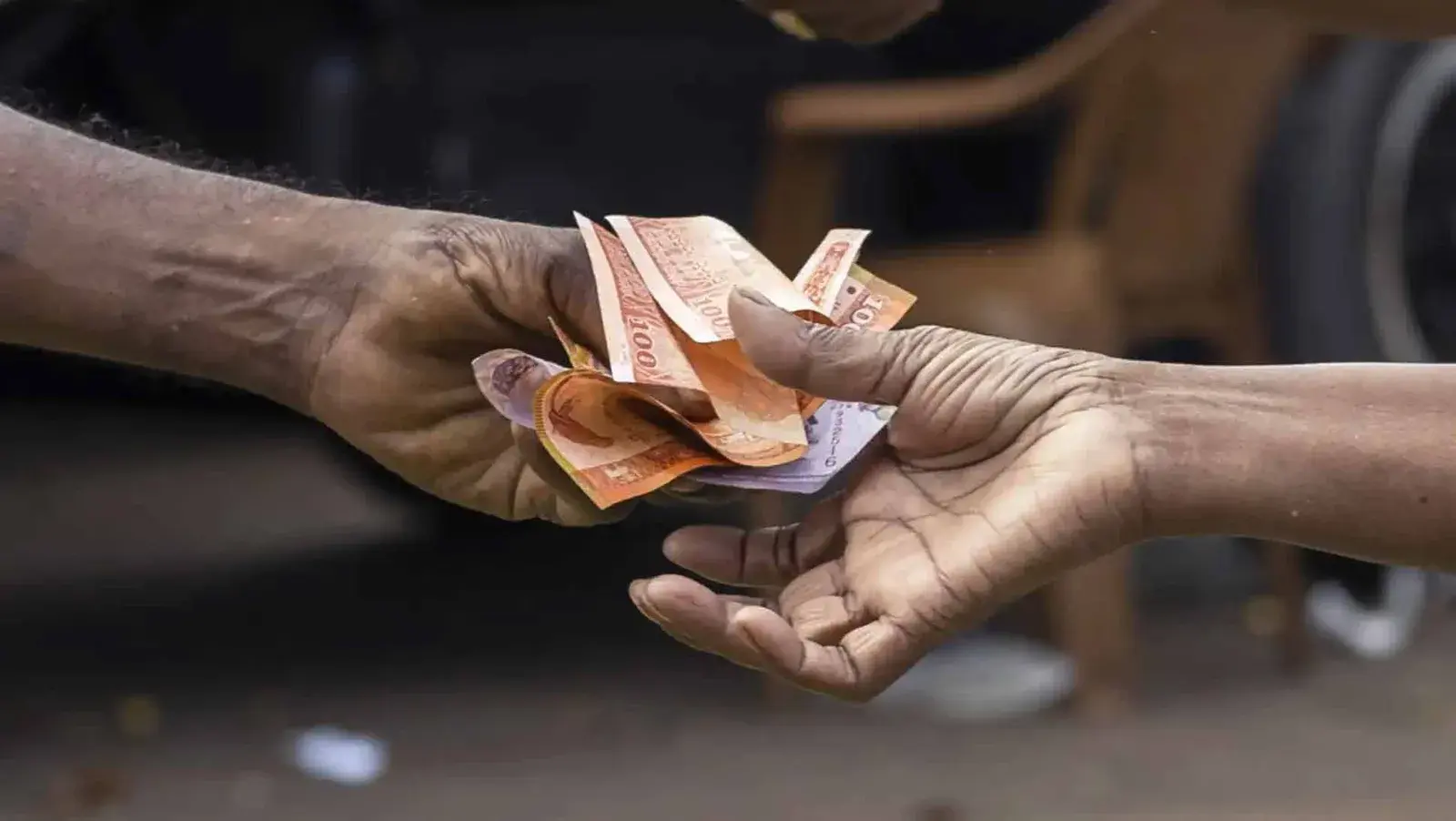
A motorbike is the vehicle of choice for local debt collectors, who fan out through places like Chandana Pokuna, some 500 brick-faced, rundown houses in Sri Lanka's rice-farming north central district of Polonnaruwa. The motorcycle men, agents of microlending companies, start work in the late afternoon, when they know residents will be at home.
Sooner or later, the confrontations are unavoidable. The debt collectors spend hours in the houses of the villagers, badgering them to make payments, and even forcing them to sell items in their homes, from furniture to gold jewelry, to raise cash. Families are desperate to escape, like a 52-year-old mother of three, who attempted suicide twice earlier this year by swallowing poison -- but was saved by neighbors. She declined to give her name, but her story is typical among rural households that have sunk deeper into debt.
The rice farming incomes of Chandana Pokuna continued to slump this year after desperate measures by Sri Lanka's government to thwart a run on the foreign currency reserves. Facing a shortage of dollars, in April 2021, then-President Gotabaya Rajapaksa imposed a ban on imported chemical fertilizer. Predictably, harvests were devastated, and now the entire village is desperate, having borrowed to make ends meet and then borrowed to repay the interest. Meanwhile, a devaluation of the rupee has ignited inflation -- at 60%, the highest in Asia, according to the International Monetary Fund -- and the villagers struggle to pay the rising prices of food and settle debts.
"We have no money in our hands for many days," said Weerakoon Amerasinghe, a 65-year-old villager living in fear of being evicted from his house by debt collectors. He had borrowed to buy a harvester and cannot pay the money back. "Now no rice fields, no machine to use and no house very soon," Amerasinghe reflected in a soft, halting voice
[caption id="attachment_19571" align="alignleft" width="770"]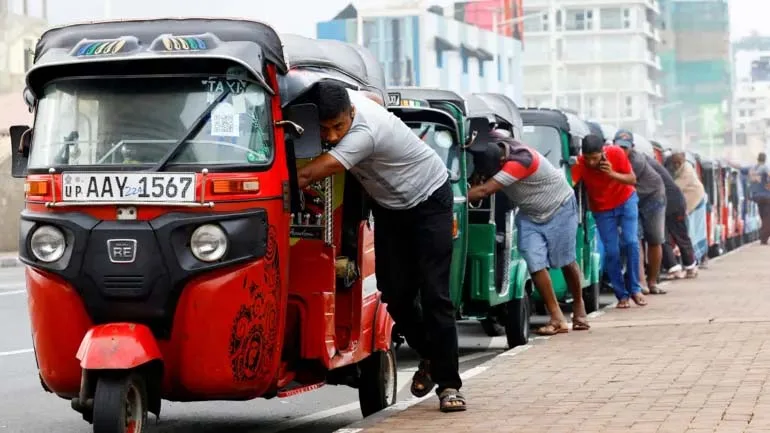 Trishaw drivers push their vehicles as they move up in line to buy fuel in Colombo, Sri Lanka, on July 29. © Reuters[/caption]
The plight of Chandana Pokuna is a window into a growing humanitarian crisis following Sri Lanka's worst economic meltdown since the country's independence in 1948. After default and devaluation in the spring and a political crisis that saw Rajapaksa step down in July, the $81bn economy is expected to contract by 8.7% in 2022, according to the IMF.
It is also the first, but probably not the last economic crisis in this region of Asia, where many middle- and low-income countries are teetering on the brink of collapse, brought on by a toxic combination of unsustainable COVID-19-era debt, economic misfortune, bad policies and heavy borrowing from China to fund ineffective infrastructure. A historically strong dollar has also exacerbated the crunch on foreign currency debt service payments. "Sri Lanka is not the only country in deep trouble. There will be more countries in Asia [who will face] similar trouble," said Murtaza Jafferjee, chairman of Advocata Institute, a Colombo-based policy think tank.
In country after country, foreign exchange reserves are plunging, currencies are wobbling and governments -- and their creditors -- are panicking. The IMF estimates that at least a third of emerging markets and about 60 least developed countries in Asia, African and South America are grappling with Sri Lanka-like "debt distress." Laos, in Southeast Asia, and Pakistan, in South Asia, are among the Asian countries that are closer to the precipice.
Trishaw drivers push their vehicles as they move up in line to buy fuel in Colombo, Sri Lanka, on July 29. © Reuters[/caption]
The plight of Chandana Pokuna is a window into a growing humanitarian crisis following Sri Lanka's worst economic meltdown since the country's independence in 1948. After default and devaluation in the spring and a political crisis that saw Rajapaksa step down in July, the $81bn economy is expected to contract by 8.7% in 2022, according to the IMF.
It is also the first, but probably not the last economic crisis in this region of Asia, where many middle- and low-income countries are teetering on the brink of collapse, brought on by a toxic combination of unsustainable COVID-19-era debt, economic misfortune, bad policies and heavy borrowing from China to fund ineffective infrastructure. A historically strong dollar has also exacerbated the crunch on foreign currency debt service payments. "Sri Lanka is not the only country in deep trouble. There will be more countries in Asia [who will face] similar trouble," said Murtaza Jafferjee, chairman of Advocata Institute, a Colombo-based policy think tank.
In country after country, foreign exchange reserves are plunging, currencies are wobbling and governments -- and their creditors -- are panicking. The IMF estimates that at least a third of emerging markets and about 60 least developed countries in Asia, African and South America are grappling with Sri Lanka-like "debt distress." Laos, in Southeast Asia, and Pakistan, in South Asia, are among the Asian countries that are closer to the precipice.
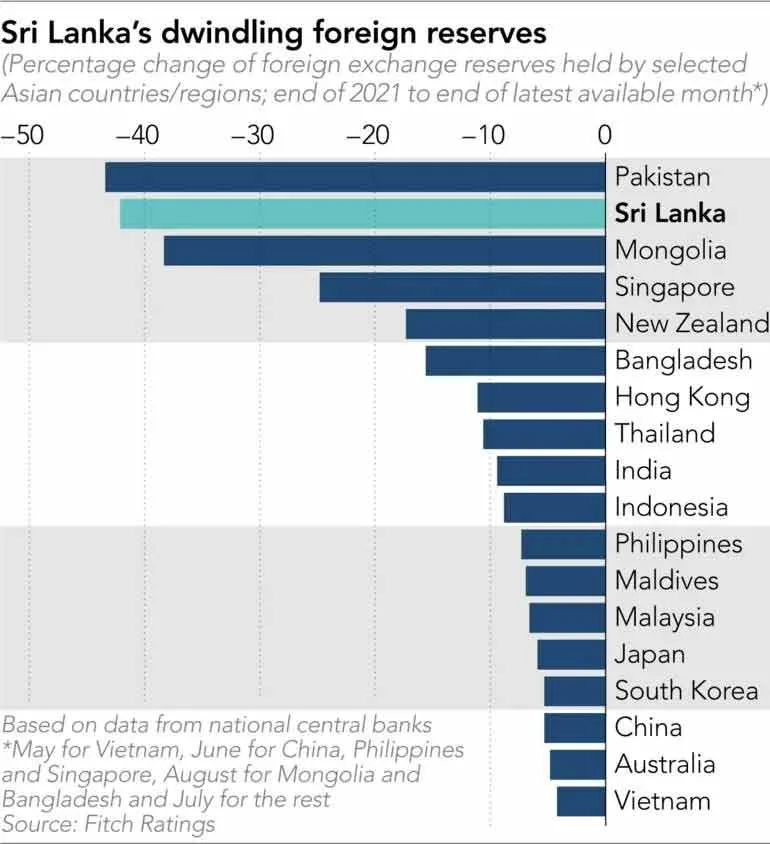 Attention is focused on Sri Lanka, which several analysts and diplomats refer to as the "canary in the coal mine," not just as a source of economic contagion infecting others in the region, but as a precedent setter for what terms they can wrangle from international lenders, particularly China, that are sure to be invoked in similar crises to come.
The causes of the economic distress are similar to all affected countries -- Sri Lanka had borrowed nearly $1.4 billion in 2020 and 2021 to bridge the COVID-19 pandemic when lockdowns and the end of tourism hit the economy hard. The loans came from Chinese and Indian state banks, though the country was shut off from capital markets because it was already deemed uncreditworthy by debt rating agencies.
The IMF and the World Bank had originally encouraged countries to borrow to tackle the pandemic. "First you worry about fighting the war, then you figure out how to pay for it," said Carmen Reinhart, former senior vice president and chief economist at the World Bank, speaking in 2020. However, Sri Lanka's status as a middle-income country means it is not eligible for international mechanisms for debt relief that wealthy nations, the IMF and the World Bank established in the wake of COVID-19 for poorer nations saddled with heavy foreign debts.
Meanwhile, the IMF has made its $2.9 billion bailout conditional on Sri Lanka negotiating with its creditors to voluntarily take a "haircut," or reduce the value of the debt they hold. But asking creditors to bear much of the pain means confronting China, which accounts for just under half of outstanding bilateral loans -- nearly $5 billion by the end of 2021. Attention is now focused on how China will work with Western creditors.
Attention is focused on Sri Lanka, which several analysts and diplomats refer to as the "canary in the coal mine," not just as a source of economic contagion infecting others in the region, but as a precedent setter for what terms they can wrangle from international lenders, particularly China, that are sure to be invoked in similar crises to come.
The causes of the economic distress are similar to all affected countries -- Sri Lanka had borrowed nearly $1.4 billion in 2020 and 2021 to bridge the COVID-19 pandemic when lockdowns and the end of tourism hit the economy hard. The loans came from Chinese and Indian state banks, though the country was shut off from capital markets because it was already deemed uncreditworthy by debt rating agencies.
The IMF and the World Bank had originally encouraged countries to borrow to tackle the pandemic. "First you worry about fighting the war, then you figure out how to pay for it," said Carmen Reinhart, former senior vice president and chief economist at the World Bank, speaking in 2020. However, Sri Lanka's status as a middle-income country means it is not eligible for international mechanisms for debt relief that wealthy nations, the IMF and the World Bank established in the wake of COVID-19 for poorer nations saddled with heavy foreign debts.
Meanwhile, the IMF has made its $2.9 billion bailout conditional on Sri Lanka negotiating with its creditors to voluntarily take a "haircut," or reduce the value of the debt they hold. But asking creditors to bear much of the pain means confronting China, which accounts for just under half of outstanding bilateral loans -- nearly $5 billion by the end of 2021. Attention is now focused on how China will work with Western creditors.
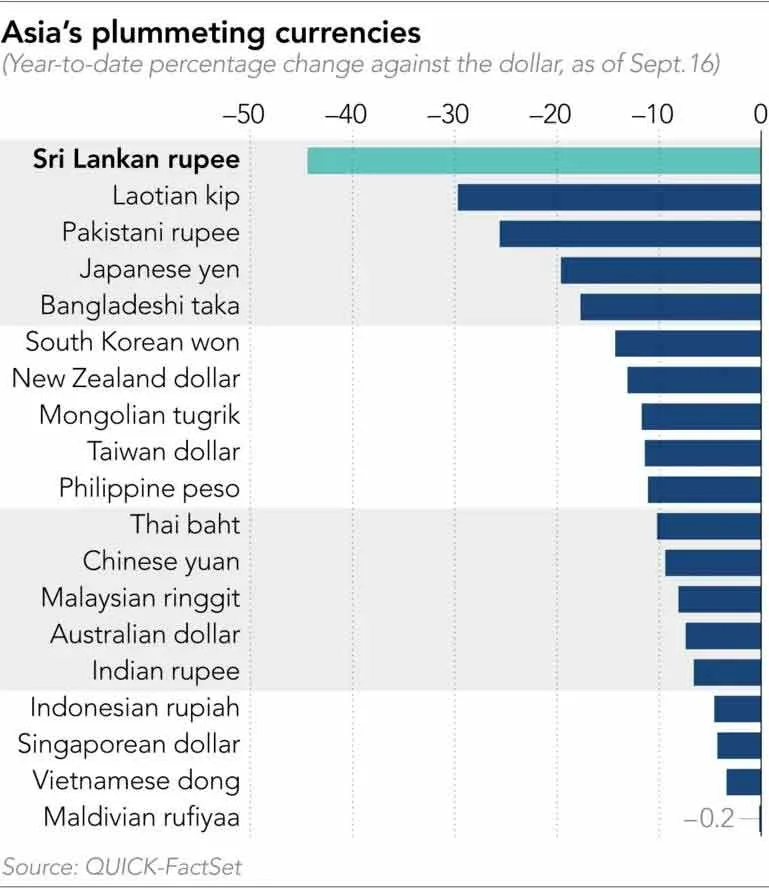 Beijing's stance has already appeared as a sticking point, given the mix of foreign lenders Sri Lanka is juggling as it strives for uniform haircut deals. The mix includes bilateral lenders like Japan, private creditors like BlackRock and JPMorgan Chase, and China, which has not signaled its interest to sit with private creditors to discuss a common haircut under the terms of "inter-creditor equity." In previous debt workouts, most recently an agreement to reschedule Ecuador's debts to China, Beijing has shown it prefers refinancing loans or extending their maturity to voluntary haircuts because these require booking losses on banks' balance sheets.
IMF officials have hinted that China may emerge as a spoiler in Sri Lanka's debt talks, torpedoing an agreement the government desperately needs between creditors as a precondition for the IMF bailout and condemning Sri Lanka to prolonged economic misery. If creditors are not willing to give assurances to Sri Lanka, it would "deepen the crisis and negatively affect Sri Lanka's debt repayment capacity," Peter Breuer, the IMF's mission chief, told reporters in early September at the end of a visit to the country. "We would urge all players to move expeditiously and swiftly so Sri Lanka can secure [an IMF bailout] to move forward."
[caption id="attachment_19574" align="alignleft" width="770"]
Beijing's stance has already appeared as a sticking point, given the mix of foreign lenders Sri Lanka is juggling as it strives for uniform haircut deals. The mix includes bilateral lenders like Japan, private creditors like BlackRock and JPMorgan Chase, and China, which has not signaled its interest to sit with private creditors to discuss a common haircut under the terms of "inter-creditor equity." In previous debt workouts, most recently an agreement to reschedule Ecuador's debts to China, Beijing has shown it prefers refinancing loans or extending their maturity to voluntary haircuts because these require booking losses on banks' balance sheets.
IMF officials have hinted that China may emerge as a spoiler in Sri Lanka's debt talks, torpedoing an agreement the government desperately needs between creditors as a precondition for the IMF bailout and condemning Sri Lanka to prolonged economic misery. If creditors are not willing to give assurances to Sri Lanka, it would "deepen the crisis and negatively affect Sri Lanka's debt repayment capacity," Peter Breuer, the IMF's mission chief, told reporters in early September at the end of a visit to the country. "We would urge all players to move expeditiously and swiftly so Sri Lanka can secure [an IMF bailout] to move forward."
[caption id="attachment_19574" align="alignleft" width="770"]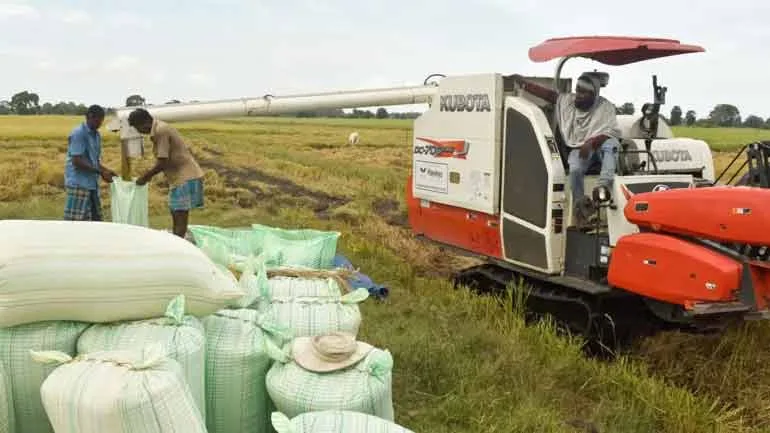 Farmers harvest rice in Kilinochchi, Sri Lanka, on July 28. The country is experiencing its worst economic crisis in decades. © AP[/caption]
As Sri Lanka's economic future hangs by a thread, so do the livelihoods of villages like Chandana Pokuna after the government's policies pushed them deeper into a debt spiral. "This household debt has become unsustainable and has become a major social issue," Karin Fernando of the Center for Poverty Analysis, a Colombo-based think tank, told Nikkei Asia. "But this is what our country is also doing."
Laos: Following in Sri Lanka's footsteps?
Across Asia, some of the same distress signals are flashing: petrol queues in Laos, protests against rising prices in Bangladesh, a plunging currency in Pakistan and urgent borrowing by the Maldives to make repayments on existing debts.
The explosion of Sri Lanka's debt-bomb has put countries like Laos on Asia's economic-crisis radar. The landlocked, impoverished Southeast Asian nation on China's southern border has been awash in the same kind of troubles that surfaced in Sri Lanka in the run-up to its default. Most glaring: the long lines of vehicles at gas stations in Vientiane, the capital, and in other towns, as fuel prices shot up and shortages worsened through the summer. Likewise: the spike in the prices of common consumer items, even ingredients to make bread. "I have never seen our lives hit like this before," complained a Vientiane resident who runs a shop selling coconuts and rice. "The prices of all my goods have gone up -- I need to survive."
Farmers harvest rice in Kilinochchi, Sri Lanka, on July 28. The country is experiencing its worst economic crisis in decades. © AP[/caption]
As Sri Lanka's economic future hangs by a thread, so do the livelihoods of villages like Chandana Pokuna after the government's policies pushed them deeper into a debt spiral. "This household debt has become unsustainable and has become a major social issue," Karin Fernando of the Center for Poverty Analysis, a Colombo-based think tank, told Nikkei Asia. "But this is what our country is also doing."
Laos: Following in Sri Lanka's footsteps?
Across Asia, some of the same distress signals are flashing: petrol queues in Laos, protests against rising prices in Bangladesh, a plunging currency in Pakistan and urgent borrowing by the Maldives to make repayments on existing debts.
The explosion of Sri Lanka's debt-bomb has put countries like Laos on Asia's economic-crisis radar. The landlocked, impoverished Southeast Asian nation on China's southern border has been awash in the same kind of troubles that surfaced in Sri Lanka in the run-up to its default. Most glaring: the long lines of vehicles at gas stations in Vientiane, the capital, and in other towns, as fuel prices shot up and shortages worsened through the summer. Likewise: the spike in the prices of common consumer items, even ingredients to make bread. "I have never seen our lives hit like this before," complained a Vientiane resident who runs a shop selling coconuts and rice. "The prices of all my goods have gone up -- I need to survive."
Trishaw drivers push their vehicles as they move up in line to buy fuel in Colombo, Sri Lanka, on July 29. © Reuters[/caption]
The plight of Chandana Pokuna is a window into a growing humanitarian crisis following Sri Lanka's worst economic meltdown since the country's independence in 1948. After default and devaluation in the spring and a political crisis that saw Rajapaksa step down in July, the $81bn economy is expected to contract by 8.7% in 2022, according to the IMF.
It is also the first, but probably not the last economic crisis in this region of Asia, where many middle- and low-income countries are teetering on the brink of collapse, brought on by a toxic combination of unsustainable COVID-19-era debt, economic misfortune, bad policies and heavy borrowing from China to fund ineffective infrastructure. A historically strong dollar has also exacerbated the crunch on foreign currency debt service payments. "Sri Lanka is not the only country in deep trouble. There will be more countries in Asia [who will face] similar trouble," said Murtaza Jafferjee, chairman of Advocata Institute, a Colombo-based policy think tank.
In country after country, foreign exchange reserves are plunging, currencies are wobbling and governments -- and their creditors -- are panicking. The IMF estimates that at least a third of emerging markets and about 60 least developed countries in Asia, African and South America are grappling with Sri Lanka-like "debt distress." Laos, in Southeast Asia, and Pakistan, in South Asia, are among the Asian countries that are closer to the precipice.
Attention is focused on Sri Lanka, which several analysts and diplomats refer to as the "canary in the coal mine," not just as a source of economic contagion infecting others in the region, but as a precedent setter for what terms they can wrangle from international lenders, particularly China, that are sure to be invoked in similar crises to come.
The causes of the economic distress are similar to all affected countries -- Sri Lanka had borrowed nearly $1.4 billion in 2020 and 2021 to bridge the COVID-19 pandemic when lockdowns and the end of tourism hit the economy hard. The loans came from Chinese and Indian state banks, though the country was shut off from capital markets because it was already deemed uncreditworthy by debt rating agencies.
The IMF and the World Bank had originally encouraged countries to borrow to tackle the pandemic. "First you worry about fighting the war, then you figure out how to pay for it," said Carmen Reinhart, former senior vice president and chief economist at the World Bank, speaking in 2020. However, Sri Lanka's status as a middle-income country means it is not eligible for international mechanisms for debt relief that wealthy nations, the IMF and the World Bank established in the wake of COVID-19 for poorer nations saddled with heavy foreign debts.
Meanwhile, the IMF has made its $2.9 billion bailout conditional on Sri Lanka negotiating with its creditors to voluntarily take a "haircut," or reduce the value of the debt they hold. But asking creditors to bear much of the pain means confronting China, which accounts for just under half of outstanding bilateral loans -- nearly $5 billion by the end of 2021. Attention is now focused on how China will work with Western creditors.
Beijing's stance has already appeared as a sticking point, given the mix of foreign lenders Sri Lanka is juggling as it strives for uniform haircut deals. The mix includes bilateral lenders like Japan, private creditors like BlackRock and JPMorgan Chase, and China, which has not signaled its interest to sit with private creditors to discuss a common haircut under the terms of "inter-creditor equity." In previous debt workouts, most recently an agreement to reschedule Ecuador's debts to China, Beijing has shown it prefers refinancing loans or extending their maturity to voluntary haircuts because these require booking losses on banks' balance sheets.
IMF officials have hinted that China may emerge as a spoiler in Sri Lanka's debt talks, torpedoing an agreement the government desperately needs between creditors as a precondition for the IMF bailout and condemning Sri Lanka to prolonged economic misery. If creditors are not willing to give assurances to Sri Lanka, it would "deepen the crisis and negatively affect Sri Lanka's debt repayment capacity," Peter Breuer, the IMF's mission chief, told reporters in early September at the end of a visit to the country. "We would urge all players to move expeditiously and swiftly so Sri Lanka can secure [an IMF bailout] to move forward."
[caption id="attachment_19574" align="alignleft" width="770"] Farmers harvest rice in Kilinochchi, Sri Lanka, on July 28. The country is experiencing its worst economic crisis in decades. © AP[/caption]
As Sri Lanka's economic future hangs by a thread, so do the livelihoods of villages like Chandana Pokuna after the government's policies pushed them deeper into a debt spiral. "This household debt has become unsustainable and has become a major social issue," Karin Fernando of the Center for Poverty Analysis, a Colombo-based think tank, told Nikkei Asia. "But this is what our country is also doing."
Laos: Following in Sri Lanka's footsteps?
Across Asia, some of the same distress signals are flashing: petrol queues in Laos, protests against rising prices in Bangladesh, a plunging currency in Pakistan and urgent borrowing by the Maldives to make repayments on existing debts.
The explosion of Sri Lanka's debt-bomb has put countries like Laos on Asia's economic-crisis radar. The landlocked, impoverished Southeast Asian nation on China's southern border has been awash in the same kind of troubles that surfaced in Sri Lanka in the run-up to its default. Most glaring: the long lines of vehicles at gas stations in Vientiane, the capital, and in other towns, as fuel prices shot up and shortages worsened through the summer. Likewise: the spike in the prices of common consumer items, even ingredients to make bread. "I have never seen our lives hit like this before," complained a Vientiane resident who runs a shop selling coconuts and rice. "The prices of all my goods have gone up -- I need to survive."
By mid-2022, inflation in Laos, home to 7.5 million people, had risen to a record 25% year on year, gasoline prices had jumped to 107.1% from the previous year and the value of the kip, the local currency, had plummeted -- trading at 19,000 to the U.S. dollar in the black market in September. A year ago the official exchange rate was 9,400.
To get by, thousands of Laotians have been streaming across the Mekong River to neighboring Thailand. More vehicles with Laotian license plates fill up the usually quiet streets in Nong Khai, a Thai town on the western banks of the Mekong, which marks the international border.
Laos' national balance sheet shows alarming parallels with predefault Sri Lanka's. Foreign exchange reserves in the $18 billion economy hovered at $1.3 billion, sufficient to pay for 2.2 months of imports but also needed to service its annual foreign debt bill of $1.3 billion, more than half of which goes toward Chinese loans.
"High fiscal deficits and high current-account deficits have made Laos vulnerable, pushing it towards a tipping point," said Jeremy Zook, Hong Kong-based director of Asia sovereign ratings at Fitch Ratings and the lead analyst for Laos. In June, global ratings agency Moody's Investors Service further downgraded Laos' sovereign rating into junk territory, reflecting a similar downgrade by Fitch in August 2021. Both ratings agencies had done likewise in Sri Lanka since 2020, effectively shutting out the South Asian nation from borrowing in international capital markets.
In Laos, citizens place much of the blame on China. "The economic situation has worsened because we keep asking for Chinese loans," a female office worker in Vientiane told Nikkei in July, after looking around to ensure it was safe to talk. "The government is lazy and only looks to China without finding our own solutions."
 Fitch Ratings said in late August that it will be withdrawing ratings for Laos, the latest indicator of the country's unstable finances. It comes a year after Fitch downgraded Laos' ratings in August 2021 to CCC and noted thereafter that "there is a possibility of default."
Laos and Sri Lanka illustrate how the old order of foreign development lending and balance of payments finance has shifted. Previously, it was the World Bank that lent money for development and infrastructure projects and the IMF that stepped in with injections of cash to bridge balance of payment problems.
But China is now doing both in greater measure: being the development banker for infrastructure projects and the lender of last resort when its borrowers need to top up dwindling foreign exchange reserves.
Laos' government has shown little interest in going to the IMF for a bailout and remains focused on China, rather than the IMF, as a solution maker of last resort. It is hoping "to avoid the fund's conditions of transparency when looking into external debt, which would require opening the books on Chinese lending," a Southeast Asian diplomatic source said. "Laos prefers China as its lender of last resort for bailouts, not the IMF."
Fitch Ratings said in late August that it will be withdrawing ratings for Laos, the latest indicator of the country's unstable finances. It comes a year after Fitch downgraded Laos' ratings in August 2021 to CCC and noted thereafter that "there is a possibility of default."
Laos and Sri Lanka illustrate how the old order of foreign development lending and balance of payments finance has shifted. Previously, it was the World Bank that lent money for development and infrastructure projects and the IMF that stepped in with injections of cash to bridge balance of payment problems.
But China is now doing both in greater measure: being the development banker for infrastructure projects and the lender of last resort when its borrowers need to top up dwindling foreign exchange reserves.
Laos' government has shown little interest in going to the IMF for a bailout and remains focused on China, rather than the IMF, as a solution maker of last resort. It is hoping "to avoid the fund's conditions of transparency when looking into external debt, which would require opening the books on Chinese lending," a Southeast Asian diplomatic source said. "Laos prefers China as its lender of last resort for bailouts, not the IMF."
 The International Monetary Fund, which encouraged companies to borrow large amounts to fight the COVID-19 pandemic, now estimates that over a third of emerging markets are in "debt distress." © Reuters
In 2021, the People's Bank of China, China's central bank, offered an emergency loan for an estimated $300 million to the Laotian central bank to boost its foreign reserves, according to AidData, a research lab at William & Mary college in the U.S., which tracks Chinese lending globally. "China has taken the extraordinary measure to ensure that the Laotian government is sufficiently liquid to service at least some of its outstanding debts," Bradley Parks, executive director at AidData, told Nikkei.
The Laotian foreign ministry did not respond to a request for comment.
Alarm bells in Bangladesh
In Bangladesh, which has a freer political environment, the specter of an economic crisis first rose over gasoline stations. In the middle of this year, the Bangladeshi government significantly raised fuel prices to ease the strain on its dwindling foreign reserves, which were down to $38.91 billion, enough for five months of imports, from $45.5 billion a year earlier.
The fuel price increase sent the costs of essentials skyrocketing and led to an explosion of countrywide protests. "Prices of all vegetables and lentils have increased by at least 30% to 50%," said Arafat Nayeem, an executive of a digital marketing company whose monthly wage is $450. "Traders say they need to spend more for transport now. ... Even rice is more costly -- how can we survive?"
But the government is in a bind when it comes to lowering fuel prices -- its shortage of dollars is beginning to resemble Sri Lanka's. The government in July sought IMF help with its balance of payment crunch as a current-account deficit widened. Thankfully for the government, its external debt is relatively low, at $93.2 billion as of March, a modest 29% of GDP and well within the recommended maximum set by the IMF.
The twin policy measures -- austerity and approaching multilateral institutions for financial support -- are actually "welcome signs, not troubling ones," Akter Mahmood, a Washington D.C.-based economist said. "It shows [that the] Bangladesh government is being prudent ... [because] the IMF [offers] relatively less expensive sources of foreign capital and it may be prudent to borrow from them during challenging times."
The International Monetary Fund, which encouraged companies to borrow large amounts to fight the COVID-19 pandemic, now estimates that over a third of emerging markets are in "debt distress." © Reuters
In 2021, the People's Bank of China, China's central bank, offered an emergency loan for an estimated $300 million to the Laotian central bank to boost its foreign reserves, according to AidData, a research lab at William & Mary college in the U.S., which tracks Chinese lending globally. "China has taken the extraordinary measure to ensure that the Laotian government is sufficiently liquid to service at least some of its outstanding debts," Bradley Parks, executive director at AidData, told Nikkei.
The Laotian foreign ministry did not respond to a request for comment.
Alarm bells in Bangladesh
In Bangladesh, which has a freer political environment, the specter of an economic crisis first rose over gasoline stations. In the middle of this year, the Bangladeshi government significantly raised fuel prices to ease the strain on its dwindling foreign reserves, which were down to $38.91 billion, enough for five months of imports, from $45.5 billion a year earlier.
The fuel price increase sent the costs of essentials skyrocketing and led to an explosion of countrywide protests. "Prices of all vegetables and lentils have increased by at least 30% to 50%," said Arafat Nayeem, an executive of a digital marketing company whose monthly wage is $450. "Traders say they need to spend more for transport now. ... Even rice is more costly -- how can we survive?"
But the government is in a bind when it comes to lowering fuel prices -- its shortage of dollars is beginning to resemble Sri Lanka's. The government in July sought IMF help with its balance of payment crunch as a current-account deficit widened. Thankfully for the government, its external debt is relatively low, at $93.2 billion as of March, a modest 29% of GDP and well within the recommended maximum set by the IMF.
The twin policy measures -- austerity and approaching multilateral institutions for financial support -- are actually "welcome signs, not troubling ones," Akter Mahmood, a Washington D.C.-based economist said. "It shows [that the] Bangladesh government is being prudent ... [because] the IMF [offers] relatively less expensive sources of foreign capital and it may be prudent to borrow from them during challenging times."
 Bangladeshi motorbike riders and activists hold placards and torches as they protest fuel price increases in the capital of Dhaka on Aug. 6. © AP
The Maldives, Sri Lanka's southwestern neighbor, has scrambled, likewise, after the IMF warned in 2020 that the overall risk of debt distress was high. The $5 billion economy, whose foreign reserves averaged $892 million last year, has to service $250 million in foreign debts this year, $362 million in 2023 and $238 million in 2024, according to government statistics. "Given that the growth of reserves has trended slightly downward for the last couple of years, these numbers indicate that external debt repayment is likely to be challenging," Fazeel Najeeb, former governor of the Maldives Monetary Authority, the central bank, told Nikkei. "A more serious situation is likely to arise in 2026, as a total of around $600 million comes due."
The tourism-dependent economy, which took a blow from the impact of COVID-19, in its 2022 budget has laid out a blueprint for "sovereign bond issuances as one of the financing sources for the year," revealed a recent study by the Baani Center, a new international policy think tank based in Male, the capital. "It is essential that these issuances go forward as planned ... to avoid a scenario where the government is unable to meet its debt obligations."
Pakistan is also teetering on the edge of an economic meltdown, with much of its agricultural land and billions of dollars worth of infrastructure destroyed by recent flooding. Inflation hovers at 38% and the rupee has fallen 25% since the start of the year.
Bangladeshi motorbike riders and activists hold placards and torches as they protest fuel price increases in the capital of Dhaka on Aug. 6. © AP
The Maldives, Sri Lanka's southwestern neighbor, has scrambled, likewise, after the IMF warned in 2020 that the overall risk of debt distress was high. The $5 billion economy, whose foreign reserves averaged $892 million last year, has to service $250 million in foreign debts this year, $362 million in 2023 and $238 million in 2024, according to government statistics. "Given that the growth of reserves has trended slightly downward for the last couple of years, these numbers indicate that external debt repayment is likely to be challenging," Fazeel Najeeb, former governor of the Maldives Monetary Authority, the central bank, told Nikkei. "A more serious situation is likely to arise in 2026, as a total of around $600 million comes due."
The tourism-dependent economy, which took a blow from the impact of COVID-19, in its 2022 budget has laid out a blueprint for "sovereign bond issuances as one of the financing sources for the year," revealed a recent study by the Baani Center, a new international policy think tank based in Male, the capital. "It is essential that these issuances go forward as planned ... to avoid a scenario where the government is unable to meet its debt obligations."
Pakistan is also teetering on the edge of an economic meltdown, with much of its agricultural land and billions of dollars worth of infrastructure destroyed by recent flooding. Inflation hovers at 38% and the rupee has fallen 25% since the start of the year.
 Farmers collect apples from retreating floodwaters at an orchard in Hanna Urak, near Quetta, Pakistan, on Sept. 17. © AP
Even before the floods peaked, foreign exchange reserves had plummeted over 40% compared to the end of 2021, according to Fitch Ratings. Meanwhile the IMF has just approved a $1.1 billion bailout as part of its $6.6 billion Extended Fund Facility, following an "extraordinary" call for help to a senior U.S. government official by Pakistan's powerful army chief, Gen. Qamar Javed Bajwa during the summer.
In June this year, China signed a $2.3 billion loan with Pakistan to build its depleting reserves. "China and Pakistan are all-weather strategic cooperative partners," Chinese foreign ministry spokesman Zhao Lijian told a media briefing in Beijing soon after. Islamabad might also be able to count on its allies in the Islamic world -- Saudi Arabia, Qatar and the U.A.E. -- for help.
Will China take the hit?
Given the importance of the IMF bailout, Sri Lanka is hoping Beijing agrees with other lenders to shoulder an equal share of losses on the defaulted loans. The country thus offers a potential template for emerging markets and developing countries for how to bargain with China when it comes to bad debt. So far China appears to be holding steadfast. "More efficient debt restructuring mechanisms are needed amid growing debt concerns," an IMF official in Washington told Nikkei, without naming China.
"Many countries with unsustainable debts will be looking at how China will treat debt restructuring in Sri Lanka," said Anushka Wijesinha, co-founder of the Center for a Smart Future, a Colombo-based public policy think tank. "The outcome of the creditor negotiations will be shaped by China deciding if it is going to settle for the same treatment as everyone else."
Local economists who have crunched the numbers estimate that total Chinese lending -- bilateral assistance, project lending and balance of payment support -- from 2001 to 2021 came to $9.95 billion. Chinese loans bankrolled an infrastructure building spree in post-conflict Sri Lanka, under President Mahinda Rajapaksa, Gotabaya's elder brother, financing 37% of the projects for an estimated $5.8 billion between 2010 till 2016, according to Verite Research, a Colombo-based think tank. Some of these ended up as white elephants, such as the empty Mattala Rajapaksa International Airport on the southern coast.
Farmers collect apples from retreating floodwaters at an orchard in Hanna Urak, near Quetta, Pakistan, on Sept. 17. © AP
Even before the floods peaked, foreign exchange reserves had plummeted over 40% compared to the end of 2021, according to Fitch Ratings. Meanwhile the IMF has just approved a $1.1 billion bailout as part of its $6.6 billion Extended Fund Facility, following an "extraordinary" call for help to a senior U.S. government official by Pakistan's powerful army chief, Gen. Qamar Javed Bajwa during the summer.
In June this year, China signed a $2.3 billion loan with Pakistan to build its depleting reserves. "China and Pakistan are all-weather strategic cooperative partners," Chinese foreign ministry spokesman Zhao Lijian told a media briefing in Beijing soon after. Islamabad might also be able to count on its allies in the Islamic world -- Saudi Arabia, Qatar and the U.A.E. -- for help.
Will China take the hit?
Given the importance of the IMF bailout, Sri Lanka is hoping Beijing agrees with other lenders to shoulder an equal share of losses on the defaulted loans. The country thus offers a potential template for emerging markets and developing countries for how to bargain with China when it comes to bad debt. So far China appears to be holding steadfast. "More efficient debt restructuring mechanisms are needed amid growing debt concerns," an IMF official in Washington told Nikkei, without naming China.
"Many countries with unsustainable debts will be looking at how China will treat debt restructuring in Sri Lanka," said Anushka Wijesinha, co-founder of the Center for a Smart Future, a Colombo-based public policy think tank. "The outcome of the creditor negotiations will be shaped by China deciding if it is going to settle for the same treatment as everyone else."
Local economists who have crunched the numbers estimate that total Chinese lending -- bilateral assistance, project lending and balance of payment support -- from 2001 to 2021 came to $9.95 billion. Chinese loans bankrolled an infrastructure building spree in post-conflict Sri Lanka, under President Mahinda Rajapaksa, Gotabaya's elder brother, financing 37% of the projects for an estimated $5.8 billion between 2010 till 2016, according to Verite Research, a Colombo-based think tank. Some of these ended up as white elephants, such as the empty Mattala Rajapaksa International Airport on the southern coast.
 Former Sri Lankan President Gotabaya Rajapaksa speaks at the COP26 climate change conference in Glasgow, Scotland, in November 2021. (File photo by Reuters)
The problem for China is the precedent a big "haircut" would set. If China agrees to join a discussion of all Sri Lanka's creditors and accept the same losses as private creditors, then Chinese policy banks like China Development Bank and the Export Import Bank of China, who have lent billions of dollars to countries in the region, would come under pressure to offer similar terms to other countries. This is something Beijing is loath to allow.
"In all the countries where it provided debt relief, China has been reluctant to provide relief in the form of haircuts -- they mostly want to roll over the loans into new ones with slightly lower interest rates and longer maturities," a London-based emerging markets investor told Nikkei. "With so many countries in [debt crises], they might be pressed to take a harder stance, else everyone will go after them."
Sri Lanka's public debt stood at 114% of GDP, and 47% of it was in the form of foreign loans.
Former Sri Lankan President Gotabaya Rajapaksa speaks at the COP26 climate change conference in Glasgow, Scotland, in November 2021. (File photo by Reuters)
The problem for China is the precedent a big "haircut" would set. If China agrees to join a discussion of all Sri Lanka's creditors and accept the same losses as private creditors, then Chinese policy banks like China Development Bank and the Export Import Bank of China, who have lent billions of dollars to countries in the region, would come under pressure to offer similar terms to other countries. This is something Beijing is loath to allow.
"In all the countries where it provided debt relief, China has been reluctant to provide relief in the form of haircuts -- they mostly want to roll over the loans into new ones with slightly lower interest rates and longer maturities," a London-based emerging markets investor told Nikkei. "With so many countries in [debt crises], they might be pressed to take a harder stance, else everyone will go after them."
Sri Lanka's public debt stood at 114% of GDP, and 47% of it was in the form of foreign loans.
 Facing down powerful creditors has pushed Sri Lanka into uncharted financial waters. "From now on, Sri Lanka will see the complexity in dealing with creditor equity," said Manjuka Fernandopulle, a Sri Lankan commercial lawyer advising the foreign ISB holders.
Adding to Sri Lanka's headaches are complicated geopolitics. Colombo's creditors: China, India, Japan and the U.S. are locked in a contest for dominance in the Indian Ocean. "Sri Lanka's debt issue is now a geopolitical issue," George Cooke, a former Sri Lankan diplomat, told Nikkei. "It cannot afford to upset any of its foreign allies who have helped the country financially."
Asian diplomatic sources in Colombo say a U.S.-leaning bloc that includes India, Japan and other Western governments has pressured the new government under President Ranil Wickremesinghe not to give in to China's favored route of debt relief -- refinancing through new loans or deferring payments -- and insist on a haircut like other foreign lenders.
The diplomatic test of loyalty is poised to become "more prevalent as smaller, middle-income countries struggle to update their debt management practices and face increased concessional lending in an environment that is overall more challenging due to the pandemic and global inflation," said Nilanthi Samaranayake, director of strategy and policy analysis program at the Washington-based think tank CNA. "In addition, small states must continue to navigate pressures from larger powers."
Facing down powerful creditors has pushed Sri Lanka into uncharted financial waters. "From now on, Sri Lanka will see the complexity in dealing with creditor equity," said Manjuka Fernandopulle, a Sri Lankan commercial lawyer advising the foreign ISB holders.
Adding to Sri Lanka's headaches are complicated geopolitics. Colombo's creditors: China, India, Japan and the U.S. are locked in a contest for dominance in the Indian Ocean. "Sri Lanka's debt issue is now a geopolitical issue," George Cooke, a former Sri Lankan diplomat, told Nikkei. "It cannot afford to upset any of its foreign allies who have helped the country financially."
Asian diplomatic sources in Colombo say a U.S.-leaning bloc that includes India, Japan and other Western governments has pressured the new government under President Ranil Wickremesinghe not to give in to China's favored route of debt relief -- refinancing through new loans or deferring payments -- and insist on a haircut like other foreign lenders.
The diplomatic test of loyalty is poised to become "more prevalent as smaller, middle-income countries struggle to update their debt management practices and face increased concessional lending in an environment that is overall more challenging due to the pandemic and global inflation," said Nilanthi Samaranayake, director of strategy and policy analysis program at the Washington-based think tank CNA. "In addition, small states must continue to navigate pressures from larger powers."
 Any delays to the IMF's $2.9 billion bailout caused by dissent among the creditors would prolong the agony of ordinary people and risk further political turmoil only months after Colombo was rocked by unprecedented political convulsions that resulted in Rajapaksa stepping down.
To fill the vacuum, Wickremesinghe, a 73-year-old political veteran, was selected by parliament in mid-July to pick up the pieces and finish the remaining two-and-a-half years of Rajapaksa's term. That unprecedented transition marked a rare retreat by the Rajapaksas, a powerful dynasty that has dominated politics for nearly two decades. The protesters accused the dynasty -- which had produced two presidents, a prime minister, a finance minister and cabinet ministers -- of bankrupting the economy and destroying their livelihoods. They lashed out at Rajapaksas' alleged links to corruption purportedly running into millions of dollars. "Give our stolen money back" was a regular refrain.
Two United Nations agencies revealed in September that nearly a third of the population -- 6.3 million people in the country of 22 million -- are "facing moderate to severe acute food insecurity and their situation is expected to worsen." Without aid, acute hunger could stretch into February, warned the Food and Agriculture Organization and the World Food Program in their combined study.
Any delays to the IMF's $2.9 billion bailout caused by dissent among the creditors would prolong the agony of ordinary people and risk further political turmoil only months after Colombo was rocked by unprecedented political convulsions that resulted in Rajapaksa stepping down.
To fill the vacuum, Wickremesinghe, a 73-year-old political veteran, was selected by parliament in mid-July to pick up the pieces and finish the remaining two-and-a-half years of Rajapaksa's term. That unprecedented transition marked a rare retreat by the Rajapaksas, a powerful dynasty that has dominated politics for nearly two decades. The protesters accused the dynasty -- which had produced two presidents, a prime minister, a finance minister and cabinet ministers -- of bankrupting the economy and destroying their livelihoods. They lashed out at Rajapaksas' alleged links to corruption purportedly running into millions of dollars. "Give our stolen money back" was a regular refrain.
Two United Nations agencies revealed in September that nearly a third of the population -- 6.3 million people in the country of 22 million -- are "facing moderate to severe acute food insecurity and their situation is expected to worsen." Without aid, acute hunger could stretch into February, warned the Food and Agriculture Organization and the World Food Program in their combined study.
 Demonstrators protest inside the premises of Sri Lanka's Presidential Secretariat, in Colombo, after former President Gotabaya Rajapaksa fled on July 9. © Reuters
The Department of Census and Statistics served more bitter news in September: GDP in the second quarter contracted 8.4% year on year.
Sri Lanka's currency has also collapsed. It now takes 360 rupees to buy $1, up from 203 rupees at the beginning of this year.
Food inflation in August took a year-on-year leap of 84.6%, up from 82.5% in July, according to the Central Bank of Sri Lanka. One egg, a cheap source of protein, now costs the equivalent of about 17 cents -- a prohibitive price for many lower-income households.
Bankrupt Sri Lanka's predicament -- hounded by foreign lenders and pinned in by big global powers treating the Indian Ocean as a chess board -- has a parallel in remote Chandana Pokuna, where villagers feel they have been ensnared by a debt trap.
"We have sold all our jewelry and other items in the house, but the debt collectors still come for the rest, threatening to take us to court," said 57-year-old Irangani Siriyalatha, her face a blank stare. "It may be better to be sent to jail -- at least we will be freed from the knocks of the debt collectors."
Additional reporting by Faisal Mahmud in Dhaka, Mitsuru Obe in Tokyo and Adnan Aamir in Islamabad.
Demonstrators protest inside the premises of Sri Lanka's Presidential Secretariat, in Colombo, after former President Gotabaya Rajapaksa fled on July 9. © Reuters
The Department of Census and Statistics served more bitter news in September: GDP in the second quarter contracted 8.4% year on year.
Sri Lanka's currency has also collapsed. It now takes 360 rupees to buy $1, up from 203 rupees at the beginning of this year.
Food inflation in August took a year-on-year leap of 84.6%, up from 82.5% in July, according to the Central Bank of Sri Lanka. One egg, a cheap source of protein, now costs the equivalent of about 17 cents -- a prohibitive price for many lower-income households.
Bankrupt Sri Lanka's predicament -- hounded by foreign lenders and pinned in by big global powers treating the Indian Ocean as a chess board -- has a parallel in remote Chandana Pokuna, where villagers feel they have been ensnared by a debt trap.
"We have sold all our jewelry and other items in the house, but the debt collectors still come for the rest, threatening to take us to court," said 57-year-old Irangani Siriyalatha, her face a blank stare. "It may be better to be sent to jail -- at least we will be freed from the knocks of the debt collectors."
Additional reporting by Faisal Mahmud in Dhaka, Mitsuru Obe in Tokyo and Adnan Aamir in Islamabad.
The International Monetary Fund, which encouraged companies to borrow large amounts to fight the COVID-19 pandemic, now estimates that over a third of emerging markets are in "debt distress." © Reuters Bangladeshi motorbike riders and activists hold placards and torches as they protest fuel price increases in the capital of Dhaka on Aug. 6. © AP Farmers collect apples from retreating floodwaters at an orchard in Hanna Urak, near Quetta, Pakistan, on Sept. 17. © AP Former Sri Lankan President Gotabaya Rajapaksa speaks at the COP26 climate change conference in Glasgow, Scotland, in November 2021. (File photo by Reuters) Demonstrators protest inside the premises of Sri Lanka's Presidential Secretariat, in Colombo, after former President Gotabaya Rajapaksa fled on July 9. © Reuters RELATED NEWS
View all

Current Affairs
Sri Lankan Presidential pardons- the good and the bad
Sep 11, 2026
Current Affairs
The pros and cons of joining BRICS- the dilemma of Pakistan and Bangladesh
Sep 09, 2026
Current Affairs
Disaster in Nepal gets embroiled in geopolitics.
Sep 08, 2026
Current Affairs
Why Mecca Pact, and what does it imply for its members, Israel and India?
Aug 18, 2026