Current Affairs
Back to square one? - Netanyahu revises Trump’s plan to suit Israel
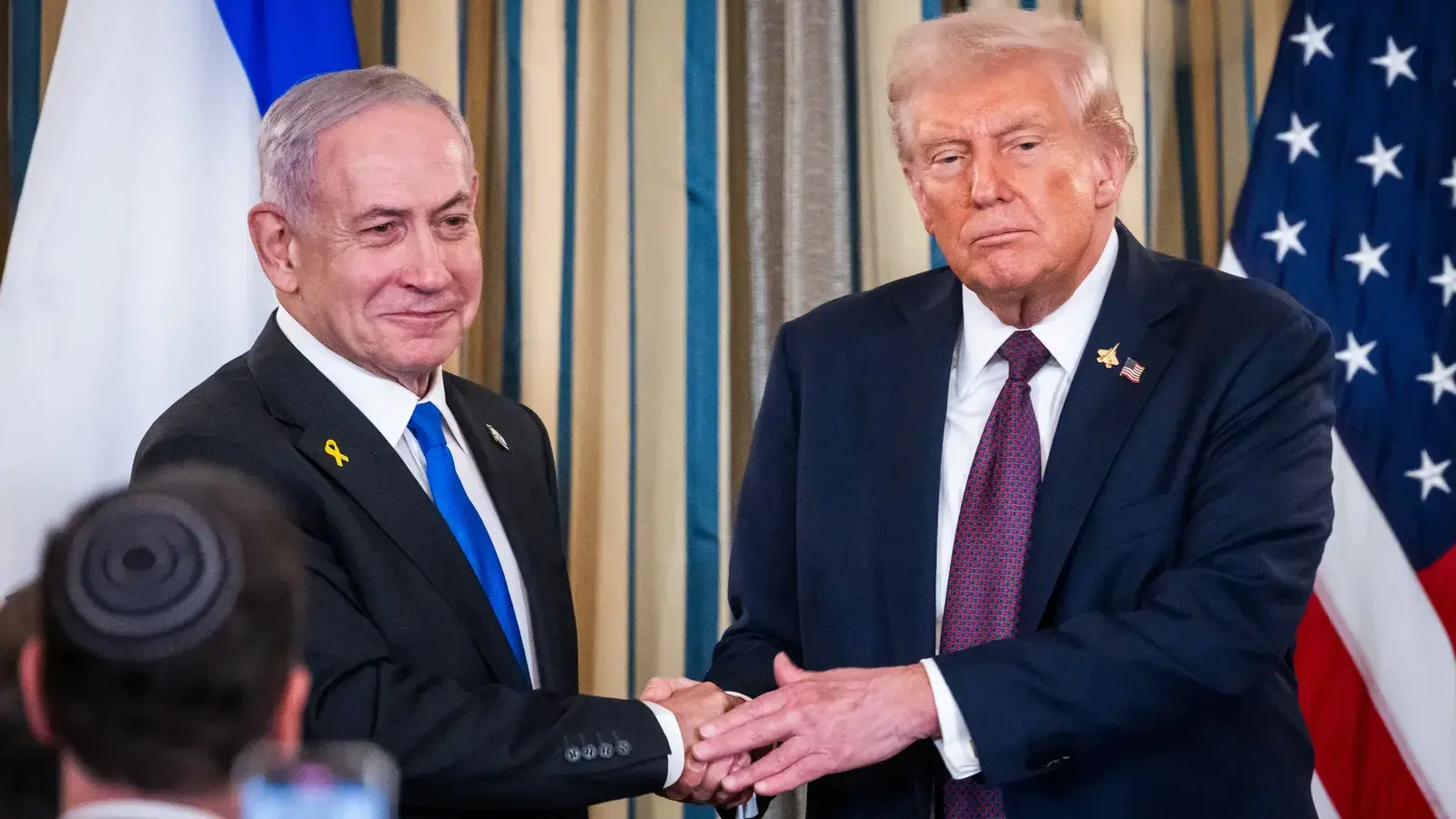
Before his meeting with Trump on Monday, Netanyahu met Steve Witkoff and Jared Kushner and got Trump’s plan revised to suit Israel and put the Arabs in a spot.
By P.K. Balachandran
Colombo, October 2 - The Gaza peace plan that US President Donald Trump discussed on Monday with Israeli Prime Minister Benjamin Netanyahu was significantly different from the one that Trump gave to the Arab and Muslim ministers on September 23.
According to Axios, Netanyahu and his confidante Ron Dermer met US negotiator Steve Witkoff and Trumo’s son in law, Jared Kushner, for six hours on Sunday, and got Israel’s tough conditions written into the plan.
The new proposal set fresh conditions for Israel's withdrawal from Gaza. It ties Israel's withdrawal to the progress of disarming Hamas and gives Israel a veto over the process.
Officials from Saudi Arabia, Egypt, Jordan and Turkey were furious over the changes, Axios said.
As per the new draft, even if all conditions are met and the envisaged three phases of withdrawal are completed, Israeli forces will remain within a security perimeter inside Gaza until Gaza is properly secured from any resurgent terror threat.
That could mean the indefinite presence of the Israeli Defence Force (IDF) in Gaza, given Israel’s past behaviour.
Critical Role for IDF
According to Times of Israel, the revised draft indicates that Israeli troops will be able to remain in most parts of the Gaza Strip even after the first pullback in preparation for all of the hostages to be released.
“They will then be able to remain in those positions until the International Stabilisation Force (ISF) of Arab and Muslim countries is prepared to deploy and fully operate to disarm Hamas. Even after the second phase of the withdrawal, the IDF will remain in over a third of the Strip, the map indicates.”
“The third withdrawal will clear the final troops out of Gaza, but the map shows that a security buffer zone will be established along the perimeter of the entire Strip to mitigate the threat of another October 7-like invasion.”
“The IDF will withdraw based on standards, milestones, and timeframes linked to demilitarisation that will be agreed upon between the IDF, ISF, the guarantors, and the US.”
Times of Israel further said that whereas last week’s version granted amnesty to ‘Hamas members who commit to peaceful coexistence’, the plan published Monday adds that those members will have to decommission their weapons.”
The updated version goes into much greater detail on the issue, stating that “all military, terror, and offensive infrastructure, including tunnels and weapon production facilities, will be destroyed and not rebuilt.”
Further, “There will be a process of demilitarisation of Gaza under the supervision of independent monitors, which will include placing weapons permanently beyond use through an agreed process of de-commissioning and supported by an internationally funded buy-back and reintegration program, all verified by the independent monitors,” the new plan said.
Most importantly, the US and Israel have informally retained the option of resuming the war.
Trump told Netanyahu, "If Hamas rejects the deal, Bibi, you will have our full backing to do what you have to do."
Angry Arabs
Arab officials who spoke to AP expressed frustration with the White House’s 20 points. “This is not what we agreed on,” said one. “This is the Netanyahu plan.”
Qatar, a key mediator, said that further talks were needed over details of Trump’s peace plan. But it hoped that everyone would look at the matter constructively and make use of the momentum to end the war in Gaza.
Qatari mediators tried to convince the Trump administration not to release the detailed plan on Monday due to Arab and Muslim objections. But White House released it anyway.
Forced Arab and Muslim Statement
The White House also pushed the Arab and Muslim countries to support the plan. As desired by Trump, Arab and Muslim countries issued a joint statement from Qatar supporting Trump’s plan.
The joint statement said – “The Foreign Ministers of the State of Qatar, the Hashemite Kingdom of Jordan, the United Arab Emirates, the Republic of Indonesia, the Islamic Republic of Pakistan, the Republic of Türkiye, the Kingdom of Saudi Arabia, the Arab Republic of Egypt welcome President Donald J Trump’s leadership and his sincere efforts to end the war in Gaza, and assert their confidence in his ability to find a path to peace.”
“They emphasize the importance of the partnership with the United States in securing peace in the region. Along these lines, the ministers welcome the announcement by President Trump regarding his proposal to end the war, rebuild Gaza, prevent the displacement of the Palestinian people and advance a comprehensive peace, as well as his announcement that he will not allow the annexation of the West Bank.”
“ The ministers affirm their readiness to engage positively and constructively with the United States and the parties toward finalizing the agreement and ensuring its implementation, in a manner that ensures peace, security, and stability for the peoples of the region. “
“They reaffirm their joint commitment to work with the United States to end the war in Gaza through a comprehensive deal that ensures unrestricted delivery of sufficient humanitarian aid to Gaza, no displacement of the Palestinians, the release of hostages, a security mechanism that guarantees the security of all sides, full Israeli withdrawal, rebuilds Gaza and creates a path for a just peace on the basis of the two state solution, under which Gaza is fully integrated with the West Bank in a Palestinian state in accordance with international law as key to achieving regional stability and security.”
Hamas
While Trump and Netanyahu were discussing the plan “on camera” at the White House, Qatari Prime Minister Mohammed bin Abdulrahman Al Thani was presenting it to Hamas in Doha, Axios said.
Netanyahu had called Al Thani from the White House hours earlier, to apologize for Israel's recent airstrike in Doha, thus meeting one of Qatar's conditions for resuming its mediatory role.
Hamas leaders told Al Thani they will study the proposal in good faith. US officials expect to get Hamas' response before the end of the week.
Positive Features
Axios quoted an Arab official as saying that while Netanyahu managed to change the text, it still has a lot of very positive elements for the Palestinians, in addition to finally stopping the killing.
Trump's plan takes the forced displacement of Palestinians from Gaza off the table, along with any permanent Israeli occupation of the enclave. It also rules out Israeli annexation of the occupied West Bank.
It promises a surge in humanitarian aid to Gaza. It includes support by the Trump administration for a "credible pathway to Palestinian self-determination and statehood" and commits the U.S. to resume peace talks between Israel and the Palestinians.
Palestinian President Mahmoud Abbas welcomed Trump's "efforts to end the war" and expressed "confidence in his ability to find a path toward peace."
Some claimed that there had been indications from Hamas that will go for a compromise and there is hope in the US and Israel that Arab and Muslim countries will press Hamas to accept the Trump plan.
However, the US and Israel have retained the option of resuming the war. Trump told Netanyahu, "If Hamas rejects the deal, Bibi, you will have our full backing to do what you have to do."
Opposition in Pakistan
In Pakistan, the government’s approval of the Trump plan drew flak from politicians, journalists and activists, who termed the deal a “Two-State Surrender’’ and not a “Two State Solution”.
On Tuesday, Foreign Minister Ishaq Dar distanced Pakistani decision-makers from the plan. He said in so many words that the US peace plan for Gaza would not be acceptable if the amendments jointly proposed by eight Muslim countries were not included. Dar said that the “document has been issued by the US” and that it was “not our document”.
This came after Trump had previously claimed that both Prime Minister Shehbaz Sharif and Army Chief Field Marshal Asim Munir were behind the plan “100 per cent”.
RELATED NEWS
View all

Current Affairs
Sri Lankan Presidential pardons- the good and the bad
Sep 11, 2026

Current Affairs
The pros and cons of joining BRICS- the dilemma of Pakistan and Bangladesh
Sep 09, 2026

Current Affairs
Disaster in Nepal gets embroiled in geopolitics.
Sep 08, 2026
Current Affairs
Why Mecca Pact, and what does it imply for its members, Israel and India?
Aug 18, 2026