Current Affairs
Bangladesh’s International Crimes Tribunal comes under scrutiny
While most observers support the judicial process, others point to distortions and pitfalls
By P.K.Balachandran
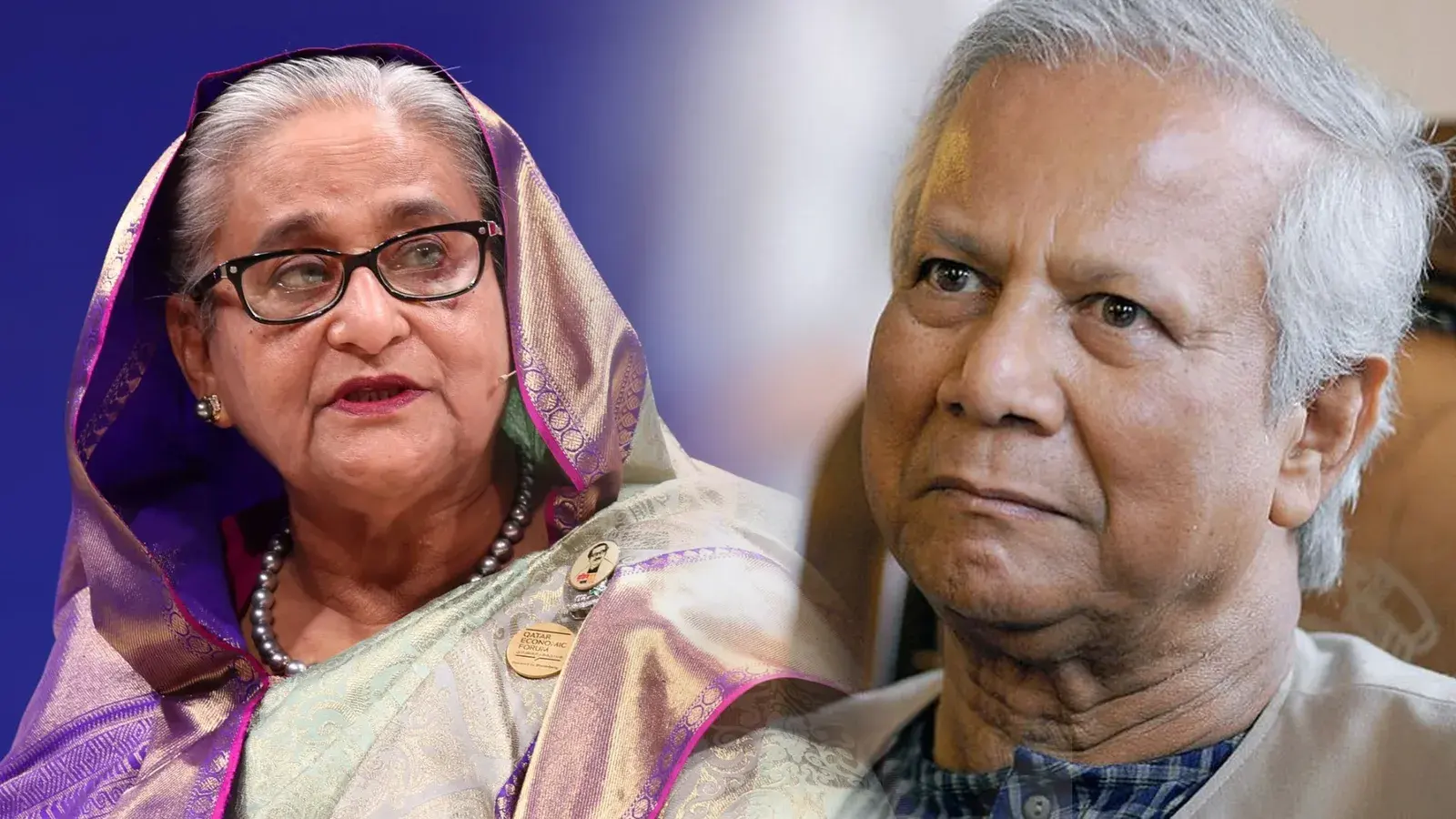
Colombo, October 15 - While few in Bangladesh reject the judicial process to fix the blame for atrocities committed during Sheikh Hasina’s 15-year rule, there is anxiety about the fairness of the approach of the International Crimes Tribunal (ICT) as well as the Interim government (IG) led by Dr. Muhammad Yunus.
Some observers have warned of over-reach, an over eagerness to tarnish the image of anyone having anything to do with the Hasina regime.
The recent arrest of 25 army officers on October 8 could stain the prestige of the army that sends the second-largest contingent to the UN Peace Keeping Force and earns a good amount of foreign exchange for Bangladesh. Some warn of a miliary coup as between August 1975 and the 2009 Bangladesh Rifles revolt, Bangladesh has been through as two military dictatorships and many attempted coups.
In September 2024, a month after the violent overthrow of the Awami League (AL) regime, the IG appointed Tajul Islam as the chief prosecutor at the ICT. But his appointment was controversial as he had been a senior defence lawyer for the Jamaat-e-Islami, a virulently anti-AL outfit, banned by the AL government for being pro-Pakistan.
In the spate of arrests made under the orders of the ICT, many were politically motivated. The commonest charge was “murder” apart from “causing forcible disappearances.”
Amon the top officials and Ministers arrested were the Law Minister, Anisul Huq, former director general of the National Telecommunication Monitoring Centre, Maj.Gen. Ziaul Ashan, as well as the former head of the National Security Intelligence Agency, Monirul Islam.
However, most of the accused, including Sheikh Hasina, had fled the country. Bangladesh has requested India for Hasina’s extradition, but it is unlikely that India will comply as it is a political case.
While proceeding against people who had allegedly unleashed violence against protesters in 2024, the IG has refused to seek accountability from those involved in revenge crimes during the July 2024 protests.
On 14 October 2024, the government issued an order stating that “students and citizens who put forth all efforts to make this uprising successful will not face prosecution, arrest, or harassment for their acts between July 15 and August 8”.
When the OHCHR questioned the IG about the indemnity, the latter justified the violence saying that it was “mostly done as desperate self-defence or in response to extreme provocation” and that there needed to be “discretion in prosecution to stabilise the situation, heal the nation in the post-conflict period and promote national reconciliation”.
But Nirmal Rozario of the Bangladesh Hindu, Buddhist, Christian Unity Council told AFP, “If the government means to ensure good governance, they should investigate each and every case and try the perpetrators”.
In August 2024, the IG set up a five-member Commission of Inquiry on Enforced Disappearances under the chairmanship of a retired High Court judge. In its preliminary report, the Commission stated that it had received 1,676 complaints of disappearances and undertaken a preliminary review of 758. Sheikh Hasina was held “prime facie responsible for acts of enforced disappearances”.
Following the report’s publication, the Chief Prosecutor filed a “crimes against humanity” cases against 12 people, including the Sheikh Hasina, her defence adviser Maj. Gen. Tarique Ahmed Siddique, and the former Inspector General of Police, Benazir Ahmed.
The latest case to kindle public debate is the arrest of 25 military officers on October 8, for alleged involvement in enforced disappearances, secret detention and torture during Sheikh Hasina’s rule. They have not been presented in court yet, though the Army Act says they could not be held for more than 48 hours.
This was the first time that so many high-ranking officers, including no fewer than five former Directors General of the Directorate General of Forces Intelligence (DGFI) and several former heads of the Counter Terrorism and Intelligence Bureau (CTIB), had been brought under the scrutiny of a civil court.
Those indicted also included officers who served in the Rapid Action Battalion (RAB), a police force long accused by international human rights organisations of extrajudicial killings and disappearances during the Hasina’s rule.
The charges showed the military, widely regarded as the country’s most disciplined and respected force, for its work during national emergencies and as UN peacekeepers, in bad light.
When the accused committed the alleged crimes, they were on secondment from the army to the Directorate General of Forces Intelligence (DGFI) and the Rapid Action Battalion (RAB), agencies which were not under the Army, but the Prime Minister’s office and the police department.
While some commentators say that the army could not be blamed for crimes committed by its men during secondment to an outside agency, others say that the army cannot protect its integrity by disowning them. There must be effective legal deterrents to prevent politicians from misusing the military intelligence agency for partisan purposes. Equally important is ending the abuse of power by agencies.
Ordinary Bangladeshis have historically held the army in high regard—as a symbol of national unity, professionalism and sacrifice. From disaster response to peacekeeping missions abroad, the military’s contribution has been immense. But the army cannot let a few bad eggs to dent its collective ethos.
The other issue agitating the peoples’ mind is the judiciary’s ability to ensure a fair and impartial trial. There is a widespread fear that political undercurrents could influence proceedings. The quality of the judges has been questioned.
There is also concern about vested interests attempting to exploit the situation for political gain in the present polarized political climate. Linking the judicial process with partisan agendas might damage the credibility of the ICT.
If the process is perceived as biased or selective, the consequences could be far-reaching, eroding public confidence in state institutions including the judiciary, one writer said. In this context, the statements made by the ICT Chief Prosecutor Tajul Islam have sparked questions regarding the line separating judicial proceedings and prosecutorial comments.
Tajul Islam told the ICT that the Awami League government was “monstrous”.
”It increasingly turned into a monstrous regime over the years. The Awami League destroyed the country's electoral system, abolished the caretaker government system, and institutionalised corruption at every level. The regime's goal was to suppress the people through fear and oppression," the chief prosecutor said, adding, "This monstrous rule finally unleashed a full-scale assault on our young generation in 2024."
Many wondered if the prosecutor was positioning himself as a judge. His statements suggested a presumption of guilt, which could jeopardise the integrity of the ICT’s process.
In the context of the controversies raging now, the Bangladesh Army chief Gen. Waker-uz-Zaman’s decision not to visit New Delhi to attend a three-day international conference on terrorism, and also the United Nations Troop Contributing Countries’ (UNTCC) Chiefs Conclave from October 14 to 16 has given rise to speculation.
It is believed that Gen. Zaman was trying to distance himself from India as he had facilitated the flight of Sheikh Hasina from Bangladesh on August 5, 2024, with the cooperation of India. Zaman, who is a relation of Sheikh Hasina, is seen by many as being somewhat pro-Hasina and pro-India.
Gen Zaman visited Malaysia to attend the Indo-Pacific Armies Chiefs’ Conference, held between September 22 and 27 and reportedly met with the Indian Army chief General Upendra Dwivedi on the sidelines of the conference.
END
RELATED NEWS
View all

Current Affairs
Sri Lankan Presidential pardons- the good and the bad
Sep 11, 2026
Current Affairs
The pros and cons of joining BRICS- the dilemma of Pakistan and Bangladesh
Sep 09, 2026
Current Affairs
Disaster in Nepal gets embroiled in geopolitics.
Sep 08, 2026
Current Affairs
Why Mecca Pact, and what does it imply for its members, Israel and India?
Aug 18, 2026