Current Affairs
Calling a spade a spade - Pope Leo’s bold statements in Africa
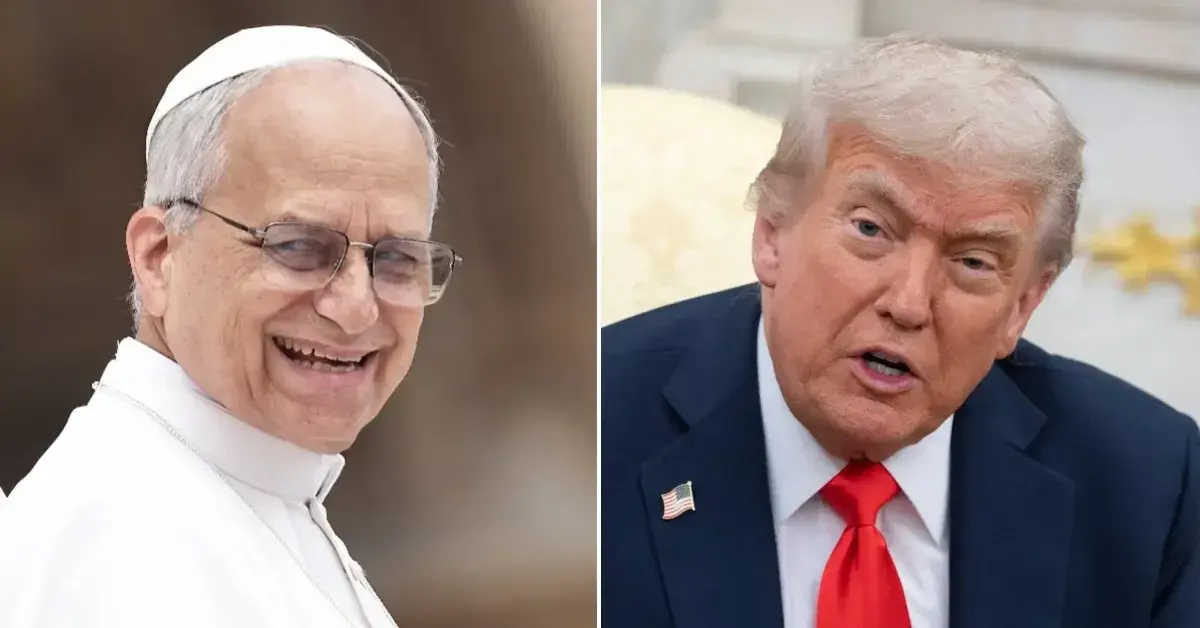
The first American Pope took on Trump, human rights violators and the corrupt during his 11-day tour of the African continent
By P.K.Balachandran
Pope Leo XIV, the first American Pope, took on US President Donald Trump, human rights violators, purveyors of violence and the corrupt during his 11-day tour of the African continent in April. The 70-year-old Leo called a spade a spade unreservedly and unapologetically as he journeyed over 17,700 km across Africa from Algeria to Angola.
Africa is very important for the Catholic church. It has the fastest-growing Catholic Church in the world, seeing an increase from 281 million members in 2023 to over 288 million in 2024.
And significantly, research done in 2025 showed that Leo has both Black and White ancestors who included enslaved people and their slave owners.
The tour gave the usually reserved Pontiff a global platform to speak out, sometimes in explosive terms, about problems confronting Africa and the world at large. He preached peace in a war-torn world and uprightness in a world battered by corruption and exploitation of the weak and the poor by the powerful and the wealthy.
Taking on Trump
At one point, the Pope took on US President Donald Trump over the war in Iran. He said in Cameroon on April 16, "Blessed are the peacemakers. But woe to those who manipulate religion and the very name of God for their own military, economic and political gain, dragging that which is sacred into darkness and filth.”
“ The world is being ravaged by a handful of tyrants," he added, without naming Trump or the war in Iran.
On Easter Sunday, Trump had said that if Iran didn't open the Strait of Hormuz by his imposed deadline, he would order attacks on various infrastructural facilities. Then on April 7, he declared - "A whole civilisation will die tonight."
Responding, the Pope said - “There was this threat against the entire people of Iran, and this is truly unacceptable. There are certainly issues here of international law, but even more than that, it is a moral question for the good of the (world’s) people.”
"I would invite citizens of all the countries involved to contact the authorities, political leaders, Congressmen, to ask them to work for peace and to reject war always," he added.
On April 10, Leo said on social media that disciples of Christ are “never on the side of those who once wielded the sword and today drop bombs.”
During a prayer service on April 11, the Pope decried the "delusion of omnipotence that surrounds us and is becoming increasingly unpredictable and aggressive.”
“Enough of the idolatry of the self and money! Enough of the display of power! Enough of war! True strength is shown in serving life,” he added.
In a Truth Social post on April 12, Trump said that Leo is "WEAK on Crime, and terrible for Foreign Policy. Leo should get his act together as Pope, use Common Sense, stop catering to the Radical Left, and focus on being a Great Pope, not a Politician."
The Pope responded on the same day, saying forthrightly - "I have no fear of the Trump administration, or speaking out loudly of the message of the Gospel, which is what I believe I am here to do. I do not look at my role as being political, a politician. I don’t want to get into a debate with him. I don’t think that the message of the Gospel is meant to be abused in the way that some people are doing."
On April 14, Vice President J.D. Vance said that Leo should "be careful" when discussing theology. A converted Catholic, Vance said at a rally that he welcomed the Pope commenting on topics such as immigration and abortion but Leo was wrong that political figures should not wield the sword, and cited the US liberation of France and the Holocaust concentration camps as examples of justified use of force.
“I think it's very, very important for the Pope to be careful when he talks about matters of theology,” Vance said.
In his latest comment on April 16, the Pontiff said the world is "being ravaged by a handful of tyrants. The masters of war pretend not to know that it takes only a moment to destroy, yet often a lifetime is not enough to rebuild.”
In the Pontifix X account, the Pope further said, “Woe to those who manipulate religion and the very name of God for their own military, economic, and political gain, dragging that which is sacred into darkness and filth.”
Pope’s Views on Other Issues
When Pope Leo was in Algeria from April 13-15, he walked in the footsteps of his spiritual father, St. Augustine. He made a pilgrimage to the archaeological ruins where the fifth-century titan of early Christianity lived, died, and wrote some of the most important works in Western thought. Significantly, Pope Leo is tied to St. Augustine, the inspiration of his Augustinian religious order.
Christian-Muslim coexistence was the top theme in Algeria, a former French colony, which is a majority Sunni Muslim nation.
The Pope was in Cameroon from April 15 to 18. The highlight of his visit to Cameroon was his remark in the western city of Bamenda, the epicentre of Cameroon's separatist conflict. Here, he blasted the "handful of tyrants" who are ravaging the planet with war and exploitation. Although the remarks were directed at the separatist conflict, Vatican officials said that the Pope's Gospel-mandated message of peace on that trip was meant for “all those responsible for wars and exploitation.”
Leo met Cameroon's 93-year-old President, Paul Biya and called for an end to the "chains of corruption" and for upright leadership. Biya has been accused of being corrupt and intolerant.
Slavery and Leo’s Mixed Racial Heritage
During his stay in Angola between April 18 and 21, Leo prayed at the Sanctuary of Mama Muxima, a Marian shrine that has become one of the most important Catholic pilgrimage sites in Angola. But the Marian shrine had had deep links to Angola's history of slavery.
While Leo didn't directly address slavery, his visit to the small town of Muxima drew reflections on his own complex heritage. Research done in 2025 showed that Leo, the first American Pope, has both Black and White ancestors who included enslaved people and their slave owners.
ABCNews had put out a story on May 10, 2025, saying that Robert Francis Prevost, the Chicago-born man who became Pope Leo XIV, has Black family roots in New Orleans, Louisiana, as per records.
Both of Leo XIV's maternal grandparents, Joseph Martinez and Louise Baquié, are described as Black or Mulatto in several census documents. On their 1887 marriage license, Martinez listed his birthplace as Haiti, and birth records show that he was born in Santo Domingo, Dominican Republic. Chris Smothers, professional genealogist and historian studying at Simmons University, told ABC News that these were the same territories at the time. Wife Baquié's birth records show she was born in New Orleans.
In the 1900 U.S. Census records, the family’s race is listed as “B,” which meant Black. However, in the 1920 U.S. Census records, which depict the family living in Chicago, the family is listed as “W,” which meant White.
" They not only migrated from New Orleans to Chicago in the period between 1910 and 1912 but also changed their racial identifiers, which was very common," Jari Honora, a genealogist and family historian at the Historic New Orleans Collection, told ABC News. Many families got classified as White for economic reasons, he explained.
Therefore, Pope Leo is not only the first American Pope, but he also represents the melting pot of backgrounds in the US.
Back To Angola
Angola today is an oil- and mineral-rich country. Yet, most of its 38 million people live in utter poverty. Previous leaders had been accused of large-scale corruption. The country still bears the scars of a 27-year civil war that began straight after independence from Portugal in 1975.
At a meeting with the Angolan President, Joao Lourenco, Pope Leo challenged current Angolan leaders to break the "cycle of interests" that has exploited Africa and its people for centuries.
The Pope was in Equatorial Guinea, his last stop, from April 21 to 23. The overwhelmingly Catholic former Spanish colony has been led for nearly 50 years by President Teodoro Obiang Nguema Mbasogo, Africa's longest-serving President, who is accused of widespread corruption and holding on to power through harassment, arrest and intimidation of political opponents, critics and journalists.
The discovery of offshore oil in the mid-1990s transformed the economy of Equatorial Guinea virtually overnight, with oil now accounting for almost half of its gross domestic product and more than 90% of exports. Yet, Equatorial Guinea shows high levels of poverty and hunger.
Leo met government authorities, diplomats and students, and denounced the "lust for power" and the "colonisation" of Africa's minerals. He also visited a psychiatric hospital and a notorious prison where he drew attention to prison conditions, human rights abuses and injustices.
Significantly, Equatorial Guinea was one of several African nations which were paid millions of dollars in contentious deals with the Trump administration to receive migrants deported from the US.
END
RELATED NEWS
View all

Current Affairs
Sri Lankan Presidential pardons- the good and the bad
Sep 11, 2026
Current Affairs
The pros and cons of joining BRICS- the dilemma of Pakistan and Bangladesh
Sep 09, 2026
Current Affairs
Disaster in Nepal gets embroiled in geopolitics.
Sep 08, 2026
Current Affairs
Why Mecca Pact, and what does it imply for its members, Israel and India?
Aug 18, 2026