Current Affairs
Challenges in mending Indo-Bangla ties after the elections
By P.K.Balachandran
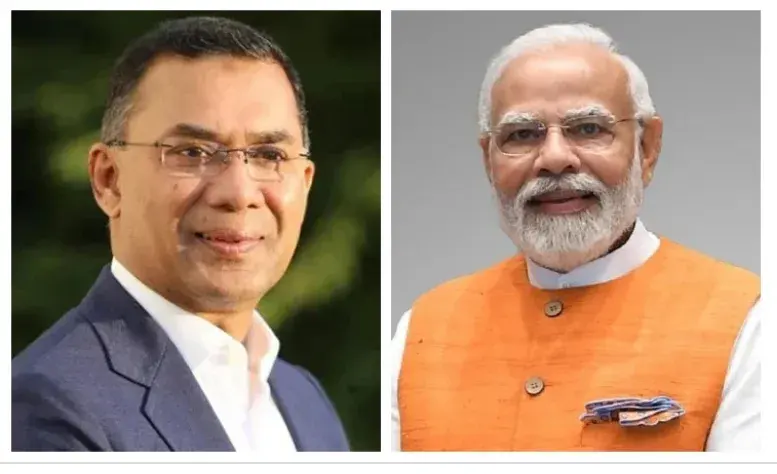
Colombo, February 14 – With the Bangladesh Nationalist Party (BNP) acquiring a commanding position in the just-elected Bangladesh parliament, and the friendly messaging between the Indian and the new Bangladeshi leaderships, the dark clouds that hung over Indo-Bangla relations since August 2024 have thinned, if not blown away.
But the road ahead is unlikely to be smooth. There are long-standing issues, such as water sharing, which have bedevilled the bilateral relationship. These need to be attended to if the ties are to stabilise.
Furthermore, certain attitudinal changes are necessary on both sides before laudable declarations can become concrete outcomes. It is undeniable that Indian leaders, bureaucrats and opinion makers suspect Bangladesh’s intentions when it improves ties with Pakistan and China. Bangladeshis, in turn, suspect that India is bent on imposing its hegemony on their country.
Therefore, the leadership of the two countries will have to ensure that, at the very least, their public and private stances on the bilateral relationship are conducive to building better ties.
But this is easier said than done, given past experiences and entrenched institutional memories. Add to this the gargantuan power of the media to influence public sentiment and governmental thinking. The media on both sides should be persuaded not to go into paroxysms of anxiety at the drop of a hat.
Bangladesh National Party
The BNP and its allies now have 213 of the 300 directly elected seats in parliament. The radical Islamist Jamaat -i-Islami and its allies have 77. While the BNP government would like to accommodate Indian interests to resolve long standing issues and to manage the very close economic interactions with India, the Jamaat -led alliance will see any major move to accommodate India as being against Bangladesh’s interest.
The Jamaat, and its allies like the National Citizens’ Party (NCP), would see any move to revive close ties with India as going back to the dreaded Sheikh Hasina-era when Dhaka bent over backwards to please a demanding New Delhi.
And true to its past penchant for Pakistan, the Jamaat will press the BNP to accommodate Pakistan’s interests too. One way in which New Delhi can manage this outcome will be to acknowledge that Bangladesh is a sovereign country with a right to choose its friends, and exercise strategic autonomy in its national interest, just like India does vis-à-vis the US. India will have to take the Jamaat into account and avoid the old practice of cultivating the ruling party, to the exclusion of the opposition.
India’s fixation with getting exclusive status cannot be applied now, after US President Donald Trump disregarded New Delhi’s demand that India could not be hyphenated with Pakistan. Trump defiantly sided with Pakistan after the May 2025 India-Pakistan war.
National Citizens Party
The other factor that New Delhi will have to bear in mind is that the other Islamic parties, and also the NCP, are virulently anti-India. The NCP is particularly angry with India for sheltering the fugitive ex- Prime Minister Sheikh Hasina. The NCP considers this an affront to Bangladesh’s sovereign rights.
However, New Delhi feels morally bound to shelter Hasina, given her past services to India. New Delhi is likely to use the legally valid argument that a fugitive need not be handed over if the offense could be interpreted as being political rather than criminal. It would have been another matter if Hasina had not been sentenced to death in absentia and her party the Awami League had not been banned from contesting in the parliamentary elections. The route taken by the Interim Government of Muhammad Yunus reeked of political vendetta. It also clashed with India’s demand that the elections be inclusive with the Awami League’s participation.
BNP’s Foreign Policy
The BNP has declared that if voted to power, it will work with a 'Bangladesh First' approach towards building relations with neighbours. The aim would be "collective progress". Rahman had signalled an independent foreign policy approach, with slogans like "Not Dilli, Not Pindi, Bangladesh before everything."
But given the fact that Indian Prime Minister Narendra Modi has waved the olive branch, not once, but twice, Tarique cannot but grasp India’s hand of friendship.
After Tarique’s win, Modi conveyed his ‘warm congratulations’ and added, “India will continue to stand in support of a democratic, progressive and inclusive Bangladesh. I look forward to working with you to strengthen our multifaceted relations and advance our common development goals.”
Tarique had said that he would want “a relationship of mutual respect, mutual understanding”. He has reportedly called for a “reset” in ties with India and expressed his keenness to take up the thorny issues. He had reportedly vowed to continue counterterrorism cooperation, pursue a resolution to the Teesta water-sharing issue, and ensure the protection of Hindu minorities. In his first public address, he said: “Religion is individual, but the state belongs to everyone.” He has promised his countrymen to “build a safe Bangladesh”. All this will please India which is worried about the security of the Hindu minority there.
Tarique is unlikely to repeat Yunus’s mistakes like saying in China, that Bangladesh could give to India’s ‘landlocked’ northeastern states access to the sea or taking Pakistani military personnel near the Chicken Neck where mainland India, China and the Indian North Eastern States interject.
China is involved in several high-profile infrastructure projects in Bangladesh, including modernization of the Mongla Port – its second-largest seaport – and a water management project along the Teesta River. However, India cannot afford to look at every Chinese project in Bangladesh and every step Bangladesh takes to improve trade or economic ties with Pakistan as a threat to its security and try to stop it. Such an approach has proved to be counterproductive and injurious to India’s own interests. The Bangladeshis get alienated from India.
Farakka Barrage
There are 54 shared waterways between India and Bangladesh, but these waterways have become arteries of anxiety and sources of friction. Disputes are over flow rates, barrages, and unimplemented treaties.
Commissioned by India in 1975, the Farakka Barrage was meant to divert water from the Ganges into the Hooghly River in West Bengal. For Bangladesh, however, this unilateral action had catastrophic downstream consequences. During the critical dry season, from January to May, the drastically reduced flow of the Ganges (known as the Padma in Bangladesh) has had a devastating impact. It has accelerated desertification in northern Bangladesh, increased salinity in the southwestern regions, and crippled the delicate ecosystem of the Sundarbans, the world’s largest mangrove forest. Livelihoods of millions who depend on the river’s bounty, from farmers to fisherfolk, have been eroded.
With Bangladesh’s independence in 1971 and the emergence of Sheikh Mujibur Rahman’s pro-India government, India found the diplomatic space to complete the barrage in 1975. But during the regime of Gen. Ziaur Rahman, Bangladesh began to strongly oppose the barrage. In 1976, the issue was taken to the United Nations, compelling India to return to the negotiating table.
For the next two decades, water sharing was managed through ad-hoc agreements until the landmark Ganges Water Treaty was signed in 1996. This 30-year treaty was hailed as a significant achievement. However, its implementation has been fraught with controversy and accusations of non-transparency. Bangladesh has repeatedly alleged that it does not receive the guaranteed quantum of water, particularly in years of low flow. A core reason for this mistrust is the treaty’s lack of a joint monitoring mechanism. The water flow data used for the sharing formula is collected solely by India at Farakka, with no provision for Bangladeshi participation.
This has fuelled suspicion that undeclared upstream diversions by India diminish the river’s flow before it is measured. With the treaty set to expire in 2026, the issue is bound to resurface.
As the deadline approaches, India has reportedly expressed interest in renegotiating the terms, proposing a new treaty that would allocate a lower share of water to Bangladesh. New Delhi argues that climate change, reduced river flow, and rising domestic demand necessitate a revision of the original allocations. This shift has sparked anxiety in Bangladesh.
Teesta Waters
Bangladeshi anxiety is compounded by the unresolved dispute over the Teesta River, a crucial artery for agriculture in northern Bangladesh’s “food basket.” A negotiated water-sharing agreement has not come about for over a decade, thanks to India’s federal system. The government of West Bengal, an Indian state bordering Bangladesh, has steadfastly refused to approve the treaty, arguing that it would create water shortages in its own northern districts. While India’s central government has expressed its commitment, its inability to bring a State government on board has left Bangladeshi farmers at the mercy of a river whose flow is now heavily controlled by upstream dams and irrigation canals in India.
Trade Flourishes Despite Barriers
Despite the political standoff and economic barriers created as a consequence of the July-August 2024 Bangladesh revolution, Bangladesh-India trade has surged, says Saqlain Rizve in The Diplomat dated 23/10/2025.
He quotes the Export Promotion Bureau of Bangladesh to say that during fiscal year (FY) 2024-25 the amount of goods exported to India went up by 12.4%, reaching a total of $1.76 billion. In the previous fiscal year, FY2023-24, Bangladesh’s exports were worth $1.57 billion.
Bangladesh’s export of footwear to India increased by 43% and that of ready-made garments (RMG) rose by 17.38%. Fish exports also increased by 42.04% compared to the previous fiscal year.
In July–September of FY2023–24, Bangladesh’s exports were $441 million, which rose to $483.71 million in the same period in 2024-25, a 9.52% increase.
The data indicate the strength of the supply chains across the Bangladesh-India border, despite political tensions, Rizve says.
Bangladesh and India imposed limited restrictions and a ban on the trading of some goods in April-May 2025. Yet, these do not seem to have had a major impact on overall trade. For example, India banned the import of all types of RMG from Bangladesh via the land route, allowing trade only through Kolkata and Mumbai seaports. Nevertheless, Bangladesh’s exports in this sector increased by 16.5% in August 2025 compared to August 2024.
But when India restricted the import of jute products by the land route, Bangladesh’s export earnings in this sector fell to just $3.4 million in July, compared to $12.9 million in the same month in 2024
Bangladesh also imposed restrictions on the import of rice and yarn from India. The ban on yarn imports by the land route increased the price of yarn in the domestic market by 8 to 12%.
The interim government led by Muhammad Yunus scrapped several India-linked projects and sought to review energy and transit agreements. Yet trade volumes have continued to rise, which reflects the depth of structural interdependence that transcends political transitions.
Fundamentals Sustaining Trade
There are several reasons why trade with India remains robust. First, geography and the transportation system make India a necessary trade partner of Bangladesh, Rizve says.
Bangladesh is surrounded by India on three sides and the two countries share a roughly 4,000-kilometer-long border. Border ports like Benapole-Petrapole keep the cost of transport of bulk goods and raw materials low. For the production of garments, leather, and agro-processing industries, Bangladeshi factories need to import Indian intermediate goods such as machinery, packaging materials, and chemicals. Business leaders point out that even the ban on trade in RMG products through land routes has had little impact. Although sea transport raises some costs, duty-free access to India keeps Bangladeshi garments competitive in the market, they said.
Second, the connection between the two economies has been strengthened by energy and infrastructure links. During seasonal shortages, India supplies electricity and fuel to Bangladesh, while Indian-made construction materials and capital goods support industrial expansion. Moreover, Bangladesh has recently increased electricity imports from India. Hence, attempts to decouple from India would interrupt production in Bangladeshi factories, Rizve says.
END
RELATED NEWS
View all

Current Affairs
Sri Lankan Presidential pardons- the good and the bad
Sep 11, 2026
Current Affairs
The pros and cons of joining BRICS- the dilemma of Pakistan and Bangladesh
Sep 09, 2026
Current Affairs
Disaster in Nepal gets embroiled in geopolitics.
Sep 08, 2026
Current Affairs
Why Mecca Pact, and what does it imply for its members, Israel and India?
Aug 18, 2026