Current Affairs
Demand for troops for Gaza puts Pakistan in a fix
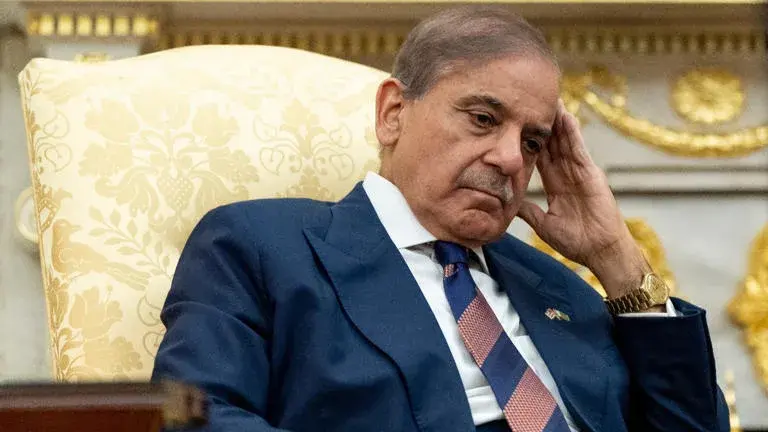
Government for sending troops but people are not
By P.K.Balachandran
Colombo, October 31 – The demand for troops for the US-proposed International Stabilisation Force (ISF) to be stationed in Gaza, has put Pakistan in a fix. While the government is for sending troops for geopolitical reasons, the opposition parties and the people at large are not for it, on ideological and practical grounds.
Large sections of the independent media and opposition parties in Pakistan have expressed deep concern over the proposal, especially the Shehbaz Sharif government’s current tendency to please US President Donald Trump, whose proposal the ISF is.
Pakistan’s Defence Minister Khawaja Asif said on Tuesday that a decision on sending Pakistani troops for the ISF was “in the process of being finalised.” But Parliament would be taken on-board in making a decision, he added. But he also said that it would be “a moment of pride for the country to play a role in protecting Palestinians.”
The ISF’s mandate would include maintaining internal security, disarming Hamas, securing border crossings, and assisting with humanitarian relief and reconstruction under the supervision of a transitional Palestinian authority.
Officials in Islamabad argue that Pakistan’s potential participation stems from both moral responsibility and diplomatic necessity because of its close relationship with the US since the May 2025 war with India in which Pakistan and the US found themselves on the same side. After the war, President Trump became an admirer of the Pakistan military and its chief Field Marshal Asim Munir.
Pakistan also has a strong track record in international peacekeeping, having deployed more than 200,000 personnel in over 40 operations across Africa, Asia and the Middle East. Officials contend that this experience not only equips Pakistani forces to manage volatile post-conflict environments but also lends credibility and legitimacy to the ISF.
But they also caution that there is still no clarity on the legal framework for the deployment. And ideally, Pakistan would like the deployment to take place under a UN mandate.
Public Opinion
Public opinion in Pakistan is definitely opposed to deployment of its troops where there is a possibility of armed clashes in which Pakistani troops have to fire at Palestinians. Deeply sympathetic to the Palestinian cause, most Pakistanis perceive participation in a US-designed stabilisation mission as serving Israeli interests and as a betrayal of Palestinian resistance.
In a blunt statement, the Pakistan Tehrik-e-Insaf (PTI) led by Imran Khan, warned that if such a proposal was indeed being considered, the government must involve all stakeholders, especially the opposition, in the decision-making process. “As the largest representative political party in the country, we (PTI) are not prepared to accept any decisions made in secrecy. We demand an unequivocal explanation from the government about whether this move is under serious consideration,” PTI’s statement read.
The Chairman of Majlis Wahdat-e-Muslimeen Pakistan, Senator Allama Raja Nasir Abbas Jafri, warned that such participation would portray Pakistan as an enabler of occupation rather than a defender of Palestinian rights, violate Pakistan’s historical and principled foreign policy, and risk regional divisions.
Jafri argued that any foreign military or security deployment in Gaza without a clear Palestinian consent and UN Security Council authorization would be illegal under international law, and that lasting peace can only come through Palestinian leadership, autonomy, national reconciliation, and humanitarian reconstruction — not foreign troop deployments.
Jordan’s Opposition
Jordan’s King Abdullah has said that “peacekeeping” and not “peace enforcement” will be an acceptable form of foreign intervention in Gaza. Trump’s proposal envisages the disarming of Hamas and its relinquishing political control of Gaza. The mandate is therefore pregnant with danger for the peacekeepers, King Abdullah pointed out.
“If we are running around Gaza on patrol with weapons, that’s not a situation that any country would like to get involved in. But it would be alright if the task was only to support local Palestinian police with training and expertise in conflict management, not actual fighting,” the King said.
Peacekeeping and peace enforcement
There is a critical difference between “Peacekeeping” and “Peace Enforcement.” The former is based on consent and cooperation, and the latter, on coercion and force. This distinction explains why some international interventions succeed while others fail spectacularly. Since the UN’s founding in 1945, peacekeeping operations had been instituted in more than 70 conflicts worldwide but with mixed results.
Peacekeeping has a “trinity of virtues.” The first is the consent of the parties. Consent provides peacekeepers with the political and physical freedom to carry out their tasks without being seen as invaders or occupiers. But consent must be actively maintained throughout a mission’s lifecycle, requiring constant political engagement and relationship-building.
The second is impartiality. Peacekeepers must uphold their mandate’s principles while treating all parties equitably. The third is non-use of force except in self-defence and defence of the mandate.
Peace enforcement rules of engagement are inherently more permissive, authorizing offensive operations and proactive force use to achieve mission objectives. Peace enforcement forces are often led by single States with advanced military capabilities.
Robust mandates requiring “civilian protection” can conflict with impartiality when peacekeepers must act against specific groups to prevent atrocities.
Peace enforcement operations also require sustained political will from participating countries, which may erode as casualties mount or objectives prove elusive. Intensive military operations also carry higher risks of civilian casualties, potentially undermining mission legitimacy and local support.
Clear military objectives don’t automatically translate into sustainable political solutions.
The US is the financier of UN peacekeeping operations but contributes relatively few troops to such operations. This approach allows America to influence peacekeeping and gain political mileage out of it, without loss of American lives. In that case, peacekeepers begin to look like “mercenaries” of the US, an imperial power.
Operations that serve US strategic objectives receive stronger support within the US than those seen as peripheral to American interests. Therefore, peacekeeping is basically an instrument of US power projection.
Non-State Actors
Modern conflicts increasingly involve non-State actors, terrorists, criminals that blur traditional war and peace distinctions and complicate peace keeping or enforcement efforts.
India Refused to Send Troops to Iraq
In 2003, India refused to send peacekeeping troops to the US-led war in Iraq. The Bush administration had hoped that India would send a full army division of 17,000 or more soldiers to serve in the Kurdish region around Mosul, and exerted considerable pressure on Prime Minister Atal Bihari Vajpayee to do so.
Initially, India was open to the idea. The then Foreign Minister Yashwant Sinha justified it saying that India’s long-term national interest, its concern for the people of Iraq, its long-standing ties with the Gulf region, as well as its growing dialogue and strengthened ties with the US, had to be considered.
But because the US war in Iraq was extremely unpopular in India, the Indian parliament overwhelmingly passed a resolution condemning the war as unjust and calling on the US to withdraw. Media reports also spoke of antiwar demonstrations in hundreds of cities and towns. A poll in the weekly newsmagazine “Outlook” showed 69% of respondents were opposed to sending troops to Iraq; other polls put the figure as high as 87%.
''Public opinion is sharply critical of the war,'' said Praful Bidwai, a prominent journalist. ''It just doesn't make sense for Indian soldiers to be used as cannon fodder when the US is getting bogged down and taking casualties.''
Columnist Prem Shankar Jha, expressed a more prevailing view, suggesting that the situation in Iraq was changing for the worse. ''To send troops now -- without knowing what they will be called on to do, how long they will have to stay, and when and how their task will be completed -- would be to push many of them to a pointless death,'' he wrote.
''Iraq has not been liberated, but invaded and occupied. The Iraqis know it, resent it, and are preparing to resist it. If India sends its troops to Iraq now, it will be as part of an occupation force. stabilization will mean oppression,'' Jha added.
After the British left India in 1947, Indians decided not to be mercenaries for any great power. In World War I, more than one million Indian troops served overseas, of whom more than 60,000 were killed. In World War II, 25 million served and 87,000 were killed.
If Pakistan were to send troops to Gaza now, participation in fighting will be inevitable. Only the other day, even as there was a “truce” Israeli attacks killed more than 100 people. There are still powerful voices in Israel calling for the continuation of the war and Hamas is still holding on to Israeli dead bodies irritating the Israelis.
END
RELATED NEWS
View all

Current Affairs
Sri Lankan Presidential pardons- the good and the bad
Sep 11, 2026
Current Affairs
The pros and cons of joining BRICS- the dilemma of Pakistan and Bangladesh
Sep 09, 2026
Current Affairs
Disaster in Nepal gets embroiled in geopolitics.
Sep 08, 2026
Current Affairs
Why Mecca Pact, and what does it imply for its members, Israel and India?
Aug 18, 2026