Politics by Vishvanath, Cover Story
Demise of a political legend and future of Sri Lanka’s left movement - I

By Vishvanath
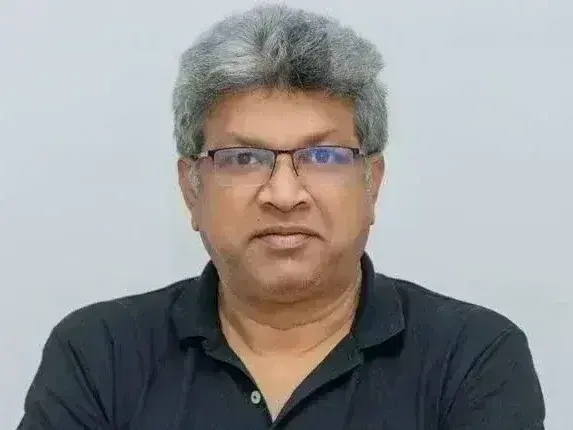
The demise of Lanka Sama Samaja Party (LSSP) leader Prof. Tissa Vitharana marks the end of an era. Gone is one of the few remaining Sri Lankan leftist leaders known for their intellectual prowess and dedication to the socialist cause.
Prof. Vitharana, born in 1934, was a physician and scientist by profession. He served as the Director of the Medical Research Institute. He joined the LSSP in 1974, entered Parliament in 2004, and served as Minister of Science and Technology, Minister of Technology and Research, and Senior Minister of Scientific Affairs. In recognition of his outstanding contribution to science, he was awarded the national honor, Vidya Jyothi.
Time was when the firmament of Sri Lankan politics was adorned by a galaxy of political greats representing the left. Only a handful of such veterans are still among us, prominent among them being the leader of the Communist Party of Sri Lanka (CPSL) D. E. W. Gunasekera.
What does the future hold for Sri Lanka’s traditional left movement? Will it be able to remain relevant? How will the radical leftist movements like the Janatha Vimukthi Peramuna (JVP) face challenges in national politics, or will they go the same way as the traditional left, which is not a shadow of its former self?
The birth of LSSP
The LSSP came into being on 18 December 1935 as the first modern political party in the then Ceylon, representing several groups of young intellectuals and activists influenced by Marxist-Leninist ideas and motivated by the global depression and colonial exploitation. Among the founding members of the LSSP were Leslie Goonewardene, N. M. Perera, Colvin R. de Silva, Philip and Robert Gunawardena. The LSSP has always remained a party of intellectuals, and contributed immensely to the political education of the Sri Lankan public. It brought under its banner educated, affluent Sri Lankan youth and ordinary people.
The LSSP played a pivotal role in helping Sri Lanka gain Independence from the British. It opposed the British rule tooth and nail and established links with the like-minded Trotskyists in South Asia via organizations, such as Bolshevik-Leninist Party of India, Ceylon and Burma. The British reacted aggressively to their activities, incarcerated some LSSP leaders and proscribed the party activities during World War II. But the LSSP proved its resilience, and bounced back as a formidable political force.
Divisions and splits
The history of the LSSP is replete with dissension among its ranks and splits. In 1943, a split in the LSSP led to the emergence of the CPSL. The Marxist-Leninist wing in the LSSP, disillusioned with the party’s Trotskyist orientation, voted with its feet to form the United Socialist Party (USP), during World War II. Proscribed by the colonial rulers, it evolved into the CPSL, which is known for its Stalinist orientation.
The LSSP has an eventful and colorful political history. In the early post-Independence era, the LSSP emerged as the main oppositional force, leading as it did major labor struggles, and succeeded in almost toppling a UNP government in 1953 through a hartal. However, whether the LSSP was able to manage its political and electoral gains and invest them strategically to expand its hold on national politics and work towards forming a socialist government is a moot point. That socio-political milieu had a lasting influence on young Sri Lankans like Prof. Vitharana and shaped their worldview. Many of them joined either the LSSP or the CPSL.
Impact of coalition politics
The LSSP closed ranks with the Sri Lanka Freedom Party (SLFP), and joined an SLFP-led coalition government in 1964, much to the consternation of many supporters of the party and its internal allies, who did not want the socialist cause undermined. It is only natural that the Fourth Internal turned hostile towards the LSSP, which also suffered splits as a result.
The SLFP-led United Front government (1970-77)embarked on extremely unpopular economic experiments characterized by statism, import substitution and rationing. Dirigisme alienated the masses who had to undergo untold hardships, paving the way for the return of the UNP to power with an unprecedented five-sixths majority.
Beginning of decline
The beginning of the decline of the LSSP has been attributed to its stay in the SLFP-led UF government until Prime Minister Sirimavo Bandaranaike sacked its Cabinet members in 1975. It had to break ranks with the SLFP, and the CPSL followed suit in 1977 ahead of a general election. All UF partners suffered an ignominious defeat.
It is doubtful whether the LSSP has been able to live down the role it played in helping the UF government crush a worker’s industrial action. In 1972, the Ceylon Bank Employee Union launched a strike, demanding better conditions and pay. They may have expected the then Finance Minister Dr. N. M. Perera, who was the LSSP leader, to grant their demands readily, but he chose to play a game of chicken with the strikers. The strike lasted for 108 days, and he issued warnings under Emergency Regulations, and threatened to terminate the strikers, thus bringing the strike to an end. His action drew widespread criticism and condemnation from labour unions. Eight years later, President J. R. Jayewardene took a leaf out of NM’s bookand went a step further; he sacked tens of thousands of workers who launched a strike demanding a pay hike. Ironically, the LSSP was among the organizers of the July 1980 strike, which the UNP crushed in the most despicable manner.
The LSSP no doubt empowered the Sri Lankan labour movement and was instrumental in winning workers’ rights, but it blotted its copybook badly in 1972, when it could have handled the bank employees’ strike differently, without setting a bad precedent which the capitalist UNP would follow eight years later. Leftist political parties fought hard to expand labour rights in Sri Lanka from the 1930s through the mid20th century. The LSSP, to its credit, championed complete trade union rights for all employees, including the recognition and protections through general strikes and mass mobilisation. The efforts of the leftist parties, especially the LSSP, enabled the Sri Lankan working class to win rights and have them embedded in national legislation; these rights include eighthour workday, pensions, overtime pay, paid leave, and social security benefits. They also ensured security of employment and collective bargaining, shaping workplace standards in both public and private sectors. But the LSSP’s role in crushing the bank employees’ strike sullied the grand old leftist party’s reputation irreparably.
Coalition politics and state power had a mellowing effect on the LSSP’s core ideology, alienating its supporters and paving the way for the emergence of far-left or ultra-radical political forces, such as the JVP. (Next: The need for a new left arises)
RELATED NEWS
View all
Politics by Vishvanath
Has 22A become the govt.'s Catch-22?
Aug 27, 2026
Politics by Vishvanath
22nd Amendment: A huge political gamble for govt.
Aug 21, 2026
Politics by Vishvanath
Move to raise retirement ages of judges: Options before govt.
Aug 05, 2026
Politics by Vishvanath
‘Cockroach’ uprising and echoes of Aragalaya
Jul 26, 2026