Current Affairs
Demographer urges India to accept immigration as a natural phenomenon
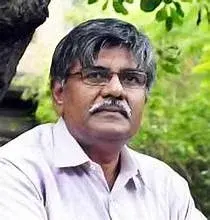
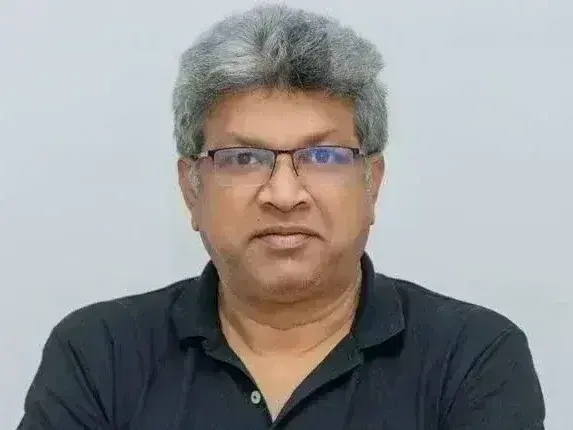
Dr. S. Irudaya Rajan, Chair, International Institute of Migration and Development, suggests a combination of stringent border control and amnesty for immigrants based on both economic and humanitarian criteria as immigration is a natural phenomenon.
By P K Balachandran
Colombo August 22 – In the past two or three decades, there has been brazen scare mongering by Indian politicians about the presence of a “huge” population of illegal immigrants from Bangladesh who pose a serious economic and security threat to India.
Under the current government led by the Hindu nationalist Bharatiya Janata Party (BJP), these voices are shriller, giving rise to fears that significant sections of the undocumented poor in the country might be classified as illegal immigrants, detained and deported.
Firstly, the prevailing notions of illegal immigration from Bangladesh are not based on scientific estimates but are only guesstimates, usually politically coloured, says Dr. S. Irudaya Rajan, Chair, International Institute of Migration and Development, Thiruvananthapuram, Kerala.
There is no official or universally accepted figure about the number of illegal Bangladeshi immigrants in India. No attempt has been made to collect accurate data. Therefore, the estimates or guestimates, which vary widely.
In 1997, the then Indian Home Minister Inderjit Gupta told parliament that 10 million illegal Bangladeshi migrants were in India. In 2001, the Task Force on Border Management estimated the number at 15 million. In 2004, then Minister of State for Home, Sriprakash Jaiswal (Congress), put the number at 12 million. In a 2016 paper, the former Research and Analysis Wing (RAW) chief, Sanjeev Tripathi, gave 15 million as the figure, based on comparisons of census data from Bangladesh and India from 1981 to 2011.
In 2016, the Minister of State for Home in the BJP government, Kiren Rijiju, told parliament that 20 million illegal Bangladeshi immigrants were in India, based on “unofficial” estimates, a figure quoted by Congress politician Shashi Tharoor also.
Detection and Deportation
In 2012, the national Press Information Bureau (PIB) said that detection and deportation of illegal immigrants in the country was a continuous process. It said that the Union Government is vested with powers to deport a foreign national illegally staying in the country under section 3(2)(c) of the Foreigners Act, 1946.
The PIB further said that certain instances of illegal immigrants having obtained ration cards, voter identity cards and driving licenses through fraudulent means had been reported. It went on to say that statistical data of this nature was not centrally maintained and therefore State Governments also should collect.
R.P.N Singh, who served as Minister of State for Home from 2012 to 2014 in the Congress government, claimed in 2018, that the Manmohan Singh regime had deported 82,000 immigrants from Bangladesh.
Deportation has picked up under the Narendra Modi government, which is more Hindu nationalistic and security conscious than Congress regimes. Not surprisingly, in 2018, the then-BJP President and the current Union Home Minister Amit Shah dubbed Bangladeshi immigrants as “termites”.
Currently, States such as Gujarat, Delhi, Assam, Maharashtra, and Rajasthan are rounding up identified illegal immigrants and transporting them to border points in Assam, Tripura, and Meghalaya. From there, they are “pushed back” across the border by the Border Security Force (BSF).
In Assam the BJP government is evicting Bengali-speaking Muslims from government’s forest and grazing lands saying that they are Bangladeshis. The Assam government has stopped issuing new Aadhaar Cards (a basic ID card) pending ascertainment of citizenship.
Complications
Controlling immigration from Bangladesh to India is complicated by various factors. The first is the length of the border which is 4,096-kms involving the Indian States of West Bengal, Assam, Meghalaya, Tripura and Mizoram. Though the border is fenced to some extent, it is still porous, with illegal crossings facilitated by influential agents, informal networks and corruption.
The issue has been diplomatically sensitive. In a 2022 BSF-BGB meeting in Dhaka, the Border Guard Bangladesh (BGB) told India that illegal immigration from Bangladesh had reduced, largely due to economic improvements in Bangladesh. In 2020-21, Bangladesh’s per capita income ($1,962) was higher than India’s ($1,935), which knocks the bottom out of the theory that people are quitting poor Bangladesh and heading for rich India.
Citizens for Justice and Peace
The Indian advocacy group, Citizens for Justice and Peace (CJP) fact-checked the claim about tens of millions of illegal immigrants from Bangladesh being in India. It found that they claim had no data backing at all. In fact, it was discovered that the number of people leaving India and going to Bangladesh was higher than the number of people entering India!
Reports published by The Wire and The Hindu said that over a period of four years, the number of illegal Bangladeshi migrants caught leaving India had been double that of those who had entered the country by illegal means, according to data provided by the Border Security Force (BSF) and the National Crime Record Bureau (NCRB).
Until December 14, 2020, the BSF had apprehended 3,173 illegal migrants when they were attempting to cross over to Bangladesh. On the other hand, 1,115 persons were caught by the security forces when they were trying to make their way into India through illegal means in the same period.
It was further stated that the number of Bangladeshis leaving India grew over the 2017-19 period from 821 in 2017 to 2,971 in 2018 to 2,638 in 2019.
Alleged ‘Bangladeshis’ in India
In the eyes of the Indian urban middle class, any ‘Muslim-looking’, Bengali-speaking tailor, construction worker or domestic help is inevitably an illegal migrant from Bangladesh. But the person could well have come from West Bengal or Assam where there are large Muslim populations. 27% of West Bengal’s population is Muslim and 34% of Assam’s population is Muslim, mostly Bengali-speaking.
The Trinamool Congress MP, Sagarika Ghose, said that the Delhi police were arresting Bengali workers because they were speaking “Bangladeshi” (actually Bengali!). The West Bengal Chief Minister Mamata Bannerji organized a rally to condemn the persecution of Bengali-speakers in BJP-ruled States. The West Bengal Chief Secretary wrote to his Odisha counterpart pointing to such harassment in Odisha.
Migrants from West Bengal are easy targets because, as per the 2011 census 33, 448, 472 Bengalis had migrated to other States in search of work because of lack of opportunities in West Bengal.
Professor Abdul Mannan professor of Statistics at Gauhati University argues in his book on the “Assam Movement” that a higher population of Muslims in some districts of Assam (as per census data) is due to a significant presence of children aged 0 to 6, i.e., indicating a natural growth of population rather than immigration from Bangladesh.
Tributaries of the Brahmaputra (and many other major and minor rivers) in Assam frequently change course inundating wide tracts of land and throwing up new land. People displaced by these changes often build temporary villages on the other bank and are eventually relocated in a different district and given land by the Government. But these are dubbed as illegal immigrants from Bangladesh.
The CJP found that a large number of people of Dholpur-Gorukhuti in Darrang district of Assam, scene of a brutal eviction drive by Chief Minister Hemanta Biswa Sarma, were in fact river-erosion refugees from Barpeta district and not from Bangladesh!
A Way Out
Dr. S. Irudaya Rajan, Chair, International Institute of Migration and Development, suggests a combination of stringent border control and amnesty for immigrants based on economic and humanitarian criteria.
To be realistic, government must collect demographic data keeping in mind that immigration is only one aspect of a country’s demographic profile, Dr. Rajan said. Fertility, mortality and out migration are other aspects to be taken into account. At present there is no data on illegal immigration and all figures touted are only politically coloured guesstimates, Dr. Rajan says.
Governments must also recognize that migration and immigration are normal and have been a constant feature in history. The Indian government, like most Asian governments, encourage migration but not immigration, even though both are driven by economic factors.
Governments which want other governments to adopt a liberal stance would themselves not do adopt such a stance. Dr. Rajan does not belittle the need for strict border control. But he pleads for a humanitarian approach which recognises the validity of migration and the potential gains from immigration.
Amnesty
Dr.Rajan suggests adoption of Amnesty for certain classes of illegal migrants. Immigration amnesty is often subjected to a misconception is that it provides an immediate and unconditional path to citizenship. Amnesty programmes in the West require applicants to meet stringent criteria and complete a multi-step process before getting citizenship.
Another misconception is that amnesty encourages illegal immigration. Critics argue that granting legal status acts as a magnet for future unauthorized entry. However, research shows that migration patterns are influenced more by economic conditions, enforcement policies, and international relations.
Amnesty programs are often paired with stricter border rules to address security concerns. They balance humanitarian and security concerns. In South Asian countries, political and security considerations are dominant.
END
RELATED NEWS
View all

Current Affairs
Sri Lankan Presidential pardons- the good and the bad
Sep 11, 2026

Current Affairs
The pros and cons of joining BRICS- the dilemma of Pakistan and Bangladesh
Sep 09, 2026
Current Affairs
Disaster in Nepal gets embroiled in geopolitics.
Sep 08, 2026
Current Affairs
Why Mecca Pact, and what does it imply for its members, Israel and India?
Aug 18, 2026