Current Affairs
Domestic and regional fallout of death sentence against Sheikh Hasina
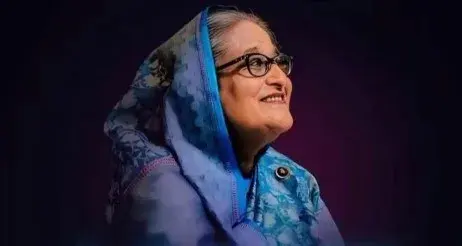
With military tension persisting between India and Pakistan since Operation Sindoor in May, and the concerning developments in Bangladesh, South Asia is in the cusp of changes with worrying possibilities.
By P.K.Balachandran
Colombo, November 18 – On Monday, the Bangladesh International Crimes Tribunal (ICT) passed, in absentia, the death sentence on deposed Prime Minister Sheikh Hasina and Home Minister Asaduzzaman Khan for “crimes against humanity” which they allegedly committed during the July 2024 mass uprising in that country.
The third accused, Inspector General of Police Chowdhury Abdullah Al-Mamun, was let off as he had become a State Witness.
The charges against Hasina and Khan were -
(1) Murder, attempted murder and torture by law enforcement and armed Awami League cadres under her orders.
(2) The use of lethal weapons, helicopters and drones to subdue student protesters.
(3) Murder of Abu Sayed on 16 July 2024.
(4) The killing of 6 unarmed protesters at Chankharpul on August 5, 2024.
(5) The killing of five protesters and burning another protester alive.
The formal charge sheet covered 8,747 pages, including 2,018 pages of reference materials; 4,005 pages of seizure lists and documentary evidence, and 2,724 pages detailing the list of those killed. Prosecution witnesses examined were 54.
According to the ICT, Hasina had delivered “inciting” remarks at a press conference at Ganabhaban on 14 July 2024, which triggered student-led mass protest that led to her fleeing the country.
Hasina Rejects Verdict
Reacting to the verdict from exile in India, Hasina said that it was made by a “rigged tribunal established and presided over by an unelected government with no democratic mandate.”
The charges she said, were “biased and politically motivated.” She insisted that she did not perpetrate violence.
“In taking the actions we did to try to stem the disorder, Bangladesh’s political leaders acted in good faith and were trying to minimise the loss of life. We lost control of the situation, but to characterize what happened as a premeditated assault on citizens is simply to misread the facts. Despite their lurid claims, the ICT’s prosecutors produced no persuasive evidence to show that I ordered the use of lethal force against the people. Transcripts and audio files cited as evidence are fragmentary and have been taken out of context. The fact is that operational control rested with security forces on the ground, acting under established legal protocols.”
“Between 6th and 14th July, students were permitted to protest freely. The government ensured their safety. Furthermore, I accepted all their demands. The situation worsened, however, from mid-July, with internet outages caused by protestors vandalizing critical communications infrastructure.”
“During the chaos, police stations and other government buildings were burned down, weapons looted, and government buildings attacked. Faced with this violence, the government acted in accordance with domestic and international law to preserve order and the constitution, and to protect lives.””
“ICT prosecutors have attempted to claim that the Awami League was responsible for burning down state buildings, even though various student leaders have cheerfully and publicly admitted they were responsible for these acts of arson and sabotage.”
“Other evidence relied upon by prosecutors is also questionable. They repeatedly cited a United Nations report (UN) that is based on anonymous testimony from state employees under pressure to please the interim government.”
“Witness testimony and forensic evidence suggest these agitators were in possession of military-grade weapons and ammunition, including 7.62-calibre bullets, that they used to attack law enforcement personnel and other civilians, escalate violence and provoke public anger against the government.”
“On July 18, 2024, I established a Judicial Inquiry Committee led by a High Court justice to investigate these incidents. The committee had already begun its work, but after Yunus took control of the government, he abruptly halted the investigation.”
“The UN’s much-quoted fatality estimate of 1,400 deaths is also disputed. Bangladesh’s own Ministry of Health’s has a verified count of 834 deaths. Only 614 families have received state assistance as families of martyrs.”
“According to newspaper investigations, 52 of those individuals were not killed by gunfire — they died from illness, accidents, or other unrelated causes — and about 19 people reported dead were later found alive. So the picture is confused, and the interim government has refused to provide clarity by publishing an official list of the dead,” Hasina said.
“In their distasteful call for the death penalty, the Yunus regime reveals the brazen and murderous intent of extremist figures within the interim government to remove Bangladesh’s last elected prime minister, and to nullify the Awami League as a political force.”
The trial conducted by the ICT was never intended to achieve justice or provide any genuine insight into the events of July and August 2025. Rather, their purpose was to scapegoat the Awami League and to distract the world’s attention from the failings of Dr Yunus and his ministers, Hasina said.
Failure of Yunus Government
Charging the Yunus government of partiality and high handedness, Hasina said - “Public services have fallen apart, police retreated from the country’s crime-ridden streets and judicial fairness are subverted, with attacks on Awami League adherents going unpunished.”
” Hindus and other religious minorities are assaulted, and women’s rights are suppressed. Islamic extremists inside the administration, including figures from Hizb-ut-Tahrir, seek to undermine Bangladesh’s long tradition of secular government. Journalists are locked up and menaced, economic growth has stalled, and Yunus has delayed elections and then banned the country’s most longstanding party (the Awami League) from participating in those elections.”
“Bangladesh’s future belongs to its people, and the election next year must be free, fair and inclusive,” Hasina said.
.
“Despite its name, there is nothing international about the ICT; nor is it in any way impartial. Its agenda should be evident to anyone who considers the following incontrovertible facts: Any senior judges or even senior advocates who have previously expressed any sympathy for the previous government have been removed or intimidated into silence.”
“The ICT has exclusively prosecuted members of the Awami League. It has done precisely nothing to prosecute or even investigate perpetrators from the other parties of documented violence against religious minorities, indigenous people, journalists and others.”
“Its guilty verdict against me was a foregone conclusion. But no genuinely respected or professional jurist in the world would endorse the Bangladesh ICT,” Hasina said.
Ready to Face ICC at The Hague
“For the record, I wholly deny the accusations that have been made against me in the ICT. I was given no fair chance to defend myself in court, nor even to have lawyers of my own choice represent me in absentia,” she asserted.
And then she said- “I am not afraid to face my accusers in a proper tribunal where the evidence can be weighed and tested fairly. That is why I have repeatedly challenged the interim government to bring these charges before the International Criminal Court (ICC) in the Hague. The interim government will not accept this challenge, because it knows that the ICC would acquit me. The interim government also fears that the ICC would scrutinise its own record of human rights breaches in office.”
“Our government was democratically elected by the people, and we were accountable to them. Dr Yunus, on the other hand, came to power unconstitutionally, and with the support of extremist elements. Under his rule, every protest — from students, garment workers, doctors, nurses, and teachers to professionals — has been met with suppression, some of it brutal. Peaceful demonstrators have been shot and killed. Journalists who attempt to report these incidents face harassment and torture.”
“Since July 15, 2024, those responsible for these retaliatory attacks, burnings and lynchings, which were carried out on Yunus’ orders as part of his meticulous plan to seize power, have been granted indemnity. Instead, every criminal charge has been redirected against Awami League members through the presentation of false information by the ICT’s compromised Chief Prosecutor to this bogus court.”
“Terrorists, extremists, and convicted killers have been released from prison, while the jails have been filled with Awami League leaders and activists.”
Rise of Islamic Radicals
Hasina’s ouster has led to the rise of radical Islamist groups that had been kept under check during her 16- year rule.
“The rise of radical Islamic influence under Yunus's watch threatens to transform Bangladesh from a secular democracy into a theocratic state. The passive response of Yunus's interim government to the demands of the radical Islamists signals tacit approval of the country's Islamization.”
“Yunus' government lifted the bans imposed on Jamaat-e-Islami, its student wing Islami Chhatra Shibir, and all associated organizations. At the same time, it banned Hasina's Awami League party. Yunus also freed from prison hundreds of jihadists, and in the post-Hasina era, Islamic State banners are seen on the streets of Dhaka.”
Islamist candidates from Jamaat-e-Islami will be allowed to run in the next elections, but not the secular Awami candidates, Hasina pointed out.
In parts of Bangladesh, Islamists had banned music concerts and women’s participation in games. Government has withdrawn its order to recruit music and physical training teachers in schools because Islamists consider music and physical training for girls un-Islamic.
With the Awami League banned, and the Bangladesh Nationalist Party (BNP) leaderless (its leader Tarique Rahman is still in the UK) and lacking in a grassroots level organisation, the Jamaat-e-Islami has emerged as the most influential party with roots in the traditionally conservative rural areas.
Islamic parties are forming an alliance with the students agitators party the National Citizens Party (NCP). There is widespread feeling that the Jamaat-e-Islami will use its “left-oriented Islamic agenda” to capture power in the February 2026 parliamentary elections.
The Islamists prefer a proportional representation system of elections that will ensure representation in parliament. The NCP also wants it. The Islamists and the NCP also want the promised referendum on the form of government held before the February elections. But the BNP says that the new constitution and election system should be decided by an elected parliament after an informed debate, and not by a referendum based on a single question.
Bangladesh is therefore deeply divided. Given the pulls and pressures from various interests, it is in danger of being thrown into chaos out of which the Islamists could come up trumps.
Impact on Indo-Bangla Relations
The sentencing of Sheikh Hasina to death has exacerbates tension between Bangladesh and India. India has had very close ties with Hasina and her father and founder of Bangladesh, Sheikh Mujibur Rahman. New Delhi had helped Hasina politically in return for help in curbing cross border terrorism. Therefore, when she was ousted, India readily gave her refuge.
But India’s hospitality irked the Yunus regime, which has been asking for Hasina’s extradition. India, however, has not obliged. New Delhi considers the trial as a one-sided and patently rigged and the extradition demand as political.
India has said that it will continue to deal with the incumbent government in Dhaka as a sovereign entity, but it would like Bangladesh to be politically inclusive meaning that it should allow the Awami League to contest the coming elections.
On Monday , the Indian Ministry of External Affairs said- “India has noted the verdict announced by the ‘International Crimes Tribunal of Bangladesh’ concerning former Prime Minister Sheikh Hasina. As a close neighbour, India remains committed to the best interests of the people of Bangladesh, including in peace, democracy, inclusion and stability in that country. We will always engage constructively with all stakeholders to that end.”
Pakistan Factor
Apart from the tussle over Hasina, India and Bangladesh are heading for a geopolitical and military conflict too. The Yunus government is cosying up to India’s principal regional rival Pakistan. Pakistani army top brass including the Chief of the Joint Chiefs of Staff, Gen. Sahir Shamshad Mirza, have visited Dhaka and a Pakistani military delegation had toured a forward airbase in North Bangladesh near the sensitive India-Bangladesh-China trijunction called the Chicken Neck. India has since beefed up its defences in this area.
India is particularly worried about the rise of Islamic radicals in Bangladesh as these could join hands with similar radicals in Pakistan to carryout terror strikes in India.
With military tension persisting between India and Pakistan since Operation Sindoor in May, and the concerning developments in Bangladesh, South Asia is in the cusp of changes with worrying possibilities.
END
RELATED NEWS
View all

Current Affairs
Sri Lankan Presidential pardons- the good and the bad
Sep 11, 2026
Current Affairs
The pros and cons of joining BRICS- the dilemma of Pakistan and Bangladesh
Sep 09, 2026
Current Affairs
Disaster in Nepal gets embroiled in geopolitics.
Sep 08, 2026
Current Affairs
Why Mecca Pact, and what does it imply for its members, Israel and India?
Aug 18, 2026