Current Affairs
Factors inhibiting the indigenous manufacture of fighter jets in India
By P.K. Balachandran
Colombo, February 28 – Since 1986, it has been India’s goal to develop an engine to power an indigenous Advanced Medium Combat Aircraft (AMCA) so that the country can exercise strategic autonomy. But even 40 years down the line, the project has not taken off.
The critical stumbling block has been the inability to make a jet engine. Its manufacture needs both design capability and the ability to fashion the materials that go into it. Success in these spheres depends on knowledge and skills, which India still lacks. However, it has not given up the project it desires strategic autonomy.
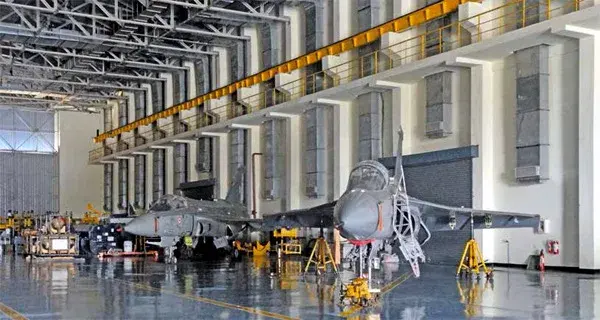
India’s “Kaveri” jet engine project for the Tejas MK 1 AMCA is still facing issues 40 years down the line. It suffers from low thrust and overheating, forcing the Tejas to use US GE engines. Technical gaps, poor management, and limited collaboration have slowed progress.
The project has already cost more than six times the original budget. Tejas fighter jets continue to fly, but with American engines. Girish Linganna writes in the news outlet WION that the Kaveri engine in Tejas, even now cannot match foreign engines of the 1970s vintage. When GE delays supplying the production of Tejas stalls.
India’s defence industry has lagged in metallurgy, advanced material science and precision manufacturing. Without mastering these areas, there can be no progress in indigenisation.
There is a complaint that the public sector manufacturing units of the Defence Research and Development Organisation (DRDO) have resisted meaningful partnership with foreign firms, Indian private companies and universities, Linganna says.
There has been a technology transfer from foreign collaborators. India is already getting nearly 80% technology transfer with the American GE F414 engine. It has also teamed up with the French company Safran for a new fifth?generation engine, Linganna points out. This shows that cooperation is possible when projects are well organised, he adds. Indian aircraft manufacturers have been tardy in taking the existing projects forward due to a lack of organization and lethargy, he says.
This led the current IAF Chief Air Chief Marshal Amar Preet Singh to publicly chastise the managers of the Tejas project. Speaking at the CII Annual Business Summit 2025, he said, “None of our indigenous weapons programs has been delivered on time. And the uncertainty begins the moment the contract is signed!”
Different from Rocketry
India has advanced greatly in rocketry, missile technology and satellite launching, but struggles to build a working fighter jet engine. This is because of the radically different demands of rockets and jet aircraft engines.
India’s missile programs — Agni, BrahMos, and the hypersonic HSTDV showcase impressive propulsion capabilities. But those engines serve entirely different missions.
Missile engines, especially solid-fuel rockets and ramjets, are designed for one-time use. A ramjet is a form of air-breathing jet engine that requires forward motion of the engine to provide air for combustion. But ramjets do not need to throttle, restart, or remain reliable across hundreds of sorties.
Ramjets and scramjets work only at very high speeds and altitudes. They’re great for missiles, not for manned fighters that must take off from runways, dogfight at various altitudes, and land safely. Solid-fuel boosters are reliable — but uncontrollable once ignited.
In short, missile propulsion is a sprint. Fighter propulsion is a marathon — repeated, controllable, and survivable
In Fighter Jets
In the jet fighter, on the other hand, the entire flight control system, cooling architecture, and payload balance must be tuned around the aircraft's jet engine.
An article on the technicalities by Raghavan S.Rao in the magazine Swarajya says that the blades in this section are made from nickel-based superalloys cast into single crystals, ensuring that there are no grain boundaries where cracks can form. These blades are also cooled from the inside using microscopic air channels and protected by thermal barrier coatings — techniques that require atomic-level precision.
India’s Kaveri engine is yet to cross these thresholds reliably. Though the basic architecture has been demonstrated, the ability to mass-produce high-temperature-capable blades using 3rd or 4th generation single-crystal technology remains out of reach.
There is a gap in high-temperature metallurgy, manufacturing equipment, and iterative production feedback, the kind of ecosystem that takes decades to build, Rao says.
India needs to develop the software — the FADEC system — that controls engine behaviour in flight. FADEC is a system consisting of a digital computer, called an "electronic engine controller" or "engine control unit" and its related accessories that control all aspects of aircraft engine performance. This software is often encrypted and proprietary.
Other nations, like China, have learned by the trial-and-error method. They have fielded imperfect engines and improved them through aggressive testing at great cost in terms of money and lives.
Globally, only a handful of countries have mastered the full jet engine value chain. The US, UK, France, Russia, and now China have mastered it. Their 4th–5th generation engines have single-crystal blades, peak turbine temperatures approaching 1,700°C, and highly reliable FADEC systems. Russia operates slightly older technology but remains self-reliant. China, after decades of importing and reverse-engineering Russian engines, has now developed the WS-10 and WS-15 series — and has become self-reliant in fighter propulsion.
India, by contrast, has not crossed the 1,150°C mark with Kaveri, according to published articles. Its single-crystal blade capability is still in early development with foreign assistance. FADEC is being developed in-house but is not yet certified or deployed.
The Kaveri engine has reached around 75 kN of thrust, which is suitable for light aircraft and drones, but falls short of the afterburner-powered engines required for frontline fighters like the Tejas Mk2. It has not yet been cleared for integration into any combat aircraft.
Local production of single-crystal blades is still in its infancy in India. Thermal barrier coatings, which are crucial for surviving high-temperature environments, remain in the research and development phase. On the digital front, efforts to build a domestic FADEC system are underway. These systems have not yet been flight-certified.
On February 23, the IAF grounded all Tejas aircraft following a crash. It was the third crash involving Tejas in recent years. The pilot ejected safely, but the aircraft was declared unserviceable. The cause of the accident was not disclosed.
Choices Before India
Investment must flow into foundational areas, such as metallurgy, facilities capable of casting high-grade single-crystal blades, development of indigenous thermal coating technologies, and field-robust, flight-tested FADEC systems that can scale across engine variants.
India has traditionally waited for systems to be perfect before deployment, a cautious approach that delays learning. In contrast, countries like China chose to field imperfect engines to learn from failures. India must adopt that approach, Raghavan S.Rao recommends.
Today, China fields fifth-generation stealth fighters powered entirely by domestically designed and manufactured engines. The journey from dependence to self-sufficiency cost more than US$ 42 billion in direct investment. It consumed four decades of continuous effort and catastrophic failure, including the deaths of test pilots and engineers.
For India, the Chinese experience offers both inspiration and warning. Self-sufficiency is achievable, but the price is higher than most democracies may be willing to pay.
China and India both started indigenous jet engine programmes in 1986. Four decades later, China has an engine to show, but India does not. In the beginning, Chinese engineers produced excellent blades but not consistently. The WS-10A, the first production variant, finally passed certification testing only in 2005, nearly two decades after the programme began.
But when the engines entered service with J-11B fighters, the results were disastrous. Engine overhauling took thirty hours while Western engines took four hours. The Air Force recorded nearly 20,000 engine faults in the first three years.
Some officials argued for abandoning indigenous development entirely and for purchasing Russian engines indefinitely. Others advocated licensing Western designs, as Japan had done with the F-15's engines. But Chinese leaders like Deng Xiaoping persisted until China achieved self-sufficiency, regardless of cost or timeline.
However, China's engineers could produce individual single-crystal blades of cutting-edge quality — laboratory showpieces that matched anything from Pratt & Whitney or Rolls-Royce. But the problem was producing thousands of identical blades with consistent quality.
The challenge was compounded by export controls. Rhenium, a rare element essential for the superalloys used in turbine blades, was largely controlled by Western suppliers who refused to sell to Chinese defence contractors. When geologists discovered 176 tonnes of rhenium in Shaanxi province in 2010 — roughly 7% of known global reserves — it removed one constraint.
But rhenium alone could not solve the manufacturing consistency problem. What eventually worked was scale, Rao points out. China's approach to research and development differs fundamentally from Western models. Where American programmes emphasise efficiency and cost control, Chinese programmes don’t. Failed approaches were documented and archived rather than concealed, Rao says.
The cumulative effect, over fifteen years of parallel effort, was a manufacturing knowledge base that no single programme could have developed.
By 2017, Chinese factories were producing third-generation single-crystal blades capable of withstanding 2,000 degrees Celsius at production scale. In 2019, the J-10C began flying exclusively on indigenous engines.
By 2020, cumulative spending on the project had touched US$ 42 billion. If India wants to go for self-sufficiency and strategic autonomy, it has to spend and persevere like China. But the compulsions of democracy and competing demands in a poor country would hamper such efforts.
END
RELATED NEWS
View all

Current Affairs
Sri Lankan Presidential pardons- the good and the bad
Sep 11, 2026

Current Affairs
The pros and cons of joining BRICS- the dilemma of Pakistan and Bangladesh
Sep 09, 2026

Current Affairs
Disaster in Nepal gets embroiled in geopolitics.
Sep 08, 2026
Current Affairs
Why Mecca Pact, and what does it imply for its members, Israel and India?
Aug 18, 2026