Current Affairs
Foreign powers’ stakes in Bangladesh parliamentary elections
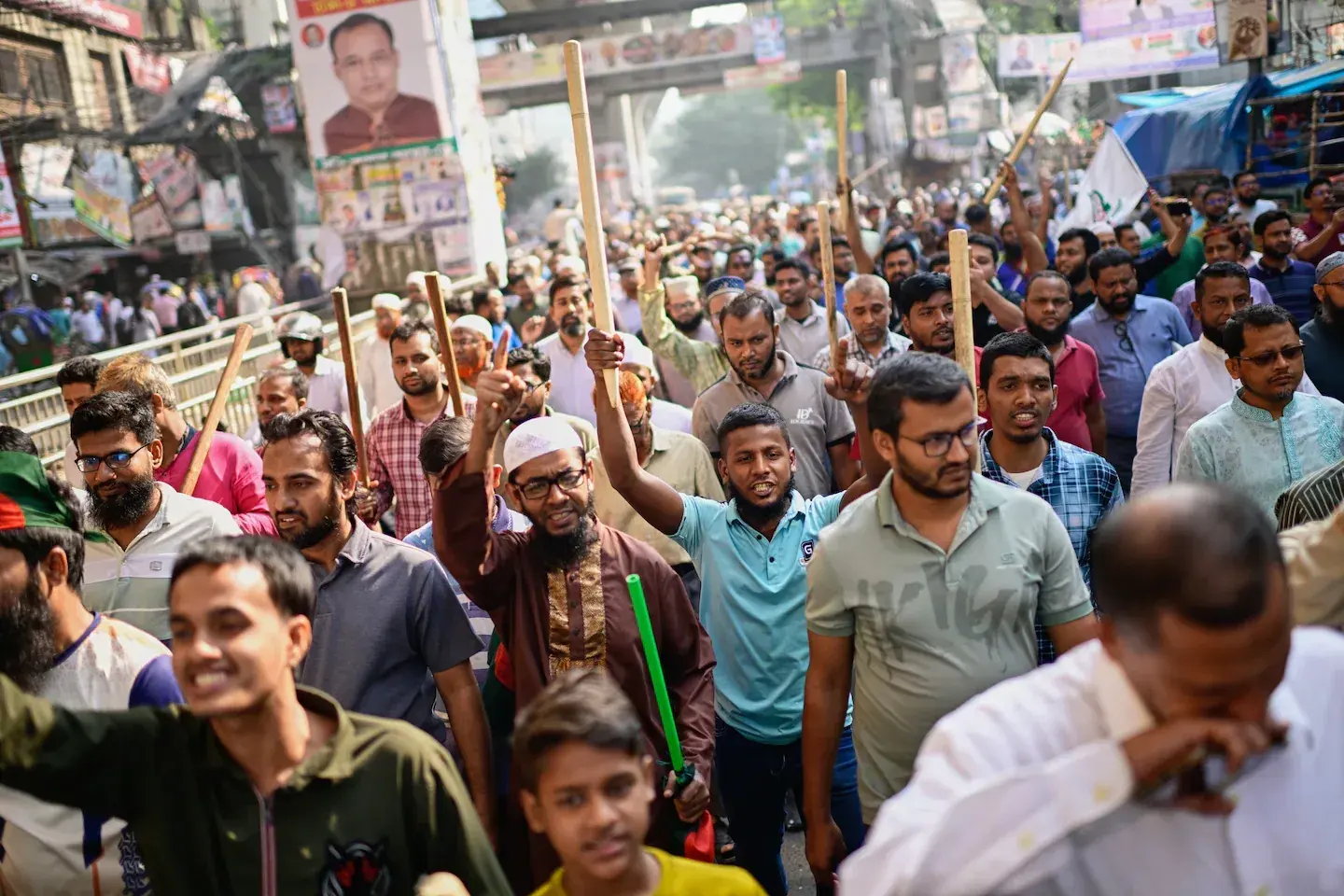
India and the US are manipulating contesting parties to secure post-election advantages
By P.K.Balachandran
Colombo, January 27 - Ahead of the February 12 Bangladesh polls, India is targeting the Muhammad Yunus government through the Awami League, and is befriending the Bangladesh Nationalist Party with the aim of isolating the Jamaat-i-Islami. And the US is cultivating the Jamaat in the expectation that it will emerge as a consequential force. But India is dead opposed to the Jamaat, considering it a civilizational and security threat.
Therefore, an India-US standoff on Bangladesh is on the cards.
India and the US have huge stakes in Bangladesh. Both are anxious about the outcome of the February 12 parliamentary elections. But since their geopolitical interests are different, they could clash, further exacerbating bilateral relations that are at rock bottom now.
India, which is the most consequential of the two external powers at play, has adopted a multi-pronged strategy to serve its interests.
The first prong is using the ousted pro-India former Prime Minister Sheikh Hasina to frontally attack the anti-India head of the Interim Government, Dr Muhammad Yunus. The second is encouraging Sheikh Hasina to attempt to revive the banned Awami League. And the third is to build bridges with the moderate Bangladesh Nationalist Party (BNP) led by Tarique Rahman so that the Awami League and the BNP can, between themselves, share the Bangladeshi political stage, marginalizing the anti-India conglomeration comprising Muhammad Yunus, the Jamaat-e-Islami and the GenZ-led National Citizens’ Party.
Hasina’s Presser in New Delhi
On January 23, Sheikh Hasina addressed a press conference in New Delhi organised by a South Asian journalists’ body. She used the occasion to lambast the Yunus regime and Yunus personally.
“The murderous fascist Yunus is pushing our beloved motherland towards disaster,” she said, accusing him of running an “illegal and violent” administration. She dubbed him an “usurper”, “money launderer”, and a “power-hungry traitor”.
“Bangladesh stands today at the edge of an abyss,” Hasina said. “The country had been reduced to a vast prison, an execution ground, a valley of death”, with human rights trampled, press freedom extinguished, and violence against women and minorities rampant.”
The Awami League chief said her removal from office on Aug 5, 2024, was the result of a “meticulously engineered conspiracy” that had plunged the nation into what she described as an age of fear. She blamed extremist groups and “foreign interests” for what she described as the systematic destruction of the state.
Dhaka’s Reaction
The Interim Government at Dhaka said it was ‘surprised and shocked’ that Hasina was given a New Delhi platform to ‘incite unrest’ in a sovereign country. Hasina’s “incitement” threatened Bangladesh’s democratic transition and security, a government statement said.
“She is a fugitive convicted by the International Crimes Tribunal. For India to have allowed it (the presser) was tantamount to undermining bilateral norms, violating sovereignty, and setting a dangerous precedent for future Bangladesh–India relations.”
Hasina had “openly called for the removal of the Government of Bangladesh and issued blatant incitements to her party loyalists and the general public to carry out acts of terror in order to derail the upcoming general elections in Bangladesh” the Interim Government’s statement said.
“Bangladesh is deeply aggrieved that, while India is yet to act on its obligations to hand Sheikh Hasina over to Bangladesh under the bilateral extradition agreement despite repeated requests by the Bangladesh Government, she has been allowed to make such inciteful pronouncements from its own soil. This clearly endangers Bangladesh's democratic transition and peace and security,” the statement added.
Reaching Out to BNP
Even as it discreetly encouraged Hasina to attack Yunus, India is cultivating the BNP, the Awami League’s traditional rival.
In a post on X, condoling the death of the leader of the BNP, Khaleda Zia, Indian Prime Minister Narendra Modi said - “Deeply saddened to learn about the passing away of former Prime Minister and BNP Chairperson Begum Khaleda Zia in Dhaka. Our sincerest condolences to her family and all the people of Bangladesh. May the Almighty grant her family the fortitude to bear this tragic loss. I recall my warm meeting with her in Dhaka in 2015. We hope that her vision and legacy will continue to guide our partnership. May her soul rest in peace.”
Modi acknowledged Khaleda Zia’s role in fostering diplomatic ties between India and Bangladesh, saying that her important contributions would always be remembered.
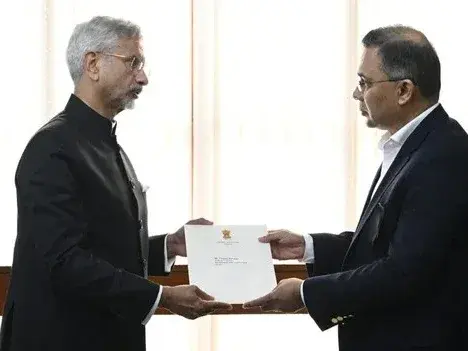
Indian External Affairs Minister rushed to Dhaka and handed over a letter from Modi to BNP’s interim chairman Tarique Rahman.
India’s aim it to help foreground the Awami League and the BNP in Bangladesh politics and be a bulwark against the rising Islamic tide represented by the Jamaat-e-Islami and the Hefazat-e-Islam.
With Hasina’s Awami League banished from the country, the Yunus government had lifted the ban on the Jamaat. Since then, the Jamaat has been successfully marketing certain new products – an anti-corruption platform accompanied by attractive social welfare projects. Jamaat chief Shafiqur Rahman cited its medical camp initiatives, flood relief and aid for families of those killed in the uprising against Hasnia in July 2024 as evidence of its new and modern mindset.
A December 2025 opinion poll done by the US-based International Republican Institute ranked Jamaat as the “most liked" party even as it projected a tight race with the BNP for the top spot in the February 12 elections.
The Jamaat had opposed Bangladesh's independence in 1971, and during Hasina's rule, many of its leaders were executed or jailed in a war crimes tribunal that was criticised by international human rights groups. In 2013, it was barred from elections after a court ruled that its constitution was in conflict with Bangladesh's secular constitution.
US Cultivates Jamaat
The US has long been suspected of having encouraged the July 2024 insurrection against the Hasina government because Hasina had refused to entertain certain geopolitical demands of the US in view of her close ties with India and China.
On January 22, “The Washington Post” exposed an ongoing US machination in Bangladesh. It said that US diplomats were looking to step up their engagement with the Jamaat.
In a December 1, 2025 closed-door meeting with female Bangladeshi journalists, a US diplomat based in Dhaka said that Bangladesh has “shifted Islamic” and predicted that Jamaat-e-Islami would “do better than it’s ever done before” in the February 12 elections.
“We want them to be our friends,” the diplomat said, asking if the reporters in the room would be willing to bring members of the party’s influential student wing on their programs: “Can you talk to them?” he asked.
The US official indicated that in addition to reaching out to Jamaat-e-Islami, mission staff might also engage with other conservative Islamist political parties, including Hefazat-e-Islam Bangladesh and Islami Andolan Bangladesh.
The diplomat, whom The Post did not name for security reasons, downplayed worries that Jamaat-e-Islami would try to force its interpretation of Islamic law on Bangladesh, saying Washington had leverage that it would use in case the Jamaat imposed Shariah law. .
“I simply do not believe that Jamaat can impose Shariah,” the diplomat said, noting that if party leaders made concerning moves, the United States “would have 100 percent tariffs put on them the next day.”
“We want them to be our friends, because we want to be able to pick up the phone and say: “That thing you just said, ‘So here’s how that’s going to play out,’” the diplomat explained.
He stressed that if the Jamaat-e-Islami was to rise to power and implement policies anathema to Washington, the US would retaliate against the country’s massive garment industry.
“Bangladesh’s entire economy, 20 percent of your exports to the United States, depend on a series of socially liberal clothing chains and clothing brands,” the official said.
“If Bangladesh tells women they can only work five hours, or kicks them out … and imposes Sharia law, there will be no more orders. And if there are no more orders, there will be no Bangladeshi economy.”
In a statement to “The Washington Post”, Monica Shie, the spokesperson for the US Embassy in Dhaka, said - “the United States does not favour one political party over another and plans to work with whichever government is elected by the Bangladeshi people.”
Anxiety in Delhi
But such an assurance from the US is unlikely to quell anxieties in New Delhi, analysts said. India had labelled Jamaat-e-Islami’s chapter in Kashmir an “unlawful group” in 2019 and renewed the designation in 2024.
The American outreach to Jamaat-e-Islami could “potentially drive another wedge between the US and India,” said Michael Kugelman, a senior fellow for South Asia at the Atlantic Council.
“India’s biggest fear in Bangladesh for many years has been Jamaat,” Kugelman said. India views the party as being allied with rival Pakistan, he added.
If the US-India relationship were “in better shape,” Kugelman said, the Americans may have been more willing to heed Indian concerns about Jamaat-e-Islami ahead of the election. But “with the partnership a real mess, … I don’t think that US officials would feel the need to be that attentive to, or sensitive to, Indian concerns.”
India and the US have drifted from each other in President Trump’s second term. India did not endorse Trump’s claim that he had brought an end to the four-day India-Pakistan war in May 2025. It did not support his claim to the Nobel Peace Prize. India has not agreed to Trump’s demands on tariffs and entry of US products into the Indian farm sector. It has not gone along with Trump on Ukraine, Gaza and his Board of Peace for Gaza. The competition over Bangladesh adds to the strain in the relationship.
END
RELATED NEWS
View all

Current Affairs
Sri Lankan Presidential pardons- the good and the bad
Sep 11, 2026
Current Affairs
The pros and cons of joining BRICS- the dilemma of Pakistan and Bangladesh
Sep 09, 2026
Current Affairs
Disaster in Nepal gets embroiled in geopolitics.
Sep 08, 2026
Current Affairs
Why Mecca Pact, and what does it imply for its members, Israel and India?
Aug 18, 2026