Politics by Vishvanath, Cover Story
Ginger group fires shot across the SJB’s bow
By Vishvanath
There is hardly anything that politicians do not do to gain or/ retain power. A long stay in the political wilderness makes them undergo something similar to withdrawal syndrome that drug addicts develop after giving up narcotics cold turkey. They desperately seek power.
Some SJB MPs are of the view that their party is not pursuing power aggressively. They criticize the party leaders behind their back, but most of them lack the courage to stand up and be counted, but MP Chaminda Wijesiri has stuck his neck out, urging the SJB leadership to take on the government more vigorously. Representing the SJB’s ginger group, he has said unless their party takes on the government with might and main others who ruined the country and are looking for an opportunity to make a comeback will do so and regain popularity. Asking the SJB leadership to take the tide in the flood and turn itself around, Wijesiri has called for party reforms, and change its strategy as it has lost four elections in a row—two parliamentary elections in 2020 and 2024, a presidential election in 2024 and a local government election in May 2025.
Addressing the media on Thursday, MP Wijesiri said that unless the SJB gave itself a radical shake-up and made key appointments on merit to reinvigorate itself, it would not be able to achieve its goal of capturing power. The party had to make course correction immediately, and free itself from the clutches of some square pegs in round holes in its higher echelons, it would not be able to make any headway, he warned, adding that some party seniors who were not fit to hold high positions in the party had to step down, allowing the capable members to steer it to success. If the voice of the rebel group went unheeded, they would be compelled to form a new political organization to achieve their goal, he said.
Wijesiri’s call for party reforms has come at a time the Opposition is trying to drive a wedge between the JVP MPs and their non-JVP counterparts in the NPP government. The SJBs MP have given a propaganda twist to a remark President Anura Kumara Dissanayake made in the parliament recently; they claim he said his government was made of riff-raff and his reference was the non-JVP members of the NPP. Previously, he said in his speech at an event to mark the JVP’s 60th anniversary , in Colombo, that some politicians whom other political parties would not have even used as doormats were going places thanks to the JVP. This remark is widely considered a swipe at some disgruntled NPP MPs.
No party is totally free from internal problems owing to group dynamics, competing ambitions of its seniors, ideological differences and the resultant dialectic tensions. This is more so where the coming together of coalitions of disparate political forces like the constituents of the NPP, is concerned. But the question is whether the NPP’s internal issues are as serious as the Opposition makes them out to be.
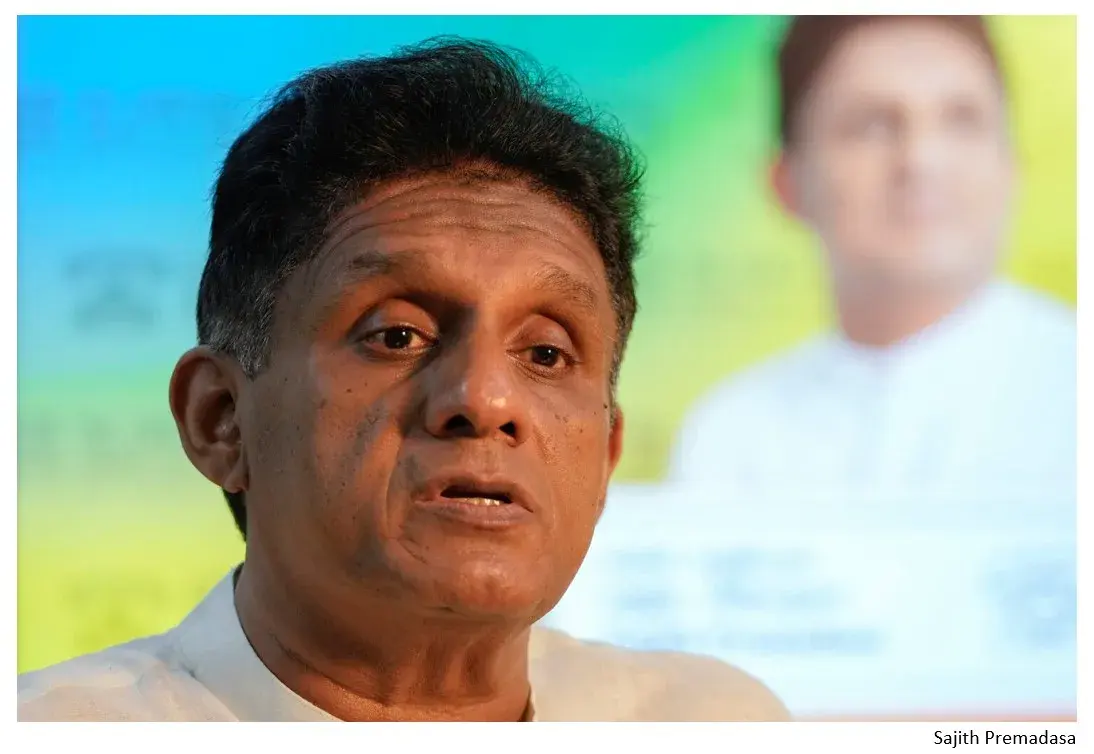
Wijesiri’s warning to the SJB leadership is sure to be grist for the NPP’s mill. The government has been spreading rumors of a plot to oust Sajith Premadasa as the Opposition Leader, and blowing differences of opinion between Premadasa and SJB MP Dr. Harsha de Silva out of proportion. Now, it has something to bolster its claim.
The SJB parliamentary group is said to be not so pleased with the way the party’s decisions are taken. The dissidents have said some members of the Premadasa family and their close associates influence the SJB’s decisions.
Wijesiri has echoed the views of all SJB dissidents without levelling allegations against any particular leader in the party. In December 2024, SJB Chairman Imtiaz Bakeer Marker sent a letter to Premadasa, calling for party reforms. His letter contained12 recommendations, including a call for the SJB to consolidate its ideological stance.
Urging the party leadership to ensure internal democracy and engage party members at all levels, and delegate responsibilities, he called for grooming the party’s youth wing members for leadership and opposed the practice of elevating newcomers to key positions. He also demanded that party decisions be made collectively, reinforcing unity among its MPs and members. He said the party had to uphold internal democracy. He also asked the party leader to have regular meetings of the SJB MPs, party organisers, and the members of committees including the Executive Council. He proposed that responsibilities be given to district leaders and progress be reviewed quarterly. Stressing the need to set up a social media unit in the SJB, he suggested that only 35% defeated candidates be included in the SJB’s nomination lists.
The dissidents in the SJB are a force to be reckoned with, and it will be a mistake for Premadasa and his inner circle to ignore their voice and try to bulldoze their way. The success of the SJB’s plans to turn the tables on the NPP hinges on its ability to present a united front against the government, whose popularity is believed to be on the wane. The SJB has managed to improve its electoral performance to some extent as evident from the outcome of the May 06 local government elections, and the manner in which it seized control of dozens of hung councils where the NPP had secured pluralities. However, it has a long way to go before it is in a position to challenge the NPP effectively in an election.
The much-delayed Provincial Council elections are expected to be held in the first half of 2025, and unless the SJB succeeds in recovering lost ground significantly in the near future and deal a severe electoral blow to the NPP, its internal problems are bound to take a turn for the worse. The possibility of some of its dissident MPs going to the extent of breaking with it and forming a new political alliance in case of another electoral setback cannot be ruled out. It was dissension in the UNP that paved the way for the emergence of the SJB.
RELATED NEWS
View all
Politics by Vishvanath
Has 22A become the govt.'s Catch-22?
Aug 27, 2026
Politics by Vishvanath
22nd Amendment: A huge political gamble for govt.
Aug 21, 2026
Politics by Vishvanath
Move to raise retirement ages of judges: Options before govt.
Aug 05, 2026
Politics by Vishvanath
‘Cockroach’ uprising and echoes of Aragalaya
Jul 26, 2026