Current Affairs
Global impact of Trump’s “snatch and grab” in Venezuela
By P.K.Balachandran
Colombo, January 9 – US President Donald Trump’s invasion of Venezuela and the capture of its President Nicolas Maduro on January 3 will have profound consequences both for Latin America and the world at large.
The launching the operation hours after President Maduro met China’s special envoy sent a clear and unequivocal message to China and its role in Latin America. China risks losing oil flows, more than $60 billion in sunk loans, and one of its reliable political footholds in the Western Hemisphere.
In November last year, at a business forum in Miami, the anti-Maduro leader, María Corina Machado, said that, in 2012, China’s state-owned CITIC company had conducted the only full geological survey of Venezuela’s critical mineral resources. CITIC is the only company that has that survey to this day, she added.
By invading Venezuela, Trump showed that the “axis of authoritarians” (the name given to the Russia-China alliance) may be strong and threatening in peacetime, but is not decisive in moments demanding resistance or counter action. The indifference of China and Russia to the invasion made Trump brag that the US had successfully attacked and subdued countries which did not bend to his will and cited Iran. Indeed no power came to Iran’s rescue when he bombed its nuclear facilities.
But it cannot be assumed that Russia and China will not plan to prove their power and value for their allies during future emergencies, experts writing in the website POLITICO said. Therefore, in the long run, Trump’s strong -arm methods could get a reaction he did not bargain for.
Justin Logan, the Director of Defence and Foreign Policy Studies at the Cato Institute wrote that China could take the cue from Trump and threaten the Taiwanese leadership or attack Taiwan to bring about a regime change.
Middle Level Powers
Then there could be a demonstration effect in other geographies. Middle-level powers could threaten weaker and recalcitrant neighbours citing Trump’s example. The future could witness attempts to dislodge inconvenient governments and leaders by regional powers.
It is widely acknowledged that President Trump is unpredictable and that his policies could swing widely from one end to the other. At the beginning of his second term, the world was given the impression that he is a President of Peace and not of war. But the action in Venezuela shows that he is indeed brazenly warlike. This unpredictability would result in other powers and weaker nations fortifying themselves against US aggression. They could build alliances and strengthen themselves militarily, leading the US into disastrous wars such as the ones it got into and lost in Vietnam and Afghanistan.
Impact on MAGA
Trump’s adventure in Venezuela may have given him instant gratification but its long and even medium-term consequences could prove to be hurting and ruinous for the US which is seeking to build itself as a self-reliant and prosperous country competing against the emerging colossus, China. In other words, Trump’s Make America Great Again (MAGA) project could suffer.
Current apprehensions in Moscow and Beijing will be coupled with more careful thinking about how to counter the capricious US leader.
Rubio-Cuba Link
Stephen Kinzer, a longtime foreign correspondent for the New York Times, and a senior fellow at the Watson School for International and Public Affairs at Brown University told POLITICO about the role of Trump’s Secretary of State, Marco Rubio, a man of Cuban origin, in the Venezuela operation. Kinzer said that Rubio wants to apply the Venezuela formula to Cuba because he intends to destroy Fidel Castro’s legacy there. Rubio hopes that without Venezuelan oil, Cuba’s political system will collapse.
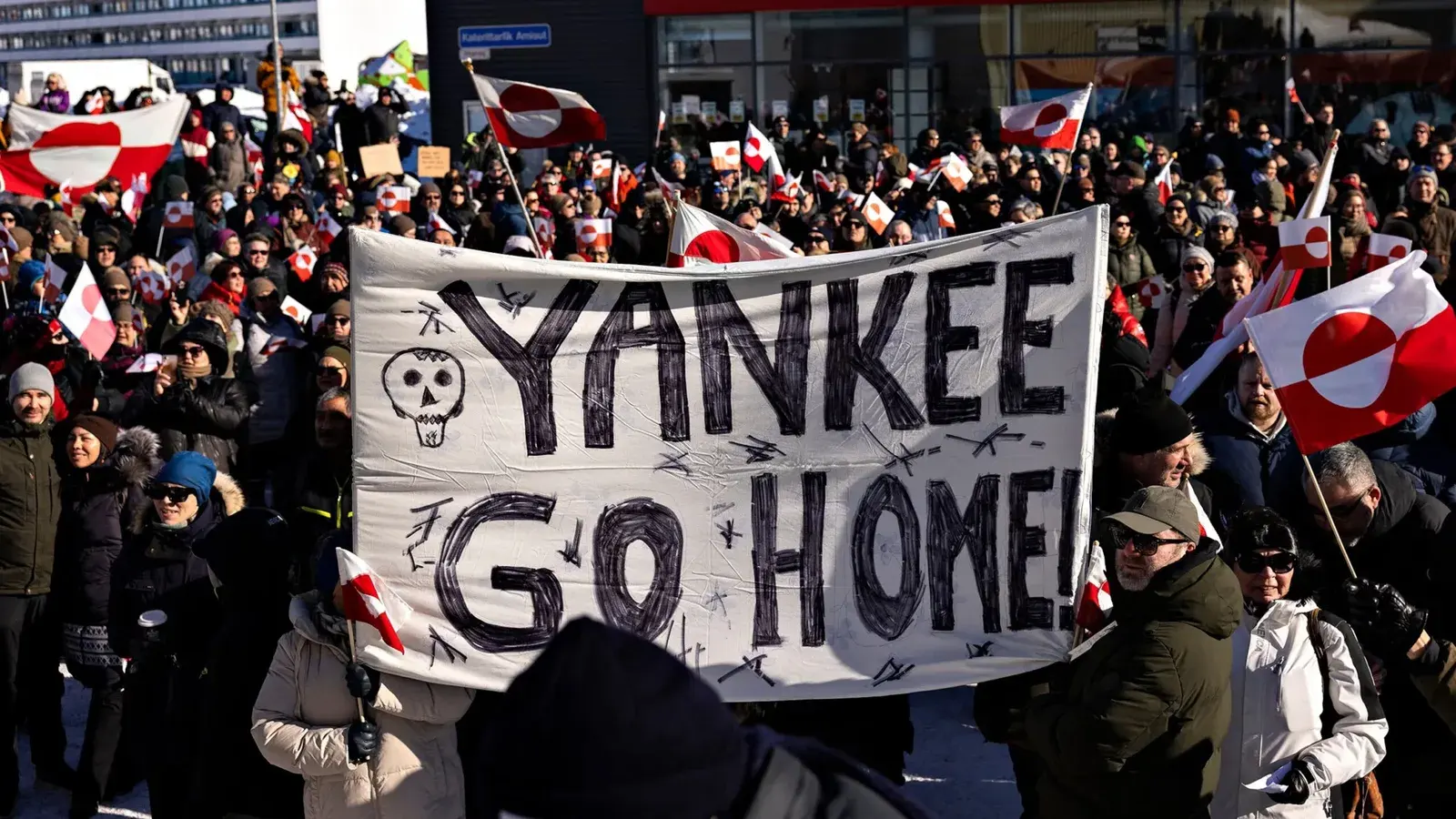
But such an operation mounted in Cuba, could make that country and the rest of Latin America chronically anti-American. The US would be seen again as an “eagle with larcenous claws.” Latin America could reverberate with the slogan “Yankees go home”.
The phrase “Yankee, go home!” has a long history of being used as an anti-American and anti-imperialist slogan. It is a powerful expression often used by those who feel oppressed or threatened by U.S. military presence.
This slogan traces its origins back to Cold War-era East Germany. On May 28, 1950, East German youths carried a banner bearing this message during a march in Berlin. The banner depicted a Soviet officer rejecting the Marshall Plan from an American, symbolizing the broader resistance to U.S. influence. Originally began as Communist propaganda, the slogan has since been adopted globally by those opposing U.S. military presence in their countries.
Emma Ashford, a senior fellow with the Reimagining US Grand Strategy program at the Stimson Centre warned that Trump’s action might signal America’s addiction to regime change that could end disastrously as it did in the Middle East.
“Right now, the Trump administration’s plan appears to be a relatively modest leadership change, the removal of Maduro and his replacement with someone inside the regime who will be more cooperative. But Trump explicitly rejected the notion of democratic regime change when he told journalists that María Corina Machado could not summon enough support to lead the country. This vision of a US-coopted government in Venezuela could very easily go wrong, with chaos taking over that could lead to a much larger US intervention,” Ashford said.
“If Donald Trump’s luck does not hold, then the Trump Corollary of the Monroe Doctrine may end up as little more than a synonym for overconfident failure,” Emma Ashford added.
Bob McNally, Founder-President of Rapidan Energy Group, an independent energy market, policy and geopolitical analysis firm based in the Washington, DC, said that Trump’s making a big deal of controlling Venezuelan oil may not make sense.
“Global oil markets have ample supply, and Venezuela contributes only about 4 percent to China’s and the US's crude imports. The US could spend billions on developing the Venezuelan oil sector at a time when demand could be falling with countries giving preference to alternative energy sources,” McNully said.
Daniel W. Drezner. Distinguished Professor of international politics at the Fletcher School of Law and Diplomacy at Tufts University told POLITICO that the Trump administration would increase, not decrease US military adventurism. Trump had given the wrong impression that he is an isolationist and the world would take note of that and respond appropriately.
Daniel R. DePetris, a syndicated foreign affairs columnist at the Chicago Tribune says that Latin American leaders who cater to US demands like Argentine President Javier Milei and El Salvadoran President Nayib Bukele will be rewarded and those who don’t, like Cuban President Miguel Diaz-Canel and Colombian President Gustavo Petro, will face intense US economic and rhetorical pressure — including the looming threat of a “snatch-and-grab” operation in the middle of the night as Maduro did.”
DePetris warned that even small powers don’t like to be dictated to, and if the pressure gets too intense or if the demands become intolerable, they may choose to enact strategies of hedging or outright balancing to defend their own security interests.
“With respect to Latin America specifically, the most likely alternative waiting in the wings is China, which is already the top trading partner of choice for many of the region’s governments. It would be the height of irony, then, if Trump’s military operation in Venezuela winds up complicating his own grand strategy over the long term,” DePetris said.
Stephen McFarland a retired US diplomat who was ambassador to Guatemala and had served twice in Venezuela, pointed out that Trump had minimized the role María Corina Machado, who had unified the opposition and led it to victory in the 2024 presidential elections. He has clearly indicated that he wants no one popular in the new Venezuelan leadership. His preference is for a puppet. He expects Maduro’s henchwoman, Delcy Rodríguez, to succeed Maduro and be his puppet.
But Rodriguez seems less than cooperative, demanding her boss’s release and affirming that only Maduro is legitimate in her eyes. There has been a gross miscalculation by Trump here too.
END
RELATED NEWS
View all

Current Affairs
Sri Lankan Presidential pardons- the good and the bad
Sep 11, 2026
Current Affairs
The pros and cons of joining BRICS- the dilemma of Pakistan and Bangladesh
Sep 09, 2026
Current Affairs
Disaster in Nepal gets embroiled in geopolitics.
Sep 08, 2026
Current Affairs
Why Mecca Pact, and what does it imply for its members, Israel and India?
Aug 18, 2026