Current Affairs, Cover Story
Income inequality is a factor in climate change says “World Inequality Lab”
By P.K.Balachandran
Colombo, December 13- The various manifestations of climate change like nature’s fury and the economic and social disruptions it causes, are linked to inequalities both in the national and global social order, says the 2026 report of the World Inequality Lab (WIL).
The report draws on writing and research by more than 200 scholars and was produced with support from the European Union and the United Nations Development Fund.
The cumulative consequences of extreme climate events are becoming increasingly visible, affecting livelihoods, infrastructure, and economic stability worldwide. The climate crisis is unfolding in a world marked by profound economic inequality and highly concentrated wealth.
“Wealthy individuals not only contribute disproportionately to global emissions but are also better shielded from the damages of climate shocks. They hold the financial, corporate, and political power to shape the pace and direction of the climate transition,” the report points out.
And the alarming this is that climate change is advancing at a pace that far exceeds early projections. But by 2025, the remaining carbon budget compatible with limiting global warming to 1.5°C above pre-industrial levels has been nearly exhausted.
Inequality and Emission
Inequality is both gross and almost universal. The richest 10% of the global population own close to three-quarters of all wealth, while the poorest half barely 2%. Fewer than 60,000 multi-millionaires now control three times more wealth than half of humanity combined.
Under the capitalist system, some 56,000 billionaires and centi-millionaires control the fate of the 8 billion human beings who inhabit this planet.
“The top 0.1% earn as much as the entire bottom 50%. This means that a group of people no larger than the population of Singapore takes in the same income as half of the world’s population,” the report says.
Growing Gap
The wealthiest 0.001% have seen their share of the world’s wealth grow from 4% to 6% since 1995, while the bottom half of the world’s population controls only 2%. Multimillionaires have increased their wealth by approximately 8% each year over the past three decades, nearly twice the rate of the bottom half of the population.
“This is an extraordinary accumulation at the very top. The result is a world in which a tiny minority commands unprecedented financial power, while billions remain excluded from even basic economic stability,” the report says.
The WIL report says that poorer nations are compelled to transfer resources outward—via debt service, profit repatriation, and financial flows. They are forced to do so because of their inability to invest in education, healthcare, and infrastructure
It is a staggering fact that these outflows from the poorer countries to the rich countries amount to approximately three times more than development aid flowing in the opposite direction,” it adds.
How It Affects Emission
At the global level, a person in the top 1% income group emits, on average, around seventy-five times more carbon per year than someone in the bottom 50%.
Inequality Within Nations
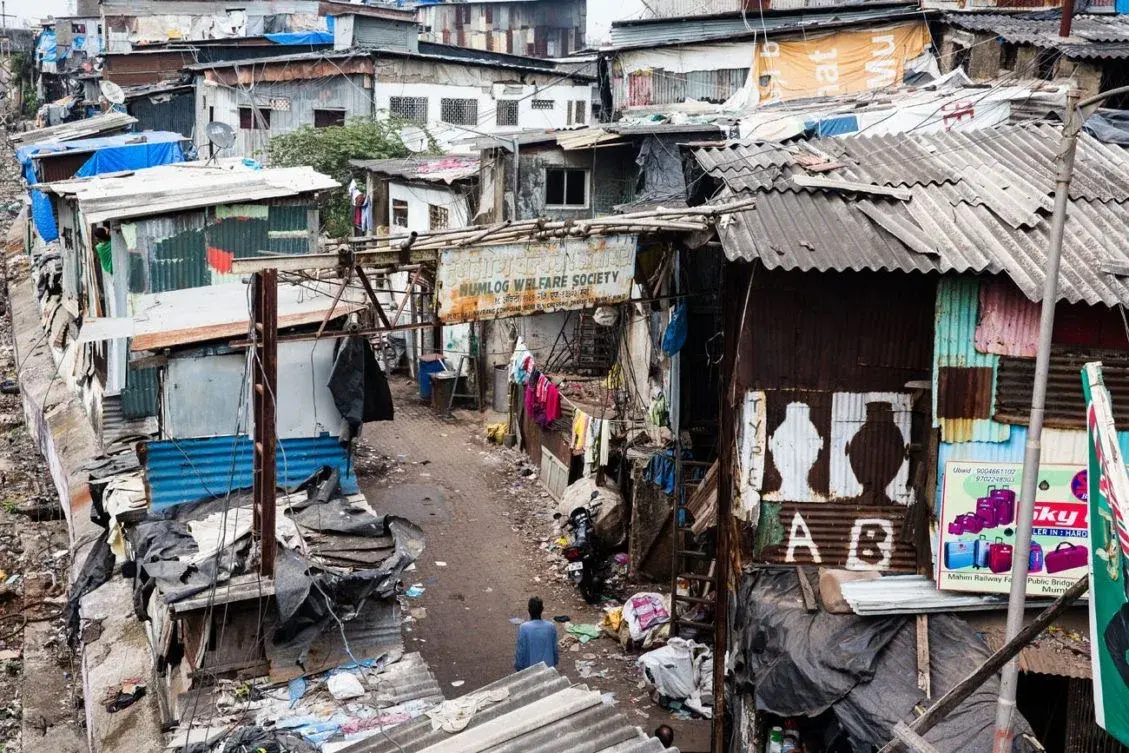
In the world as a whole as well as withing countries, the rich are getting richer and the poor are getting poorer. In nearly every region of the world, the top 1% is wealthier than the bottom 90% combined.
The data given in the WIL report is inadequate as Sri Lanka has been omitted while India, Pakistan, Bangladesh and China have been included.
In Bangladesh, the top 10% of earners receive about 41% of national income, while the bottom 50% take only 19%. Wealth is more unevenly distributed, with the richest 10% holding around 58% of total wealth and the top 1% nearly one quarter.
However, the income gap between the top and bottom halves of the population decreased slightly from 22 to 21 between 2014 and 2024, suggesting stable inequality levels. Female labour participation remains low at 22.3%, indicating persistent gender disparities in economic activity.
In Pakistan, inequality remains high and shows limited progress over the past decade. The top 10% of earners capture 42% of total income, whereas the bottom 50% receive only 19%. Wealth inequality is even more concentrated, with the richest 10% holding 59% of total wealth and the top 1% accounting for 24%.
Female labour participation fell from 9.8% to 8.5%, indicating a decline in gender inclusion.
India
In India, inequality remains among the highest in the world and has shown little movement in recent years. The top 10% of earners capture about 58% of national income, while the bottom 50% receive only 15%. Wealth inequality is even greater, with the richest 10% holding around 65% of total wealth and the top 1% about 40%. The income gap between the top 10% and the bottom 50% remained stable between 2014 and 2024.
Female labour participation remains very low at 15.7%, showing no improvement over the past decade. Overall, inequality in India remains deeply entrenched across income, wealth, and gender dimensions, highlighting persistent structural divides within the country.
China
In China, inequality remains high but has levelled off after decades of sharp increases. The top 10% of earners capture about 43% of national income, while the bottom 50% receive just 14%. Wealth disparities are particularly large, with the richest 10% holding nearly 68% of total wealth and the top 1% about 30%. The income gap between the top 10% and the bottom 50% widened slightly from 29 to 31 between 2014 and 2024, signalling continued polarization despite slower growth in inequality overall.
The overall female labour force participation (LFP) rate in China is 34.6%, showing no significant improvement. After years of widening divides, inequality in China now appears to have reached a plateau, though at a high level by global standards
After years of widening divides, inequality in China now appears to have reached a plateau, though at a high level by global standards.
Russia
In Russia, inequality remains very high and has increased further over the past decade. The top 10% of earners receive 51% of total income, while the bottom 50% account for only 16%. Wealth concentration is even more pronounced: the richest 10% hold 75% of total wealth, and the top 1% alone holds 47%. Average income per capita is 27,500 euros (PPP), and average wealth per capita stands at 94,100 euros (PPP). The income gap between the top 10% and the bottom 50% widened from 27 to 32 between 2014 and 2024, showing expanding disparities.
Female labour participation increased slightly from 40% to 42%. Overall, both income and wealth are highly concentrated in Russia, with inequality continuing to rise.
UK
In the United Kingdom, inequality is moderate and has remained relatively stable over the past decade. The top 10% of earners receive 36% of total income, while the bottom 50% account for 21%. Wealth concentration is higher, with the richest 10% holding 57% of total wealth and the top 1% holding 21%.
The income gap between the top 10% and the bottom 50% declined slightly, moving from 18.1 to 16.6 between 2014 and 2024. Female labour participation increased from 37.7% to 38.9% over the same period. Overall, the United Kingdom displays stable income distribution patterns, though wealth remains concentrated among the top groups.
USA
In the United States, inequality remains high and has shown little change over the past decade. The top 10% of earners receive 47% of total income, while the bottom 50% account for only 13%. Wealth inequality is even more concentrated, with the richest 10% holding 70% of total wealth and the top 1% alone holding 35%.
The income gap between the top 10% and the bottom 50% remained stable, moving from 34.5 to 34.6 between 2014 and 2024.
Female labour participation increased from 37.4% to 39.7% over this period. Overall, income and wealth in the United States remain highly concentrated among the top groups, with persistent disparities across inequality dimensions.
How to Reducing the Gap
Reducing inequality is a political choice, WIL says. Fragmented electorates, underrepresentation of workers, and the outsized influence of wealth all work against the coalitions needed for reform.
But this reality can change.
There are a range of policies that, in different ways, have proven effective in narrowing gaps, WIL asseerts.
“One important avenue is through public investments in education and health. These are among the most powerful equalizers, yet access to these basic services remains uneven and stratified. Public investment in free, high-quality schools, universal healthcare, childcare, and nutrition programs can reduce early-life disparities and foster lifelong learning opportunities.”
“By ensuring that talent and effort, rather than background, determine life chances, such investments build more inclusive and resilient societies. Another path is through redistributive programs. Cash transfers, pensions, unemployment benefits, and targeted support for vulnerable households can directly shift resources from the top to the bottom of the distribution. Where well-designed, such measures have narrowed gaps.”
END
RELATED NEWS
View all

Current Affairs
Sri Lankan Presidential pardons- the good and the bad
Sep 11, 2026
Current Affairs
The pros and cons of joining BRICS- the dilemma of Pakistan and Bangladesh
Sep 09, 2026
Current Affairs
Disaster in Nepal gets embroiled in geopolitics.
Sep 08, 2026
Current Affairs
Why Mecca Pact, and what does it imply for its members, Israel and India?
Aug 18, 2026