Current Affairs
India’s bonhomie with Taliban could help rein in Islamic terrorists in Afghanistan
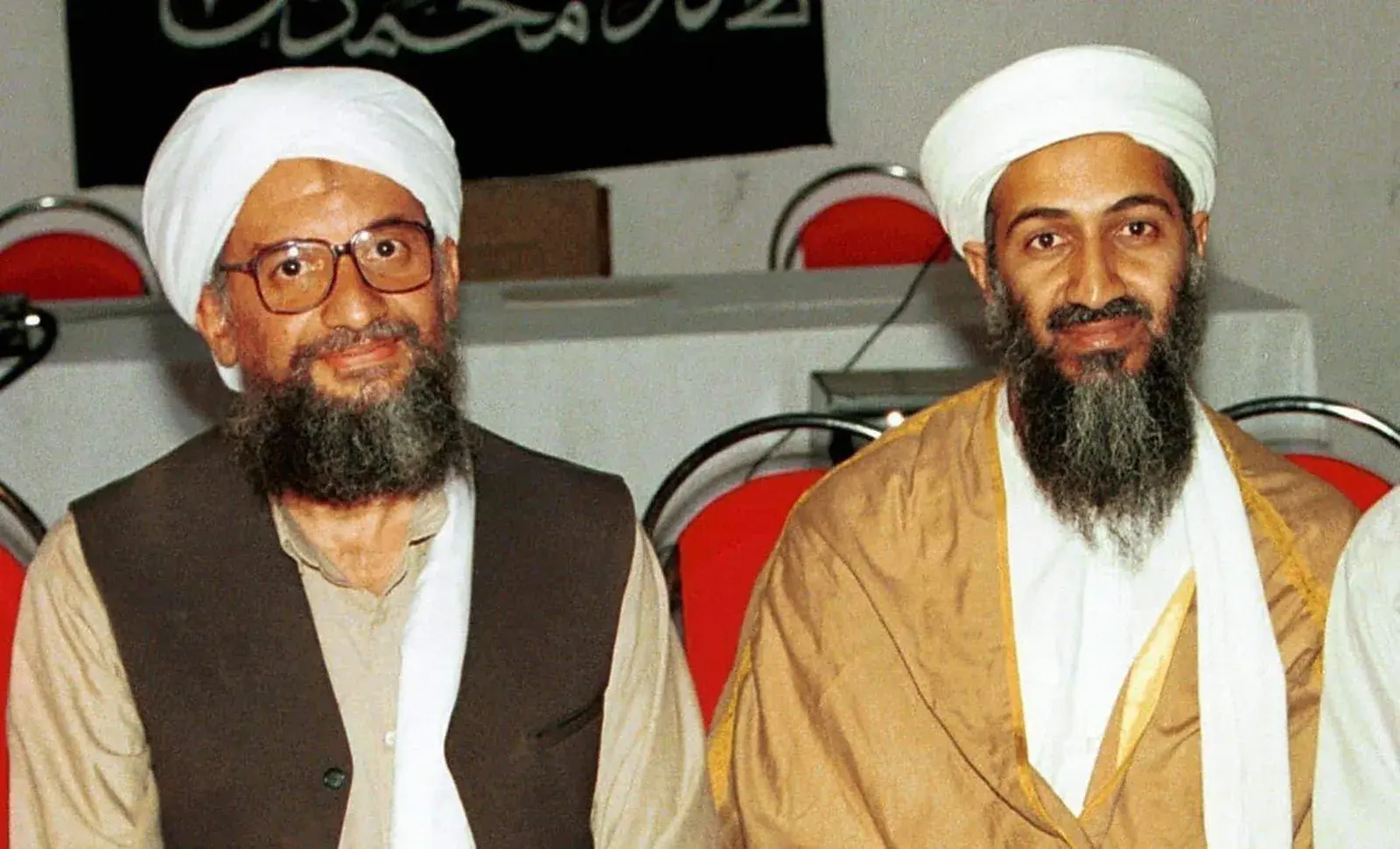
The Al Qaeda Indian Subcontinent (AQIS) and its cognate Jihadi groups are based in Taliban-ruled Afghanistan
By P.K.Balachandran
Colombo, October 23 – India’s much publicised bonhomie with the Taliban is not just to create a two-front conflict in Pakistan, but also to rein in the “Al Qaeda in Indian Subcontinent” or AQIS and other radical Islamist outfits ensconced in Afghanistan.
The AQIS is an offshoot of Al Qaeda Central (AQC) led first by Osama bin Laden (1957-2011) and later by Ayman al Zawahiri (1951-2022).
It was in September 2014 that the AQC launched the AQIS to carry out Jehadi and terrorist activities in Pakistan, India, Bangladesh and Myanmar, with its leadership based in Pakistan and Afghanistan.
In his paper entitled “Al Qaeda in the Indian Subcontinent” published by The International Centre for Counter-Terrorism at The Hague, Alastair Reed says that the AQIS had three objectives – (1) counteracting the breakaway Islamic State of Iraq and Syria (ISIS) or Daesh, (2) expanding AQC’s activities in South Asia and (3) continuing to function in Afghanistan after the withdrawal of the Americans.
AQIS’ presence in Afghanistan was needed both to have secure bases and to see that the Taliban was committed to the Sharia and Jihad in Afghanistan as well as the South Asia region as a whole.
Ghazwa-al-Hind
The AQIS coined the term “Ghazwa-al-Hind” (Battle of India) for the task before it in South Asia. Afghanistan and Pakistan were made the headquarters of the “Ghazwa-al-Hind” project. Most Pakistan-based Jihadist groups have framed their attacks on Indian soil as part of the “Ghazwa -al-Hind”.
The AQIS recruited fighters and united different pre-existing Jihadi groups in the Indian Subcontinent. The groups brought under the AQIS were - Tehrik-e-Taliban Pakistan (TTP), Harkat-ul-Jihad al-Islami (HuJI) (Bangladesh and Pakistan), Harkat-ul-Mujahideen (HuM) (Kashmir), Harkat-ul-Mujahideen al Almi (HuMA) (Pakistan), Brigade 313 (Pakistan), Jaish-e-Mohammad (JeM) (Pakistan), Lashkar-e-Jhangvi (LeJ) (Pakistan), Jundullah (Pakistan), Ansar ut-Tawhid wa al Jihad (Kashmir), Ansar al Islam Bangladesh (Bangladesh), Ansarullah Bangla Team (ABT) (Bangladesh), Indian Mujahideen (IM) (India), Lanshkar-e-Taiba (LeT) (Pakistan), Islamic Movement of Uzbekistan (Pakistan), and Turkistan Islamic Party (Pakistan).
Osama Mahmood is the current leader (Amir) of the AQIS. He is a Pakistani Islamic cleric. Osama succeeded Asim Umar after Umar's death in a 2019 US-Afghan raid in Afghanistan’s Helmand Province.
Osama Mahmood operates primarily from Afghanistan under Taliban protection. He was designated a global terrorist by the US in 2022. AQIS is believed to have up to 400 members in Afghanistan.
Presence in India
The AQIS has no organized presence in India, according to Alastair Reed. Membership is very low. There have been no claimed or verified attacks by AQIS on Indian soil. Efforts to establish a foothold—such as links to Kashmiri insurgents—have been largely ineffective.
The group's influence in India is primarily through propaganda, online recruitment, and threats, including videos and statements calling for attacks on Delhi, Mumbai, Gujarat, and Uttar Pradesh. India has designated AQIS as a terrorist organization and monitors its digital activities.
In its messaging, AQIS makes a special focus against India, which it sees as an ally of the West against South Asia’s Muslim populations. Ayman al-Zawahiri had called upon Muslims to unite to “confront the alliance of India, the West, secularists and atheists”.
Alastair Reed says that the AQIS has capitalized on the existing cleavages in Indian society between the Hindu majority and the large Muslim minority, while also seeking to exploit age-old fears of domination and suppression of the Muslim community.
According to al-Zawahiri, Muslims in India are “living under the dark shade of Hindu occupation”.
The Indian establishment is “working methodically to bring the Muslims down from the level of former kings and emperors to the level of Shudars, Dalits and lower castes so that they lose the will and strength to stand up to the Hindus”, the AQIS contends.
In December 2015, AQIS infiltration into India became apparent with the arrest in Delhi of three members AQIS’s Indian wing, including its leader, Mohammad Asif. In his interrogation it emerged that Asif had attended the grand Shura in Waziristan that had formally announced the formation of AQIS, during which he was instructed to return to India to set up terror groups in the country.
The Delhi police claimed that one Maulana Abdul Rehman Kasmi had set up a terror training camp “somewhere in Jharkhand forests.”
A notable escalation occurred in May 2025, when AQIS issued a formal Jihad against India in response to Operation Sindoor, framing it as an assault on Muslims and urging regional Muslims to join their cause. But this rhetoric was not translated into significant operational strength or action on the ground.
Many analysts argue that despite elements like AQIS, al-Qaeda has little prospect of being able to radicalise the Indian Muslim population – pointing out that is something that al-Qaeda has tried and failed to do over the last two decades.
Researcher Kirit Nair says that the AQIS “is unlikely to gain traction as India’s democratic dispensation provides Indian Muslims freedom, liberty and media exposure to a level unheard of in most of the Islamic world”.
There is also an ideological disconnect with little support within the Indian Muslim population for the Wahhabi strand of Islam followed by some extremists, nor for the establishment of a Caliphate.
Despite AQIS’ stated vision of fighting a war for South Asia, since its formation it has largely failed to live up to its ambitions, unable to carry out a terrorist spectacular and managing only a handful of relatively minor attacks across South Asia.
Contradictions in Pakistan
The AQIS has a substantial presence in Pakistan. But Pakistan has had a complex relationship with the many jihadi groups on its soil. It promoted Jihadi groups to enable the Taliban to seize power in Afghanistan from the -Soviets and Americans. At the same time, it used some of these Jihadists to fight its unceasing non-conventional war with India on Kashmir.
However, Pakistan could not meet the Jhadists’ demand for a strictly Sharia-compliant Pakistan, which led to unceasing violence internecine.
Pakistan also drew a distinction between Jihadi groups that fulfilled its agenda in India such as Lashkar-e-Taiba (LeT)) and those that waged war against the Pakistani State, such as Tehrik-e-Taliban Pakistan (TTP). But this distinction has put the Pakistani State in conflict with the AQIS of which both groups are members. It also irritated the US and India which wanted Islamabad to crackdown on all terror groups.
The intense competition between Jehadi groups has sparked internecine fights. Such rivalry may prove to be a catalyst to drive AQIS to carry out terrorist spectacular to prove itself.
But, so far, the AQIS has been ineffective in India. Even in Bangladesh where it has been more active, the attacks have been sporadic and directed mainly at secular bloggers using primitive instruments like knives and machetes.
END
RELATED NEWS
View all

Current Affairs
Sri Lankan Presidential pardons- the good and the bad
Sep 11, 2026

Current Affairs
The pros and cons of joining BRICS- the dilemma of Pakistan and Bangladesh
Sep 09, 2026
Current Affairs
Disaster in Nepal gets embroiled in geopolitics.
Sep 08, 2026
Current Affairs
Why Mecca Pact, and what does it imply for its members, Israel and India?
Aug 18, 2026