Politics by Vishvanath, Cover Story
Mahinda’s warning and NPP’s ire
By Vishvanath
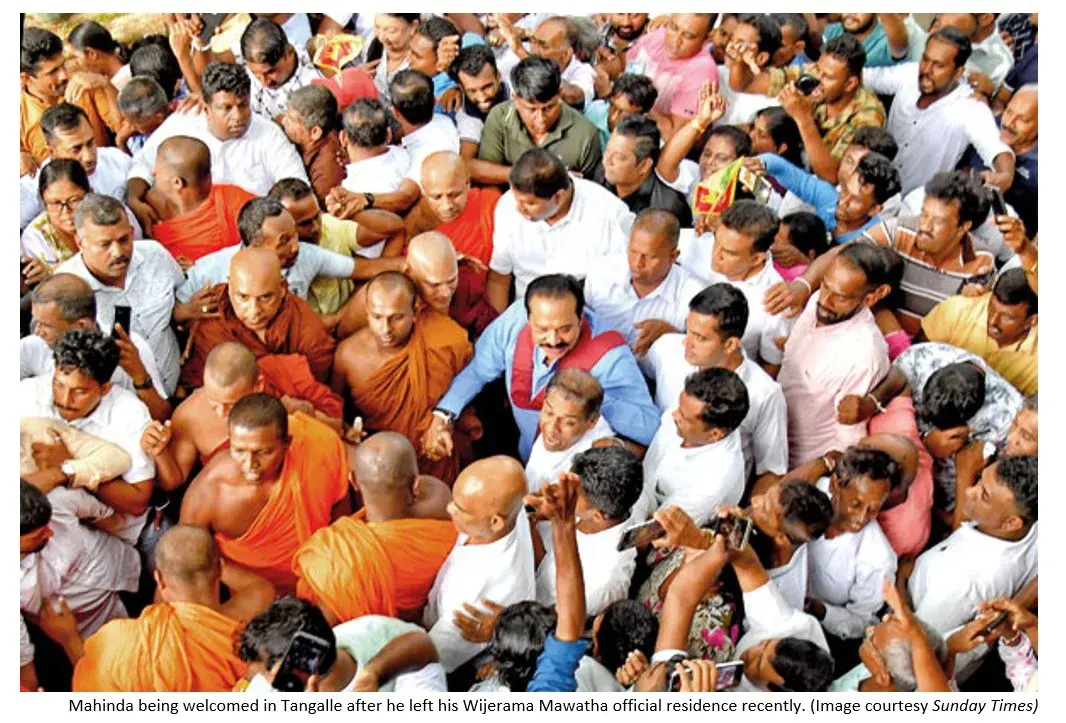
The NPP has provided the SLPP with a fresh rallying point, albeit unwittingly. It has promised, in its election manifesto, to scrap the perks and privileges for the former Presidents, and it says the recently passed Presidential Entitlements (Repeal) Bill is in keeping with the pledge, but it is widely thought that the government’s real target was former President Mahinda Rajapaksa, who poses a political challenge to the ruling alliance. In fact, the NPP asked him to leave his Wijerama Mawatha official residence in Colombo months before the passage of the aforementioned bill. The Opposition, save a party or two, has pledged solidarity with Mahinda although its MPs, except Chamara Sampath Dassanayake, did not vote against the bill to strip the former Presidents of their entitlements.
Mahinda never ceases to be a problem for his political rivals whether he is in office or out of power. He caused splits in the UNP while holding the presidency (2005 to Jan. 2015), and it was said at the time that there were more UNP MPs in his government than in the UNP’s parliamentary group! The UNP leaders did not have any peace of mind even after Mahinda was defeated in a presidential election held Jan. 08, 2015. He launched his comeback campaign on Jan. 10 2015 itself by addressing his supporters from a window sill of his Carlton residence in Tangalle. The Mahinda Sulanga campaign, he launched to topple the UNP-led Yahapalana government, gathered momentum, and propelled the Rajapaksa family back to power four years later.
After returning to Tangalle last Sunday, in an interview with Hiru TV, Mahinda warned of the possibility of another Mahinda Sunlanga or what he called any other Sunlanga unless the government got its act together and lived up to the expectations of the people. Government politicians have interpreted his warning as a veiled threat that Namal Rajapaksa will take on the NPP the way Mahinda did to the UNP-led Yahapalana government in the 2015-2019 period.
Namal opted out of the last parliamentary election for fear of losing, and entered the parliament via the National List. The SLPP’s national vote share improved marginally in the May 06 local government polls, but it will be a mistake for the Rajapaksa family to think that any of its members will be able to pose a formidable political threat to the NPP or even the SJB, for that matter, any time soon, much less turn the tables on President Anura Kumara Dissanayake’s government. One can also argue that anything is possible in politics, where fortuitous circumstances catapult politicians and political parties to the centre-stage of politics and facilitate their meteoric rise to power. The 2024 regime change may serve as an example.
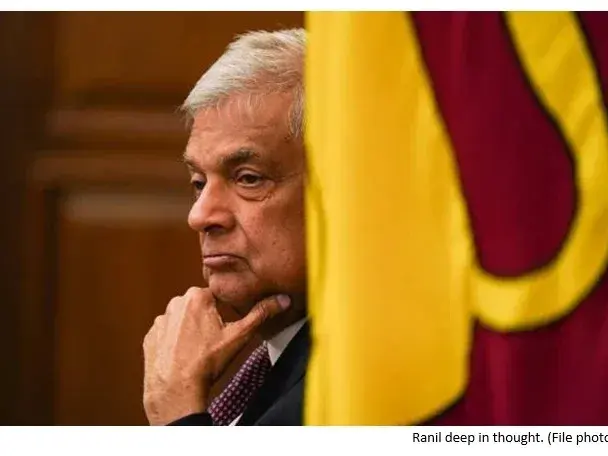
The JVP-led NPP had only three members in the last Parliament, and its national vote share was a meagre 3% in the 2020 general election, but four years later it captured state power with a two-thirds majority in the parliament, and its vote share shot up to a staggering 61.56%. Everybody thought it was curtains for Ranil Wickremesinghe politically when he lost his own seat in the 2020 general election and his party was reduced to a single National List slot, but he entered parliament as an appointed MP and went on to become Prime Minister and President in quick succession, the way Chandrika Bandaranaike Kumaratunga did in 1994, when her popularity as well as the electoral performance of the SLFP was at its zenith. It was also thought in some quarters that Maithripala Sirisena was committing political suicide by challenging the then President Mahinda Rajapaksa in the 2015 presidential race, but he came from behind and beat the latter. So, it is only natural that the NPP does not want to leave anything to chance and is all out to defeat Namal’s efforts to make a comeback with the help of his father.
Anti-corruption drives are very popular in this country, but they alone don’t help governments consolidate their vote banks and secure re-election, as was the experience of the Yahapalana government, which also caused numerous high-profile arrests to be made in the name of combating corruption; they did not help the UNP, the main constituent of the Yahapalana administration, avoid a crushing defeat.
One of the main reasons why it is not advisable for the NPP to rely solely on its anti-corruption campaign to hold its political rivals at bay and shore up its approval rating, which has decreased as evident from its performance at the May 06 LG polls, is that there are very serious allegations of corruption against some of its own members. The assets of some key NPP members have received social media attention recently and become grist to the Opposition’s mill.
The JVP/NPP seniors call themselves non-elites and condemn the traditional elites in politics as rogues who have amassed wealth at the expense of the public and through some other illegal means. So, they will have a hard time preventing their rivals from making the same allegations against them. Another factor that takes its toll on the popularity of any government is failure to provide economic relief to the public. People expected the prices of essentials such as food, fuel and power to be slashed by the NPP government. It was also thought there would be sizable tax reductions. The NPP had the public believe that the root cause of their economic hardships was corruption that the previous governments, their leaders and their progeny indulged in, and it would be able to deliver them from their suffering by eliminating corruption and punishing the corrupt.
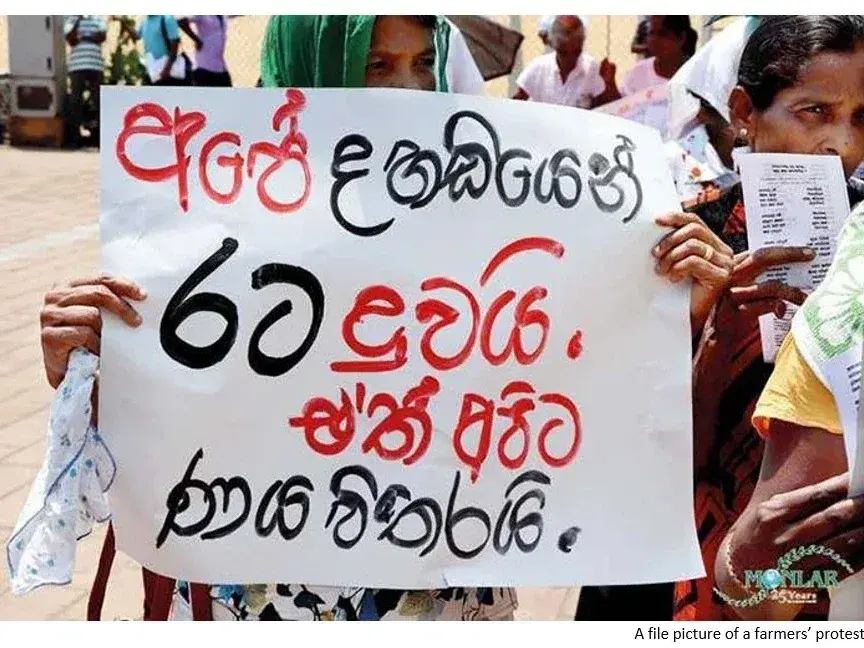
Farmers are up in arms, demanding fair prices for produce. Paddy cultivators are carrying out a frontal attack on the NPP government, and berating its ministers who once fought for farmers’ rights. Protesting farmers are accusing the government of being in the pay of large-scale rice millers just like its predecessors. Sugarcane cultivators are protesting against the nonpayment of their dues, in Sevanagala, and the NPP politicians’ rhetoric has exasperated them beyond measure. Unemployed graduates are demanding jobs, and staging street protests; the graduates recruited as Development Offices by the previous government are demanding that they be absorbed into the state service as teachers. Teachers’ trade unions are all out to defeat the government’s proposed education reforms, which they call ill-conceived and disastrous. The Ceylon Electricity Board (CEB) trade unions have been on a work-to-rule campaign for several days, and are threatening to intensify their industrial action unless the government heeds their demands. They are opposing a government move to restructure the CEB in keeping with a plan formulated by the previous government as part of the IMF bail-out package. The JVP’s trade union has dissociated itself from the ongoing trade union action, much to the consternation of the CEB workers.
There are many serious issues that the NPP will have to sort out if it is to recover lost ground on the political front and prevent the Opposition from emerging stronger and intensifying propaganda attacks on the government. The SLPP is bound to exploit them to boost its election campaigns. Mahinda is still a force to be reckoned with; he is an asset to the SLPP.
RELATED NEWS
View all
Politics by Vishvanath
Has 22A become the govt.'s Catch-22?
Aug 27, 2026
Politics by Vishvanath
22nd Amendment: A huge political gamble for govt.
Aug 21, 2026
Politics by Vishvanath
Move to raise retirement ages of judges: Options before govt.
Aug 05, 2026

Politics by Vishvanath
‘Cockroach’ uprising and echoes of Aragalaya
Jul 26, 2026