Current Affairs
Nehru’s cautious stand on the 1958 anti-Tamil riots in Sri Lanka
By P.K.Balachandran
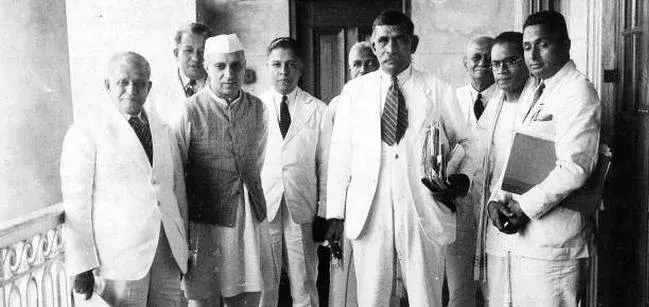
Colombo, November 28 – India’s Prime Minister Jawaharlal Nehru preferred to take a cautious line on the 1958 anti-Tamil riots in Ceylon ( as Sri Lanka was known then). The 1958 riots were the first against the Tamil minority which claimed hundreds of lives.
Not surprisingly, they reverberated in India, particularly in Madras State which is home to millions of fellow Tamils. The issue was raised in the national parliament in New Delhi also.
In a letter to Madras State Finance Minister C.Subramaniam in June 1958, Nehru said that while the loss of Tamil lives and the destruction of their properties were worrying, any Indian action on their behalf would be counter-productive both for India and the Tamils, especially to Indian origin Tamils in the estates.
In the letter dated June 28, 1958, Nehru said- “We cannot compel the Ceylon Government to do anything against its will. We cannot bring trade or economic pressures on them as they react against us. Any action that we take injures the people of Indian descent in Ceylon. In effect, Ceylon has a large number of hostages, and this puts us in a weak position to deal with them.”
“The very smallness of the country makes it difficult for us to take up too strong a line. If we do so, they fall more and more into the lap of other countries who might exploit them to our disadvantage.”
Estimates of the death toll in the 1958 riots varied from 300 to over 1,000, mostly Tamils. There was a widespread destruction of Tamil property, and the displacement of tens of thousands.
The immediate trigger was the abrogation of the Bandaranaike–Chelvanayakam Pact (B-C pact), but the deeper antecedents go back several decades. The British brought large numbers of Indian Tamils (separate from the indigenous Ceylon Tamils) to work on tea plantations in the central highlands, creating a new Tamil-speaking minority which was resented by the majority Sinhalese.
British favouritism toward Tamils in education and civil-service recruitment resulted in Tamils being over-represented in the bureaucracy and professions. That created a deep Sinhalese grievance.
The United National Party (UNP) governments between 1948 and 1956 followed a relatively balanced language policy with English as the official language. In 1951, S.W.R.D. Bandaranaike broke away from the UNP and founded the Sri Lanka Freedom Party (SLFP) on an explicitly Sinhala-nationalist platform, promising to make Sinhala the sole official language within 24 hours of taking power.
The 1956 general election was fought largely on the language issue and Bandaranaike’s Mahajana Eksath Peramuna (MEP) coalition was swept to power with the slogan “Sinhala Only”. The Official Language Act of 1956 (“Sinhala Only Act”) was passed in June 1956, to make Sinhala the sole official language, demoting Tamil.
Tamil public servants suddenly faced the prospect of having to function in a language many did not know adequately; Tamils lost access to government services in their mother tongue. Tamil non-violent protests began in 1956. Tamil unrest and Federal Party pressure forced Prime Minister Bandaranaike sign a pact with S.J.V. Chelvanayakam, the leader of the Federal Party (or Ilankai Tamil Arasu Katchi) in July 1957.
Key provisions of the B-C pact were -
(1) Recognition of Tamil as a “national minority language” and its use for administrative purposes in the Northern and Eastern provinces.
(2) Creation of regional councils with substantial devolved powers.
(3) Stopping state-sponsored colonization of Tamil-majority areas with Sinhalese settlers.
But the B-C pact was bitterly opposed by Sinhalese nationalists and also by the opposition UNP, which launched a vigorous anti-BC pact campaign. In April 1958, under intense pressure from Buddhist monks (notably the Eksath Bhikkhu Peramuna) and after a large protest march to Kandy, Bandaranaike unilaterally abrogated the pact. On 9 April 1958 he formally tore up the agreement.
In May rumours spread in Colombo and the south that Tamils had attacked Sinhalese and even Buddhist monks in the Tamil-speaking North. On May 24, a Buddhist monk was reportedly assaulted in Polonnaruwa, further inflaming tensions. By May 25-26, organized mobs (often led by persons close to the government) began systematic attacks on Tamils in Colombo. It spread to many other areas such as Kandy, Panadura, Matale, etc.
Velupillai Prabhakaran, the future founder-leader of the Liberation Tigers of Tamil Eelam (LTTE), was a schoolboy then. In an interview in 1984 he attributed his radicalisation to the 1958 pogrom. “I strongly felt that armed struggle was the only way to confront a system which employs armed might against unarmed, innocent people," he said.
The violence lasted from May 25 to early June 1958, only ending after Governor-General Sir Oliver Goonetilleke declared a State of Emergency and deployed the army.
Writing on the pogrom in “Emergency '58: The Story of the Ceylon Race Riots”, leading Ceylonese journalist Tarzie Vittachi noted that ethnic harmony which was a defining feature of Sri Lanka in the past had broken under deteriorating economic conditions and also an explosion in the population.
In Vittachi’s view, Bandaranaike’s “Sinhala Only” policy was but a part of his plan to meet the already growing unrest in the population. In most conditions of economic distress communal conflicts arise, minorities are held responsible and made the scapegoat.
Concern in Madras
The riots caused great concern in Tamil Nadu where there was already a powerful and secessionist “Dravidian movement” which up to 1962 was seeking a separate “Dravida Nadu” comprising the non-Hindi speaking South Indian States. The riots and the extensive suffering of Ceylonese Tamils figured in debates in the Madras Legislature and the Central parliament in New Delhi.
In June 1958, C.Subramaniam, the then Minister of Law, Education and Finance Minister in Madras State, wrote to Prime Minister Jawaharlal Nehru about the condition of the Tamils in Ceylon and asked what India planned to do to alleviate their condition.
Nehru replied to Subramaniam on June 28, giving his view of the entire Tamil question in Ceylon. He indicated a cautious line and gave reasons for it.
Here is the letter dated June 28, 1958 in full (source www.nehruarchive.in ).
My dear Subramaniam,
I am writing to you about the situation in Ceylon. We have all naturally been much exercised over happenings in Ceylon and I can very well understand the anxiety felt in Madras. I can also understand how this situation can be exploited by the communal elements in Madras.
Recently you have had a visit from Sunder Das who went from our High Commission in Colombo and gave you an account of what had happened. I understand also that a copy of a letter from our High Commissioner dated June 24th has been sent to your Chief Secretary. This letter gives the latest information of the position there.
You will have learnt that during all these troubles our High Commission was very much alive and alert and gave every help and protection to Indian nationals there who are mostly from South India. Our High Commissioner was in constant touch with the Prime Minister and other authorities in Colombo. He himself toured these riot-affected areas and opened camps where people could come for security and relief. These naturally dealt with Indian nationals only and it was not possible or desirable for our High Commission to deal with Ceylon nationals, even though they might be Tamils. Any such interference with Ceylon nationals would have been an unwarranted interference on our part which would have been deeply resented and objected to, and which would have put us in a most embarrassing position.
So far as Indian nationals were concerned, it appears that one of them died during these riots. There was, however, a good deal of damage done by arson and looting to shops. Strictly speaking, we are not entitled in the case of civil commotion to ask for damages that might have occurred even to our nationals. We shall however try our best to see what can be done about rehabilitating these people and bring this matter before the Ceylon Government.
Three Classes of Tamils
You know, of course, that there are three categories of persons in Ceylon who have been in the past or are now connected with India. The first category is that of the Ceylon Tamils or the Jaffna Tamils who have been there for hundreds of years and who, though they look up to India naturally for cultural reasons, take no political interest in India. Indeed they have studiously kept aloof in the past over the question of the large body of estate labour which is principally Tamil. They made it clear that they were Ceylonese and not particularly interested in these other people.
Indian-origin Tamils
The second category consists chiefly of the estate labour which has been in existence there for a long time. The so-called Indo-Ceylonese problem relates to this estate labour which, according to our reckoning, is fully entitled to Ceylon nationality. These people themselves wish it but the Ceylon Government has put many obstructions in their way and only a relatively small number have thus far succeeded in being registered as Ceylon nationals. In effect, therefore, most of them are practically Stateless persons, that is, we do not recognise them as Indian nationals and the Ceylon Government has thus far not accepted them as Ceylon nationals. That is a big question between India and Ceylon.
We are always in a slight difficulty in dealing with these people. If we claim special rights and privileges for them, it is immediately said that this proves that they are Indian nationals. If once this is accepted, the Ceylon Government will no doubt push out large numbers of them from Ceylon. The representatives of the Tamil labour population in Ceylon have even asked us on several occasions not to interfere too much and leave it to them to settle with the Ceylon Government as all interference from us rather weakens their standpoint.
We have thus to tread rather warily over this matter. We are naturally interested in them and want to help them. We cannot accept the Ceylon Government’s proposal to take steps which would ultimately push them out in large numbers. At the same time, we cannot deal with them, for obvious reasons, as if they were our nationals.
The third category is that of Indian nationals in Ceylon. For them we are naturally responsible and in recent troubles we tried to help them to the best of our ability. Some of them wanted to come back to India and we made arrangements for this.
Sinhalese-Ceylon Tamil Conflict
The real trouble in Ceylon has been between the Sinhalese elements on the one side and the Jaffna Tamils on the other, both full Ceylon nationals. I think that the Ceylon Government’s attitude on the language issue there has been unreasonable and unwise, and I can well understand the irritation of the Jaffna Tamils.
But to some extent the Jaffna Tamils have not behaved wisely. They have deliberately thrown down the gauntlet and challenged the Sinhalese in many ways. I imagine that during these disturbances the Jaffna Tamils have suffered a good deal, though I have no precise information. As a result of this they tend now to think a little more of India. Previously they deliberately and ostensibly kept aloof.
It is exceedingly difficult for us, and I think wholly undesirable, to interfere in the language controversy in Ceylon, whatever our views and sympathies may be. In fact, even the slightest hint at interference results in widespread propaganda against us and in fact it endangers the cause of the Tamils there. Therefore, we have kept studiously aloof in this matter. There is no other course.
Madras’s Response
Some statements made in Madras on behalf of the Dravida Munnetra Kazhagam to the effect that an independent Tamil land will be established and should include the Jaffna Tamils, have been made much of in Ceylon by the Sinhalese, to show how we in India were imperialists. It has vaguely been hinted at also that during these recent troubles some arms were supplied to the Jaffna Tamils from South India. So far as I know, this is completely without foundation. It is only a way of trying to find fault with others in order to have an excuse for one’s own incompetence.
We have always to remember that we are in a difficult position in Ceylon. Any demands that we make so far as the Indian nationals are concerned lead to increased pressure by the Ceylon authorities for the repatriation of Indian nationals from Ceylon. Any demands that we make in regard to the estate labour, or the so-called “Stateless persons”, lead to greater difficulties for them and pressure on them to become Indian nationals so that they can later be pushed outside Ceylon.
International Dimension
During the past year or so, Indo-Ceylonese relations have been slightly better than previously, although we are nowhere near solution of our problems. These moderately better relations have been due chiefly to the present Prime Minister, Bandaranaike, who is trying to follow a broad policy internationally in line with ours. As a result of this, the tension there over the Indo-Ceylonese question has been somewhat less.
So far as we are concerned, we have avoided bringing pressure to settle the question immediately because the result of that was no settlement and greater hardship on the “Stateless persons”. In a sense, it is a little better for time to elapse because every lapse of time makes it more and more difficult for the Ceylon Government to deal with these so-called Stateless persons as aliens. This is gradually being recognised. In other words, the question moves slowly towards some kind of a solution.
An Economic Issue
The real difficulty, of course, has been that Ceylon, in common with other countries, is suffering from economic depression and growing unemployment and every Indian is supposed to take the bread out of the mouth of the Ceylonese.
I have written to you at some length explaining the position in Ceylon to assure you that we are very much alive to our responsibilities there and our High Commissioner, if anything, errs on the side of throwing his weight about too much. Sometimes this pays but not always.
I think that, insofar as the law and order situation is concerned, conditions in Ceylon are relatively calm now and getting back to normality. But the damage done remains and bitterness created between the Sinhalese and the Jaffna Tamils will take a long time to be removed.
Naturally all this affects us in various ways and affects the other populations of Indian descent in Ceylon. But, broadly speaking, the estate labour did not get too much involved in these troubles which were as well.
Watchword is Caution
We have to tread rather carefully so that all this internal bitterness is not turned against India. Some people are trying to do that in Ceylon. But on the whole I believe they have not succeeded. In the final analysis, we cannot compel the Ceylon Government to do anything against its will. We cannot bring trade or economic pressures on them as they react against us. Any action that we take injures the people of Indian descent in Ceylon. In effect, Ceylon has a large number of hostages and this puts us in a weak position to deal with them.
The very smallness of the country makes it difficult for us to take up too strong a line. If we do so, they fall more and more into the lap of other countries who might exploit them to our disadvantage.
I hope you will show this letter to Kamaraj and to your other colleagues. We shall keep you informed of developments in Ceylon.
Yours sincerely,
Jawaharlal Nehru
END
RELATED NEWS
View all

Current Affairs
Sri Lankan Presidential pardons- the good and the bad
Sep 11, 2026
Current Affairs
The pros and cons of joining BRICS- the dilemma of Pakistan and Bangladesh
Sep 09, 2026
Current Affairs
Disaster in Nepal gets embroiled in geopolitics.
Sep 08, 2026
Current Affairs
Why Mecca Pact, and what does it imply for its members, Israel and India?
Aug 18, 2026