Politics by Vishvanath, Cover Story
NPP govt. in a bind with ideological baggage

By Vishvanath
The JVP-led NPP finds itself in an ideological bind. On the one hand, it has had to come to terms with the present-day global economic reality and act accordingly to keep the Sri Lankan economy on an even keel and, on the other hand, it has had to flaunt its Marxist ideals, from time to time, to retain its hold on the radical fringe of the electorate, espousing socialism, if not communism. The NPP government therefore finds itself in an unenviable position, with its main constituent, the JVP struggling to retain its Marxist ideology while following neo-liberal policies. This struggle seems to have taken its toll on the JVP’s ideological foundation and investor confidence.
President Anura Kumara Dissanayake has created quite a stir in political circles, especially among Marxists, by making a public statement that the government should not engage in business activities, which, he says, must be left to the private sector; he has said the private sector is much better equipped to do handle them than state institutions. His critics have demanded to know how he can reconcile his statement at issue, made at a meeting of the Ratnapura Development Committee, early last week, with the JVP’s core Marxist ideology, which places emphasis on authoritarian statism.
The JVP vehemently opposed the establishment of the Free Trade Zones in the early 1980s, and vowed to nationalize them without compensation in case of capturing state power. It condemned foreign investors as agents of neocolonialism, and promised to take over their assets including private banks.
Responding to a proposal for a mega project to be undertaken by a local government institution in the Ratnapura District, President Dissanayake stressed that all such projects carried out with state capital had invariably failed, and therefore the NPP government had decided against launching any construction projects except those in sectors such as education and health.
Rhetorically asking why the government should ever get involved in building tourist hotels, etc. the President said at the Ratnapura meeting such investments may have made sense in the past, when the private sector was not strong, but the situation had changed, and at present the state could not compete with the private sector due to lack of flexibility resulting from time-consuming procurement procedures, and the like. Citing examples, he said the state owned scores of rest houses across the country, but they were not doing well. They were sitting in picturesque places, but their full economic potential had not been realized, he said, noting that there was a pressing need for the private sector participation to turn them around.
Giving an example of waste of state funds in the name of infrastructural development, the President said a half-built cultural centre in Matara had become a white elephant. The private sector and state institutions, including the University of Ruhuna, had refused to acquire it, he added, noting that all such projects owned by local government bodies, in places like the Borella and Nugegoda junctions, had become dilapidated, and they housed only shops of small-time tailors and offices of astrologers.
President Dissanayake was sounding just like UNP leader and former President Ranil Wickremesinghe, whom the JVP criticizes as an advocate of neoliberalism. Dissanayake’s critics are demanding to know whether he has articulated the policies of the JVP or whether they are his personal views.
Political parties may undergo changes over time, adapting to new politico-economic realities, but they find it extremely difficult, if not impossible, to live down their past haunting them. This has been the experience of the JVP, which leads the ruling NPP alliance.
The NPP government has chosen to continue the economic policies of its predecessor, despite its pre-election rhetoric, and promises to upend the current IMF program; it is accused of being a mere extension of the previous SLPP-UNP administration. It has apparently been able to win over the local business community, as evident from its rapport with some key business leaders, and the presence of President Dissanayake, and other government bigwigs at the opening of South Asia’s first integrated resort, “City of Dreams” on August 02, 2025, and their efforts to attract foreign investment. But the question is whether the NPP administration has been able to dispel doubts and suspicions in the minds of foreign investors about the JVP’s commitment to Marxism, which it makes a public display of, from time to time.
The JVP’s past as well as its leaders’ oft-repeated public avowal of Marxism has apparently led to investor apprehension, reflected in an observation in the US Investment Climate Statement 2025 on Sri Lanka, which says, among other things, “The sweeping electoral victories of President Anura Kumara Dissanayake and his National People’s Power (NPP) parliamentary coalition in late 2024 have provided political stability. The NPP’s commitment to the country’s $3 billion, four-year (2023-2027) Extended Fund Facility IMF program reassured investors, but many remain wary given the NPP leadership’s historically anti-Western, Marxist-influenced ideology.”
It may be that President Dissanayake’s speech in Ratnapura was meant for the consumption of private investors who are still apprehensive of the JVP-led NPP government’s overall economic programme. Their apprehension is not unfounded, given the JVP’s Marxist policies which President Dissanayake and other JVP leaders have not publicly relinquished.
General Secretary of the JVP Tilvin Silva remains an ardent advocate of Marxism, and is often heard making statements in support of his party’s socialist programme, which the likes Dissanayake are apparently trying to disown in an effort to attract private and foreign investment to sustain the economic growth momentum and prevent the country from sliding back into an economic crisis. The JVP’s real strength lies in its full-time cadres, driven by Marxism, although it has been able to win elections, with the help of the NPP allies, by mobilizing floating voters, who are known to switch their allegiance to different political parties, depending on politico-economic conditions prevalent in times of elections. The NPP is bound to lose power one day, and when that happens the JVP will be dependent on its cadres. If the JVP renounces is Marxist policies in view of the present-day economic realities and the survival of the NPP government, it will alienate its faithful cadres, who are its backbone. It faces the prospect of being left without the neoliberal forces it is wooing and its cadres, and ending up like other Marxist parties that opted for coalition politics and compromised their socialist ideals for political expediency.
RELATED NEWS
View all
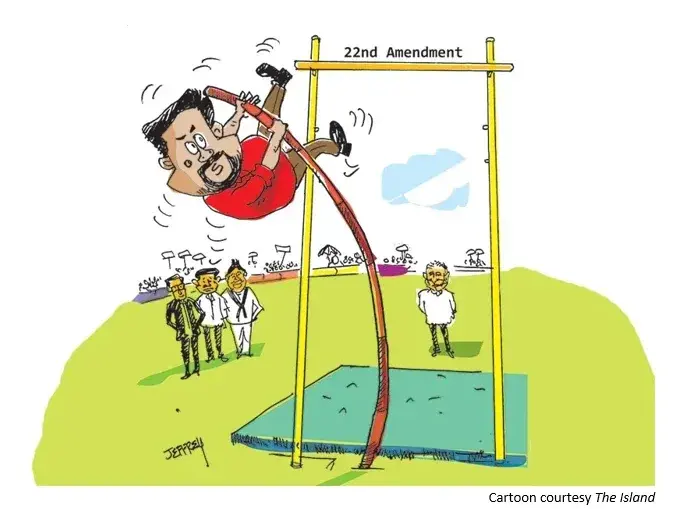
Politics by Vishvanath
Has 22A become the govt.'s Catch-22?
Aug 27, 2026
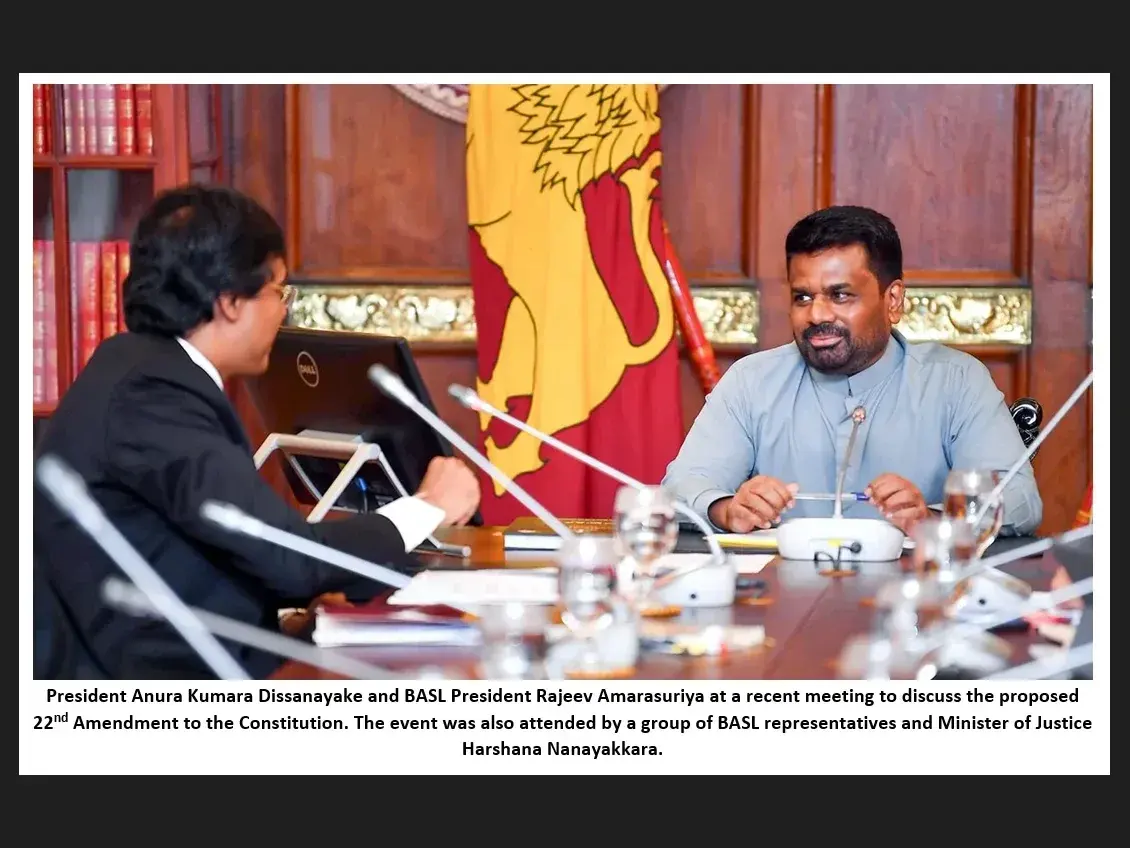
Politics by Vishvanath
22nd Amendment: A huge political gamble for govt.
Aug 21, 2026
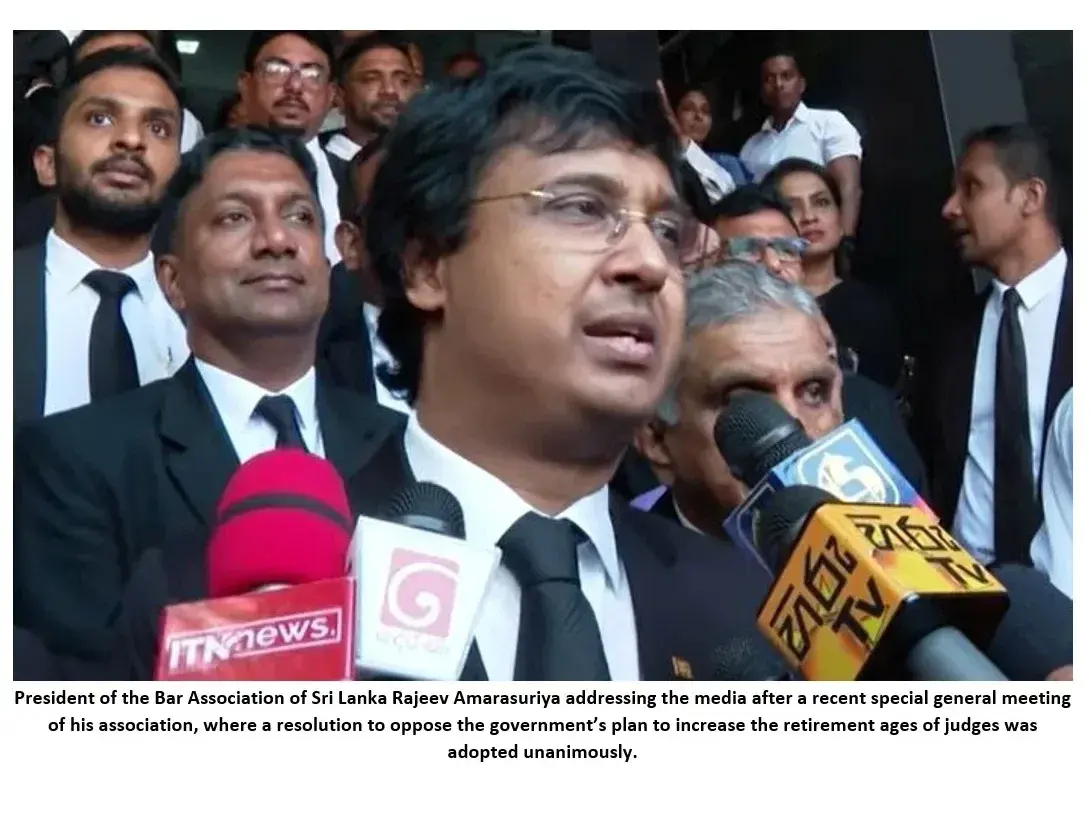
Politics by Vishvanath
Move to raise retirement ages of judges: Options before govt.
Aug 05, 2026
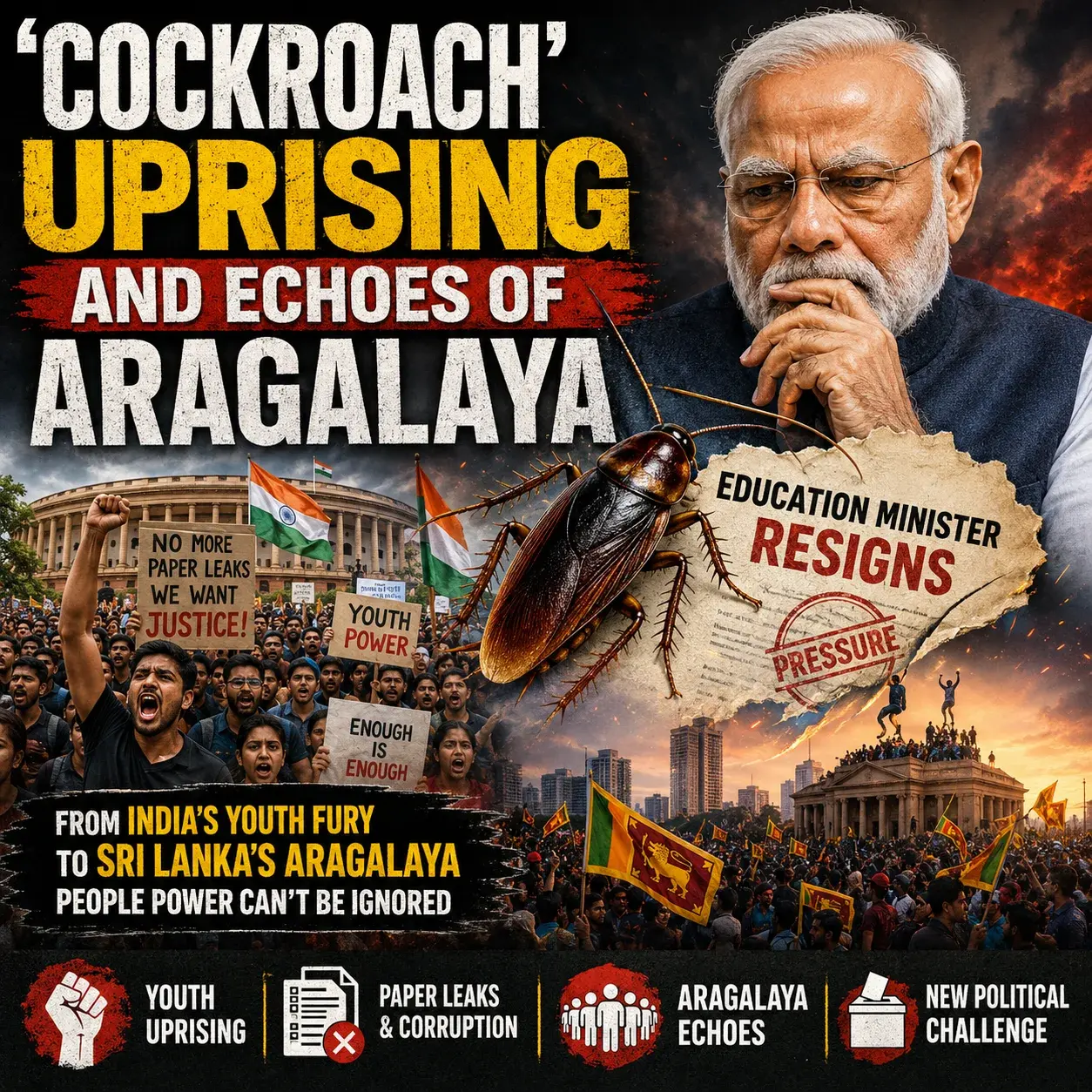
Politics by Vishvanath
‘Cockroach’ uprising and echoes of Aragalaya
Jul 26, 2026