Current Affairs
Points to ponder on privatisation of nuclear power sector in India
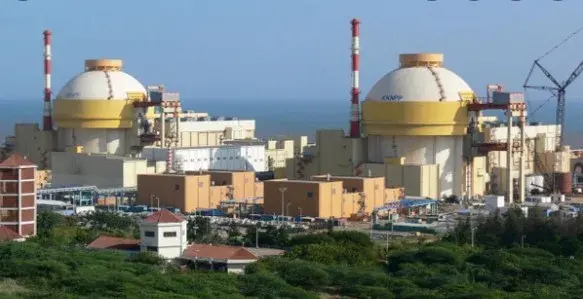
While there is an urgent need to step up power generation and to encourage private and foreign participation in the nuclear power sector, there are financial, liability and safety issues to consider.
By P.K.Balachandran
Colombo, December 19 – This week, India took a major step forward in its nuclear power production policy by changing the law to allow Indian private sector companies to build and operate nuclear power plants with foreign participation in specific areas.
Both Houses of parliament passed the “Sustainable Harnessing and Advancement of Nuclear Energy for Transforming India Bill, 2025” (or SHANTI bill for short) in the face of stiff opposition in the parliament.
The opposition parties had raised issues regarding safety and liabilities. They sought a review of the bill by a Select Committee, but the government did not yield. The opposition suspected that the Modi government had rushed the bill through to help negotiate a favourable deal on tariffs with the United States and to enable Indian billionaire Gautam Adani to invest in the nuclear power generation sector.
In its defence, the government said that India had to steeply step up nuclear power generation to reduce carbon emission, meet the mounting demand for power, and to reduce the liability to encourage foreign suppliers to come.
Nuclear energy currently makes up only 1.5% of India’s installed power capacity and 3% of the electricity produced. This should go up. The government has linked the reform to India’s broader climate and energy goals. India is the world's third-largest greenhouse gas emitter. The new law would reduce reliance on fossil fuels and help India achieve net-zero emission by 2070.
The law aims to expand nuclear power capacity to 100 gigawatts (GW) over the next two decades, more than 12 times the current 8.2 GW. Nuclear power accounts for only 8.8 GW of India’s 476 GW power capacity. The country added just 2.9 GW nuclear capacity between 2015 and 2024. China, in contrast, added 32.8 GW.
No Foreign Control
Under the Act, Indian private companies and Indian-incorporated joint ventures may apply for licences to build, own, operate and decommission nuclear power plants, subject to approval by the central government.
But the opening stops short of allowing foreign control.
Companies incorporated outside India, or controlled by foreign entities, are barred from holding nuclear operating licences. Foreign firms may participate only as technology partners, suppliers or service providers, working within Indian entities. This structure reflects the government’s attempt to attract global expertise without ceding ownership of critical infrastructure.
New Liability Rules
As per the new law, victims of a nuclear incident need not prove negligence to claim compensation. Primary liability continues to rest with the operator, within limits set out in the law, with the central government stepping in beyond those caps in specified circumstances.
The law doubles operator liability for large reactors to INR 30 billion (US$ 330.75 million), retains the overall compensation cap at previous levels and proposes a “nuclear liability fund” to cover accident claims in line with global norms.
The new law removes statutory supplier liability, that had been introduced in 2010. Operators may now seek compensation from suppliers only if such rights are explicitly written into contracts or if damage results from a deliberate act.
Supporters argue that this aligns India with international practice and makes projects bankable, but opponents say it weakens accountability in a high-risk sector.
Regulatory Authority
The law now gives statutory status to the Atomic Energy Regulatory Board (AERB), which until now has operated under executive authority. The regulator will be empowered to set safety standards, issue authorisations, conduct inspections and suspend or cancel licences. Disputes would pass through a proposed Atomic Energy Redressal Advisory Council, with appeals ultimately reaching the Supreme Court.
Private firms will be allowed to import and process uranium, according to the bill. But the government has kept strategic activities such as uranium mining, nuclear fuel enrichment and fuel re-processing under government control, and all operators would require licenses.
The Opposition
However, the opposition is unconvinced. Congress MP Shashi Tharoor warned of a “dangerous leap into privatised nuclear expansion”, arguing that commercial interests must not override public safety or environmental protection.
The new bill has dropped a rule that let operators sue suppliers for equipment defects, a provision foreign suppliers have long opposed. Foreign suppliers include the US company General Electric Co (GEN).
Congress MP Manish Tewari sought to know if it was a “coincidence” that a legislation enabling private sector participation in the nuclear sector coincided with interest expressed by the “conglomerate house… Adani” in November to enter the nuclear sector.
Tewari then alluded to the removal of a clause in the existing Civil Liability for Nuclear Damage Act, 2010 that allowed the operator of a nuclear power plant to claim recourse from suppliers if their equipment was found being responsible in case of an accident. The 2010 Act prevented foreign participation in India’s nuclear sector despite the U.S.-India nuclear deal that granted India a waiver from Nuclear Suppliers Group sanction.
Aditya Yadav of the Samajwadi Party accused the government of bringing in the Bill with the dollar crossing INR 90 and “unable to attract foreign investment” was “desperately trying to throw a red carpet to American companies” under pressure from the “prevailing Trump tariffs”.
Congress MP Shashi Tharoor reiterated this point. “The clean-up costs of the Fukushima disaster have already exceeded US$ 182 billion dollars. Chernobyl’s (disaster) impact at US$ 700 billion dollars... however, the total liability as per this Bill is capped at ?3,000 crore (or about U$ 400 million).
To this Minister Jitendra Singh said that US$ 400 million was only the maximum liability of the plant operator and if higher amounts were required it would come in from a nuclear insurance pool as well as additionally, source funds from the newly proposed Nuclear Liability Fund (pooled through tariffs).
“If we cross those limits then we can benefit from CSC (Convention on Supplementary Compensation for Nuclear Damage). The reason for a ‘graded operator liability’ was because it was necessary to encourage companies to invest in developing small reactors,” he said.
Tiwari also said the Bill does not provide a robust mechanism for nuclear waste disposal and that it could not be left to delegated legislation.
Key Considerations for Private Players Entering India's Nuclear Energy Sector
According to the Nuclear Business Plaztform (https://www.nuclearbusiness-platform.com/media/insights/entering-india-nuclear-energy-market) private players eyeing India's burgeoning nuclear energy sector, a strategic and nuanced approach is paramount.
Private players must meticulously track the final contours of these laws, particularly regarding liability caps for vendors and operators and the precise scope of private equity participation (minority equity). They should understand the stringent qualifying criteria—including financial strength, technical expertise, and a proven track record in large-scale projects. These are non-negotiable.
Nuclear projects demand substantial upfront capital and are characterized by long gestation periods, with operational lifespans often exceeding six decades. These high capital requirements can significantly impact project viability, particularly under unfavourable financing terms.
Private players must secure “patient capital” and adopt innovative financing structures tailored to the long-term nature of nuclear assets.
To de-risk investments, the government is recommending mechanisms such as Viability Gap Funding (VGF) and sovereign guarantees.
Structuring projects with an optimal mix of debt and equity, while leveraging these support frameworks, will be essential for attracting private capital and ensuring bankability.
The government explicitly promotes Public Private Partnerships (PPP) and Joint Ventures (JV), where private players provide capital, land, and cooling water, while Nuclear Power Corporation of India Lld (NPCLI) handles design, quality assurance, and operation.
The captive power approach for the Bharat Small Reactors (BSRs), where private users are responsible for the entire Capital Expenditure (CapEx) and Operating Expenditure (OpEx), including maintenance and decommissioning costs, and pay annual fees for plant operation and the price for power (INR 0.60 per kWh of electricity generated, escalating by INR 0.01 per kWh annually.)
Private operators should focus on Small Modular Reactors (SMRs) and Bharat Small Reactors (BSRs). India's Union Budget 2025-26 launched a Nuclear Energy Mission with a significant allocation of Rs.20,000 crore (approximately US$ 2.4 billion) for SMR research and development (R&D), aiming for at least five indigenously designed and operational SMRs by 2033.
SMRs, with power capacities ranging from 30 to 300 MW per unit, are physically smaller and modular, allowing for factory assembly and transportation. BSRs are essentially 220 MW Pressurized Heavy Water Reactors (PHWRs) that are being upgraded to reduce land requirements, making them highly suitable for deployment near industries as captive power plants to aid in decarbonization efforts.
The Bhabha Atomic Research Centre (BARC) and NPCIL are actively designing and developing Bharat Small Modular Reactors (BSMRs) of 200 MW capacity, with an estimated commissioning timeline of five to six years post-project sanction.
The Atomic Energy Regulatory Board (AERB) is India's stringent nuclear safety regulator, embodying the nation's unwavering commitment to safety. Its mission is to ensure that the use of ionizing radiation and nuclear energy does not cause undue risk to health or the environment.
Safety is ensured through a "Defence-in-Depth" philosophy at the design level and "As Low As Reasonably Achievable (ALARA)" at the operations level.
The AERB prescribes detailed effective individual dose limits for radiation workers (20 mSv/year averaged over five consecutive years, with a maximum of 30 mSv in any single year) and for members of the public (1 mSv/year at the site boundary during normal operations).
Cybersecurity is also a critical focus, requiring protection from cyberattacks for sensitive digital assets and regular tests and assessments.
India’s nuclear expansion must be accompanied by strong public engagement, especially because of past opposition at sites like Jaitapur, Kudankulam etc. Concerns around safety, radiation, waste, environment, and livelihoods highlight the need for transparent dialogue and trust-building. Demonstrating safe, well-designed operations is key to earning public confidence.
Private players must actively engaging with communities, addressing concerns sincerely, and ensuring environmental care and fair compensation, they can help secure the social license to operate and enable smooth project development.
Achieving 100 GW capacity necessitates installing over 4 GW of new nuclear power plants annually within 22 years, demanding a massive ramp-up in domestic manufacturing capabilities for reactor components.
The government explicitly supports Public-Private Partnerships (PPPs) in nuclear component manufacturing, SMRs, and hydrogen production. Indian conglomerates like Larsen & Toubro (L&T) are already actively involved; in a significant development, the US Department of Energy last month cleared an American firm, Holtec International to design and build SMRs in India in collaboration with L&T, Tatas, and Holtec Asia.
This creates opportunities for private firms to integrate into the nuclear supply chain, reducing import dependence and contributing to the "Make in India" initiative.
The nuclear sector requires a highly specialized and skilled workforce across design, engineering, construction, operation, maintenance, and waste management. The planned rapid expansion will create an unprecedented demand for such human capital. Private players should invest significantly in training programs, attract top talent, and potentially collaborate with academic institutions, vocational training centres and public sector entities like NPCIL and BARC for comprehensive skill development and knowledge transfer.
India's nuclear power program is founded on a long-term vision of energy independence and strategic autonomy, articulated through its unique three-stage nuclear power program, leveraging substantial uranium and vast thorium reserves.
The first stage involves natural uranium-fuelled Pressurized Heavy Water Reactors (PHWRs), the second stage uses plutonium-239 in Fast Breeder Reactors (FBRs), and the third stage aims for full exploitation of thorium in uranium-233 fuelled breeder reactors. Private players must align with this strategy and be prepared to contribute to long-term, scientifically sound solutions for radioactive waste management, the Nuclear Business Platform said.
END
RELATED NEWS
View all

Current Affairs
Sri Lankan Presidential pardons- the good and the bad
Sep 11, 2026

Current Affairs
The pros and cons of joining BRICS- the dilemma of Pakistan and Bangladesh
Sep 09, 2026

Current Affairs
Disaster in Nepal gets embroiled in geopolitics.
Sep 08, 2026
Current Affairs
Why Mecca Pact, and what does it imply for its members, Israel and India?
Aug 18, 2026