Current Affairs
Pros and cons of social media ban for children under 16
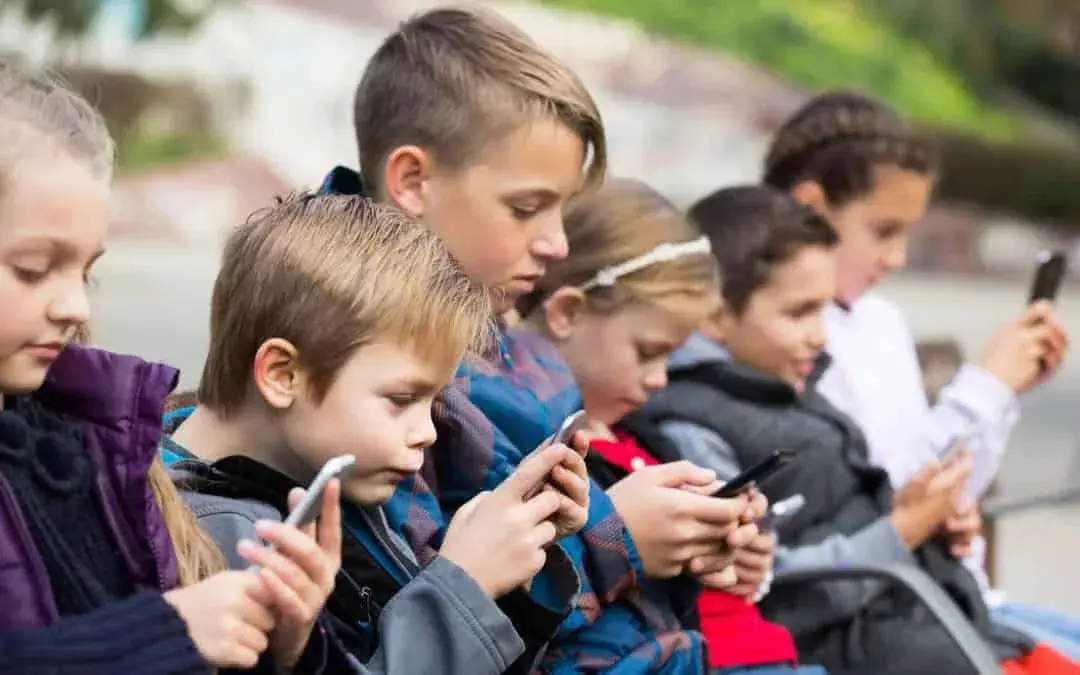
The Ill Effects of social media on kids are apparent, but their extent has yet to be scientifically established. Psychologists highlight the benefits of social media, but also advocate for a measured regulatory system in place of a blanket ban.
By P.K.Balachandran
Colombo, March 11 - There is a global trend in the last two years to ban social media access to children under 16. The idea is to protect them from pernicious influences that could affect their minds, distract them from studies, and keep them away from socially disapproved activities and thoughts.
The Ill Effects of social media on kids are apparent, but their extent has yet to be scientifically established, psychologists say. They point to the immense benefits of social media for people of all age groups, but at the same time advocate a measured regulatory system in place of a blanket ban.
The subject of social media ban on kids has been debated at length by decision makers, parents, social workers and psychologists, the world over. However, despite the ban’s spread across the world, uncertainty prevails about its efficacy and need.
All agree that social media are not bad per se. In fact, they have tremendous benefits in this information age. But like all other modern tools, they have to be regulated. And there are regulatory models to choose from.
Karnataka’s State Kicks Off Ban in India
Recently, the South Indian State of Karnataka made headlines by banning the use of social media by those under the age of 16. It became the first Indian State to join global calls for more scrutiny of minors' digital usage. Goa and Andhra Pradesh propose a bill to curb social media for children. Indeed, there is a country-wide campaign against "digital addiction.”
This is important because India is one of the world's largest social media markets. It is the world's second-biggest smartphone market with 750 million devices and a billion internet users. For Meta, India is its biggest market with the highest number of users on Facebook, Instagram, and WhatsApp globally.
Australia, the Pioneer
Australia was the first country to ban social media for children in December 2025. Many child health advocates sought the ban to protect and boost kids' mental health, control anxiety levels and promote self-esteem. Australian Prime Minister Anthony Albanese said that the ban would become "a source of national pride. It helps parents push back against peer pressure.”
Australian social media platforms are required to "take reasonable steps" to implement the ban. Companies are required to deactivate or remove accounts tied to users under 16 and prevent kids from creating new accounts or use workarounds to use the platforms. The ban currently applies to 10 platforms run by social media companies, including Meta’s Facebook, Instagram, and Threads, Reddit, Snapchat, TikTok, Twitch, X and YouTube.
Of course, social media companies have resisted the new law, with Snapchat characterising the measure as “misguided and even potentially risky for children.” Snapchat said that disconnecting teens from their friends and family doesn’t make them safer — it may push them to less safe, less private messaging apps."
Meta, the parent company of Facebook, Instagram and Threads, also spoke out against the countrywide ban. There's a better way, Mets said. “Legislation should be done to empower parents to approve app downloads and verify the age that allows families to do it and not the Government.””
While social media companies have taken steps to pull the plug on kids' accounts to comply with the new law, there is an exemption for some messaging, online gaming, and professional networking apps. If not followed, companies could be required to cough up US$ 33 million.
France
In June 2023, a new French law required social media platforms to verify user age and obtain parental consent for those under 15. It was part of the French government’s plan to reduce children’s screen time and protect them from cyberbullying and other crimes. France will financially penalise the social media companies if the law is breached. The penalty is a fine of up to 1% of the company’s global revenues.
In June 2024, Spain approved a draft law that included a prison sentence for those who engage in deepfakes (images, videos, or audio that have been edited or generated using artificial intelligence) and banned under-18s from accessing games with “loot boxes,” ingame purchases that open a surprise prize that more often than not, leads to disappointment and more purchases.
In 2018, Italy passed a law that states those under-14s must seek parental consent before they sign up for social media accounts. South Korea is not implementing a total social media ban, but it is enacting a nationwide ban on the use of mobile phones and other digital devices in classrooms. This law is to take effect starting from the next school year in March 2026.
Science Media Centre Survey
However, there’s no telling what the outcome of a blanket social media ban will do. In January this year, the UK’s Science Media Centre ( an independent press office for science, working closely with un iversities, scientific companies, research funders and leading science and engineering institutions) had put out comments of experts on the social media ban.
Dr. Holly Bear, Postdoctoral Researcher, Department of Psychiatry, University of Oxford, said the current evidence on social media use and adolescent mental health is mixed. Findings from cross-sectional studies generally show small and inconsistent associations, which makes it difficult to draw strong causal conclusions.
She added that the time spent online alone is not a reliable indicator of risk. “What appears to matter more is how young people encounter and engage with online content, and what they are exposed to. Young people may come across potentially harmful or sensitive material in a range of ways, including distressing or sexualised content, self-harm material, online harassment, unrealistic body ideals, and algorithmically curated feeds that can amplify vulnerability. Importantly, much of this exposure occurs passively, through feeds and recommendations rather than being actively sought out.”
“Our work and that of others suggests that online harms do not occur in isolation but tend to cluster with wider vulnerabilities, including loneliness, online aggression and mental health difficulties. Online experiences also sit within a broader ecosystem that includes family circumstances, peer relationships and school environments. Risk and resilience emerge from the interaction of these factors, rather than from digital exposure alone,” Dr.Bear said.
Further, “It is also important to recognise that not all intentional engagement with sensitive content is necessarily harmful; for some young people it may reflect attempts to seek understanding, connection or support, highlighting the need for nuanced and proportionate responses.”
Dr. Chris Ferguson, Professor of Psychology, Stetson University, said that current research does not support the usefulness of banning kids from social media. Research studies do not suggest there is a correlation between time spent on social media and youth mental health. Further, reducing social media time does not improve mental health.
“ This ban is likely to be a waste of time and resources. Further, it prevents opportunities to teach kids how to use social media responsibly. And like most moral panics, these kinds of efforts do harm in distracting us from real sources of youth mental health problems, mainly families in distress and failing schools,” Dr.Ferguson said.
“We have to remember we’ve been through this all before, many times, from video games, to rock and roll, books, to the radio. These panics over media and technology never do anything to help kids,” he added.
Prof Amy Orben, Research Professor and Programme Leader at the MRC Cognition and Brain Sciences Unit, University of Cambridge, said that while there is broad scientific agreement that we need to do more to keep children safe, what we currently lack is strong scientific evidence on whether banning social media for certain ages is an effective way of achieving this.
“To my knowledge, there has been no high-quality scientific study that has removed or substantially reduced social media use among healthy under-18s and systematically examined the consequences.”
Prof Dennis Ougrin, Professor of Child and Adolescent Psychiatry and Global Mental Health, Queen Mary University of London, said:
Prof David Ellis, Chair of Behavioural Science, University of Bath, said: “Online harms are of course very real – there is naturally risk for everyone when they go online. Misinformation, bullying, and unsuitable content have always been a part of the internet. Online benefits are also very real – social media allows people to communicate with each other, share information, and let us be honest, it is generally an enjoyable activity. Hence why people, young and old, use these platforms regularly.”
“Therefore, it remains difficult to square what a ban might actually accomplish, and that’s before we get to how difficult those bans are to enforce and how they can lead to new risky online behaviours. It makes complete sense that parents want governments to act, but the science does not currently support the view that a ban of social media for young people will significantly improve wellbeing.”
China’s Minors’ Mode
China has devised a ‘minors mode’ that ensures kids only see wholesome socialist content online. The Cyberspace Administration of China (CAC) delivered a spec for minors mode last year, and called upon device manufacturers, developers and content providers to work together on a system that will ensure that kids' use of the internet is controlled so they only see age-appropriate material.
The CAC wanted toddlers to be able to access songs and audio content. The regulator wanted twelve-to-sixteen-year-olds to get news tuned to their cognitive capacity, wholesome entertainment and news.
New smartphones from Xiaomi, Honour, and vivo come with “minors mode” loaded. The big players in the field have signed up for minors mode and will only serve appropriate content. They’ve apparently pledged to not just keep kids away from online nasties, but to develop content for minors.
Parents can invoke the “minors mode” with a single click and set usage time limits. Devices set to “minors mode” will even remind users to take breaks, and collect statistics so that parents can make sure their offspring are surfing the web in an age-appropriate and socialist fashion.
Globally, some online services like Google SafeSearch, Spotify kids, and Instagram’s Teen Accounts have already delivered just-for-kids offerings.
END
RELATED NEWS
View all

Current Affairs
Sri Lankan Presidential pardons- the good and the bad
Sep 11, 2026

Current Affairs
The pros and cons of joining BRICS- the dilemma of Pakistan and Bangladesh
Sep 09, 2026

Current Affairs
Disaster in Nepal gets embroiled in geopolitics.
Sep 08, 2026

Current Affairs
Why Mecca Pact, and what does it imply for its members, Israel and India?
Aug 18, 2026