Politics by Vishvanath, Cover Story
Protests return in fits and starts as govt., digs its heels in
By Vishvanath
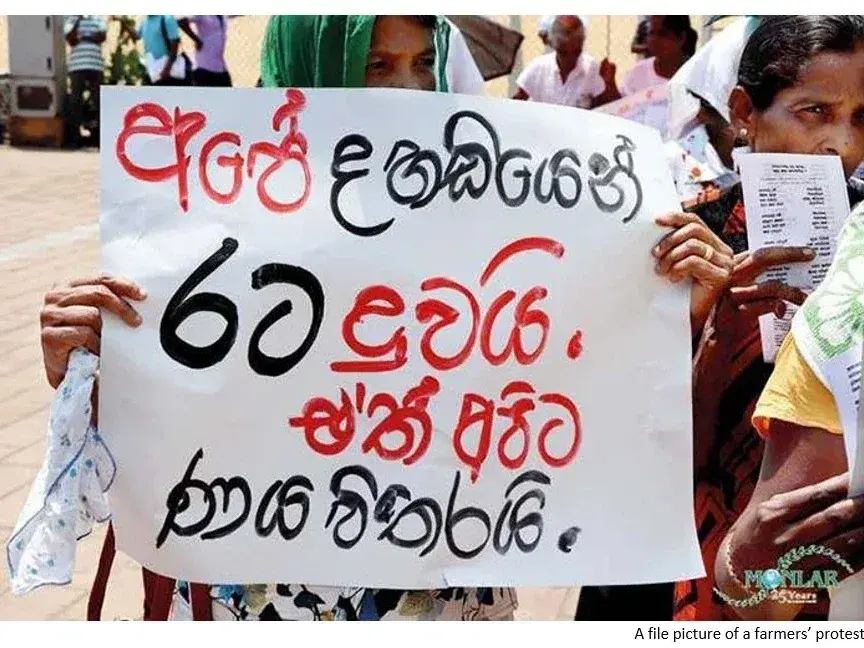
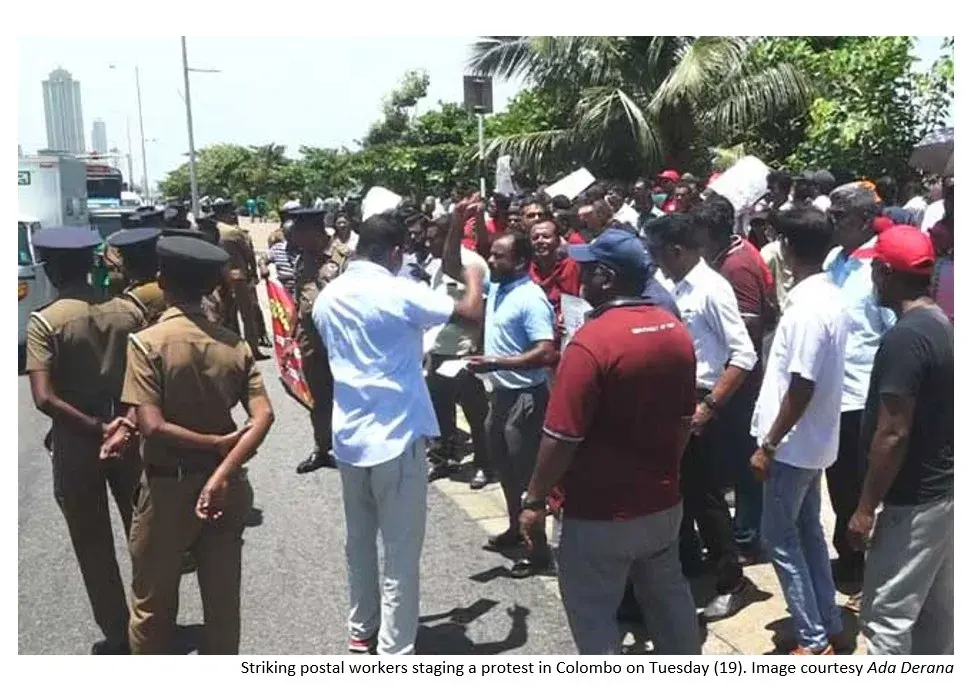
Government teachers were engaged in a protest near the Presidential Secretariat , and postal workers were on strike, at the time of writing (Aug. 19). The teachers had stayed there overnight, demanding a presidential intervention to restore a scheme where teachers were allowed to admit their children to the schools where they served. Protesting teachers complain of a government move to scrap that scheme. The striking postal workers were holding a protest. A hartal in the Northern and Eastern Provinces came to an end on Monday. Paddy farmers were holding protests, asking for fair prices for their produce. The police dispersed a group of unemployed graduates engaged in a protest near the JVP headquarters in Pelawatte, Battaramulla a few days ago.
The first few months following the formation of the JVP-led NP government late last year were free from protests and strikes so much so that it was claimed in some quarters the JVP had been behind all protests and strikes under previous governments, and its ascent to power was the reason for the absence of agitations. But now protests and labor disputes are returning, albeit in fits and starts.
Time was when the JVP used to run circles around governments to the point of being a nuisance to them. While it was in the Opposition, it mastered the art of protesting, and its trade union and student wings took to the streets at the drop of a hat, warranting the deployment of the riot police, especially in Colombo much to the inconvenience of the public. It created media events almost daily with the help of various agitations. The JVP protests were very colorful; farmers wearing loincloths and carrying mamoties paraded in Colombo, and young men and women in jeans and red T-shirts held pickets and leaflet distribution campaigns. There were also strikes and numerous abortive attempts to march on the Presidential Secretariat prior to the mass uprising, Aragalaya in 2022, when the JVP tried to lead a protest march to the parliament, but the armed forces foiled its attempt. The boot is now on the other foot. It is the JVP’s turn, as the key constituent of the ruling NPP coalition, to face protests, the most potent political weapon it used against previous governments.
The JVP-led NPP government condemned Monday’s hartal, organized by the ITAK, as a shameful attempt to arouse communal feelings among the Tamil people in the North and the East, the way their Sinhala counterparts did to gain political mileage, elsewhere, on the pretext of protesting against the death of a Tamil man in Mullaitivu recently. The ITAK alleged that the army was behind the victim’s death as he had been a member of a group that entered a military camp to collect scrap iron only to be chased away. His body was later found in an irrigation reservoir. Minister Bimal Rathnayake said it was wrong for the ITAK to claim that the victim had died at the hands of the military because he was a Tamil. An investigation was going on, and the protesters had to exercise patience until its conclusion, he said.
The ITAK is likely to organize more protests to rally public support in view of the Provincial Council elections expected during the first half of next year. It is all out to recover lost ground in the North and the East.
Protests are contagious and tend to snowball unless the causative factors are eliminated. However, there is little a government can do to resolve issues such as labour disputes over wages for want of funds. State worker’s overtime costs the state coffers billions of rupees, and the efforts of successive governments to reduce the public sector overtime bill have met with stiff resistance from trade unions.
Can protests bring down governments? The answer is both yes and no, paradoxical as it may sound. In Bangladesh, the Sheikh Hasina government collapsed last year due to mass protests, which went out of control, leading to bloodshed and the formation of an interim administration. In this country, one of the main reasons for the collapse of the UNP’s 17-year rule in 1994 was a spree of protests conducted by the then Opposition during Ranasinghe Premadasa’s presidency. In 2022, the Aragalaya and attacks on protesters, leading to retaliatory violence, caused the ouster of the Rajapaksa family, but the beleaguered SLPP government survived, and Ranil Wickremesinghe became the interim President. Governments can withstand protests effectively and retain their hold on power if they can live up to the expectations of a broader segment of the population by fulfilling its election promises and achieve its development goals while granting economic relief to the vulnerable sections of society.
Usually, it takes about one year for a badly defeated Opposition to recover and be fighting fit. There are situations where the losers take much longer to regain vitality. But the current Opposition, which suffered a crippling defeat last year, has shown signs of early recovery, and the NPP government has begun to experience protests earlier than expected. Worse, the protesters represent the very forces that propelled the NPP to power. They include farmers, state employees, especially university teachers, and student activists. The government has antagonized the farming community by failing to fulfil its promises. Rice growers who expected a better deal are utterly disillusioned and resentful today; they accuse the government of being putty in the hands of a cartel of wealthy millers, accused of exploiting cultivators and consumers alike, with impunity. Trishaw operators carried out a very effective campaign for the NPP at the grassroots level ahead of last year’s presidential and parliamentary elections. They even displayed NPP propaganda posters on their vehicles in violation of election laws. But today they are disillusioned.
Exasperated farmers who voted for the NPP overwhelmingly are now complaining that the NPP members who took part in their protests before securing ministerial posts have taken them for a ride. They have warned that unless the government looks after their interests, and ensures reasonable prices for their produce, they will be compelled to hold a continuous protest. The government has in its wisdom undertaken to introduce education reforms, which has drawn severe criticism from school teachers and university dons, who insist that the NPP is advancing the UNP-SLPP combine’s neoliberal agenda.
The NPP government seems to be overconfident that no one pose an existential threat to it because of its two-thirds majority the parliament. But nothing is more certain than the unexpected in politics, which is full of uncertainties. There’s the rub. (August 19, 2025)
RELATED NEWS
View all
Politics by Vishvanath
Has 22A become the govt.'s Catch-22?
Aug 27, 2026
Politics by Vishvanath
22nd Amendment: A huge political gamble for govt.
Aug 21, 2026
Politics by Vishvanath
Move to raise retirement ages of judges: Options before govt.
Aug 05, 2026
Politics by Vishvanath
‘Cockroach’ uprising and echoes of Aragalaya
Jul 26, 2026