Current Affairs
Radical Islamists on the rise in Bangladesh
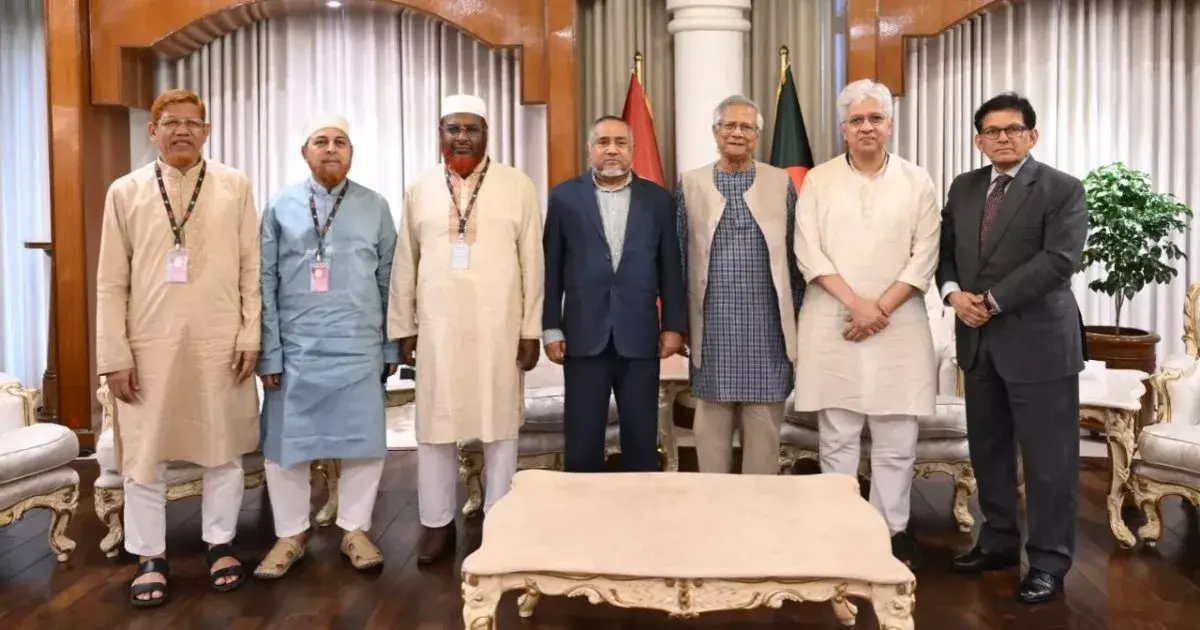
A political vacuum coupled with the pusillanimity of the Yunus-led Interim Government has emboldened religious radicals
By P.K.Balachandran
Radical Islamist groups are exploiting the prevailing political vacuum in Bangladesh to spread their ideology and strike alliances aimed at emerging as a critical factor in the parliamentary elections slated for April 2026.
The 11-year Awami League regime under Prime Minister Sheikh Hasina that was overthrown by a popular student-led uprising in July-August 2024, was undeniably authoritarian and corrupt. But, to its credit, it promoted economic development, curbed persecution of minorities, and kept Islamic radicals at bay.
When Hasina was overthrown and an Interim Government under Dr. Muhammad Yunus was installed, the general hope was that rule of law would be restored and tolerance would replace intolerance.
But these hopes were quicky dashed. Conditions deteriorated and normlessness marked by mob justice, arbitrary arrests and bans on political outfits prevailed. Individuals even remotely associated with the Awami League, were hounded, charged with murder and bail denied.
Equally strikingly, a destructive force – Islamic radicalism - that was kept under control by Hasina, came into the open, got into frenzied activity and spewed intolerance, in the name of Islam. These elements seem determined to rebuild Bangladesh on the Afghan Taliban model. In fact, a delegation recently met the Taliban’s leaders in Kabul.
Simultaneously, other Bangladeshi political parties are looking to build opportunistic alliances with radical Islamic organisations because the latter have a share of the popular vote, albeit small. In a tight electoral contest, the Islamic radical vote could determine victory or defeat. Of these political parties, the most eager is the new students’ party, the National Citizens’ Party (NCP), which led the revolt against Sheikh Hasina in 2024.
Both the NCP and the Islamists, want a new Bangladeshi constitution finalised before parliamentary elections are held in April 2026. This is because they fear that the moderate and secular Bangladesh Nationalist Party (BNP) will win and quash their bid to establish a non-traditional, or even an Islamic, constitution. Both reject the First Past the Post system because under the Proportional Representation System (PR) they will be assured of some seats. The BNP, on the other hand, wants the First Past the Post system (FPS).
However, the BNP itself is not averse to forming an alliance with the Islamic parties. In the past, it had teamed up with the Bangladesh Jamaat-i-Islami (BJI) to fight the Awami League.
Ban on Music Teachers Sought
Taking advantage of the emerging favourable political climate, the Islamists are pitching their demands high and indulge in vandalism against shrines of the moderate Sufis and the minority Ahmadiyyas, whom the Muslims consider to be heretics.
The extremist group Hefazat-e-Islam (HI) recently issued threats in response to a decision of the Ministry of Primary and Mass Education to appoint music teachers in primary schools. The Hefazat branded the decision as “anti-Islamic”. On September 5, Hefazat’s Amir, Muhibbullah Babunagari, and Secretary-General Sajedur Rahman, issued a statement framing music education in schools as “contrary to Islam” and demanding the appointment of religious teachers instead of music teachers. The group threatened to unleash a “mass movement” if its demand was not met.
Cultural and human rights organizations like the Ain 0 Salish Kendra reacted sharply saying that the Hefazat’s aim was to “impose a narrow, religion-dominated education system that would stifle creativity, culture and tolerance.”
But the Islamists were undeterred. The ‘Bangladesh Khilafat Movement’ staged a protest march from the Baitul Mukarram Mosque in Dhaka demanding the cancellation of the appointment of music teachers in primary schools. Slogans such as “There is no place for music teachers in Muslim Bengal,” rent the air.
the banned Hizb ut-Tahrir (HUT), which seeks to establish a global Islamic caliphate, held a massive rally in Dhaka. Five months earlier, the HUT established its student wing, Swadhin Bangladesh Chattra Sangsad (SBCS) at Dhaka University, as a rival to the more secular NCP.
HUT organized an online International Khilafat Conference and started a WhatsApp group called “Prabaashi Muslim Network” aimed at overseas Bangladeshis.
In February, the At-Tamkeen Media Foundation, an IS-inspired group, created a room on Element, an end-to-end encrypted messaging platform, to communicate with other Islamist extremists. Foreign terrorist groups, including al-Qaeda in the Indian Subcontinent (AQIS) and Islamic State–Khorasan (ISK), have also been exploiting Bangladesh's political turmoil to spread radical ideologies. All use the popular anti-corruption platform to get the peoples’ ear.
Significantly, the Interim Government has in it, representatives of the Bangladesh Jamaat-e-Islami (BJI). The government has lifted the ban on BJI’s student wing, Islami Chhatra Shibir.
Several prominent members of terrorist organizations — including Ansar al Islam leader Jasimuddin Rahmani and the Harkatul Jihad al Islami-Bangladesh leader Atik Ullah — have been given bail by courts, points out Sonia Sarkar in the Religion Unplugged website.
According to the document entitled “The Burning of Shrines”, after the fall of the Hasina government, Islamic radicals attacked over a hundred Sufi (Islamic) shrines and homes of the minority Ahmadiyya Muslim community across Bangladesh. The Sufis are a moderate sect of Islam who believe in venerating Islamic saints and holy men, a practice that is considered un-Islamic by the orthodox Islamists.
Among the shrines vandalised, burnt, or destroyed, were the Ashrafnagar Darbar Sharif, established by Syed Ashraf Ali Chandpuri in Laksam, Comilla, the Kappa Pagla shrine in Narsingdi, the shrines of Bairam Shah in Dhaka, Garib Shah in Jessore, Dewan Sharif Khan in Narsingdi, Syed Reza Shah Chishti, and Malek Darvesh's shrine in Laksam, Comilla. The Ahmadiyya mosque, Jamia (theological school), and the Jalsa Gah (annual conference ground) were attacked in Ahmadnagar.
“In many cases, the attackers, armed with local weapons, have carried out acts of destruction in broad daylight, sometimes even in the presence of law enforcement officers, who have been widely criticized for their inaction,” the document said.
“For centuries, Bangladesh has been a land of religious coexistence, where Muslims, Hindus, Christians, Buddhists, and other faiths have coexisted in mutual respect. The Sufi tradition, in particular, has played a vital role in shaping the country’s spiritual and cultural landscape. However, that longstanding tradition is now under threat,” the documents released in September said.
“These shrines, often built around the graves of Sufi saints and revered preachers, have long been pilgrimage destinations for people of all backgrounds seeking peace, healing, and divine blessings,” it added.
Filling a Political Vacuum
Molla Mehedi Hasan, writing in East Asia Forum, notes that there is a serious political vacuum in Bangladesh today that might be filled by radical Islamists.
“The BNP, historically the largest opposition party, was significantly weakened during the Awami League regime by harassment, imprisonment of its leaders and internal divisions. The recent release of former BNP prime minister Khaleda Zia and the potential return of her son Tarique Rahman from political exile, may boost its morale, but is unlikely to restore the BNP to its former glory,” Hasan says.
The BNP’s space could be taken by an assortment of groups including the Islamists. Hasan recalls that Islamic parties have historically played a role in Bangladesh’s politics, particularly during the anti-Ershad mass uprising in 1990 and in the BNP-led government in 1991 and 2001. In fact the BNP had an alliance with the Bangladesh Jamaat-e-Islami (BJI).
The Hefazat-e-Islam, is not a formal political party, but is an Islamic pressure group. It had emerged as a significant socio-political force, through its Qaumi Madrassahs (Islamic schools) and even Sheikh Hasina had to treat it with kid gloves.
Explaining the Islamic parties’ success, Hasan says that their rise is accelerated by their “ability to engage with grassroots communities, spanning urban centres and rural areas, through preachers, social welfare initiatives, educational support and disaster relief.”
And with mainstream parties failing to meet the public’s needs and sentiments, Islamic parties are emerging as alternatives, combining religious values with social services.
Islamic parties, which were fractious earlier, are now coming together, having smelt the possibility of capturing State power. The BJI leader Dr Shafiqur Rahman and Islami Andolan Bangladesh leader Mufti Syed Muhammad Rezaul Karim met recently.
But there is a stumbling block for the BJI. This is its close ties with Pakistan during Bangladesh’s Liberation War in 1971. This is a deeply divisive issue that could alienate potential allies, Hasan points out.
Islamic parties have not been electorally successful, with only 10% or less support. But their popularity is increasing thanks to their organisational capacity and the ineffectiveness of the traditional political parties. Add to this the pusillanimity of the government led by Chief Advisor Dr. Muhammad Yunus, the field is open for exploitation by the extremists.
END
RELATED NEWS
View all

Current Affairs
Sri Lankan Presidential pardons- the good and the bad
Sep 11, 2026
Current Affairs
The pros and cons of joining BRICS- the dilemma of Pakistan and Bangladesh
Sep 09, 2026
Current Affairs
Disaster in Nepal gets embroiled in geopolitics.
Sep 08, 2026
Current Affairs
Why Mecca Pact, and what does it imply for its members, Israel and India?
Aug 18, 2026