Current Affairs
Significance of Paul Kapur’s appointment as US Asst. Secretary of State for South Asia
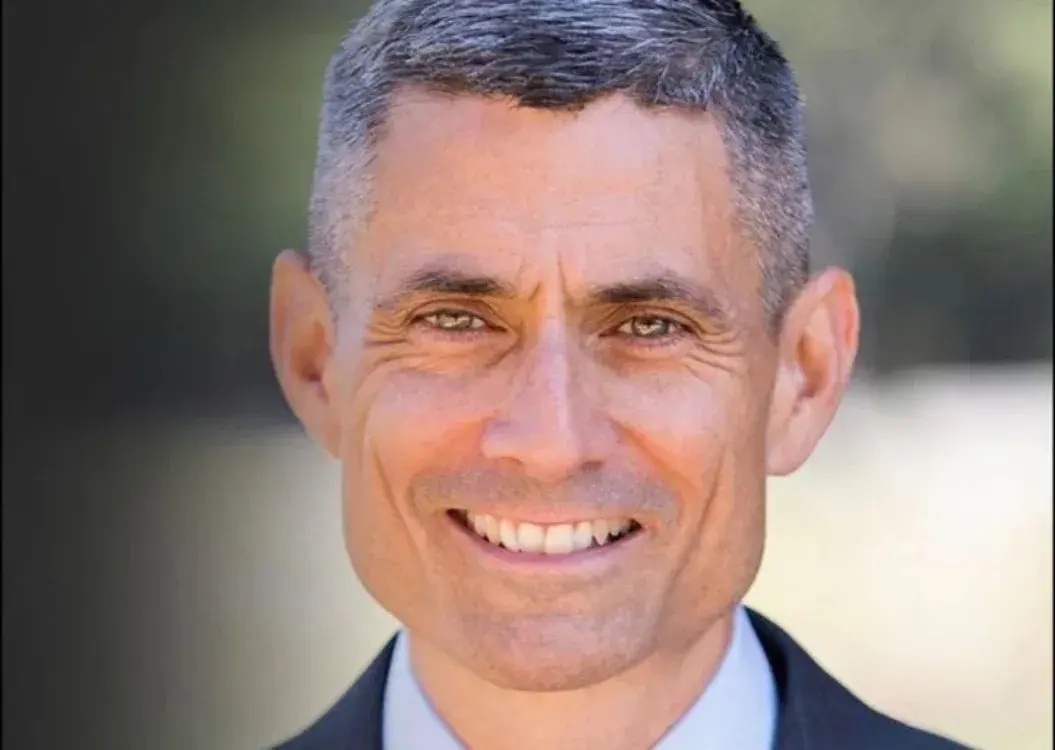
The US sees India-Pakistan relations as being marked by threats of war and nuclear blackmail and Kapur is an expert on both nuclear warfare and India-Pakistan military conflicts.
By P.K.Balachandran
Colombo, October 10 – The appointment of Dr. S.Paul Kapur as US Assistant Secretary of State for South Asia is highly significant.
It makes great sense as the US sees India-Pakistan relations as being marked by threats of war and nuclear blackmail and Paul Kapur is an expert on both India-Pakistan military conflicts and nuclear warfare.
The appointment stems from a deep-set American fear that nuclear-armed India and Pakistan could use this devastating weapon in their never-ending fights over Kashmir.
Trump’s Worry about Nuclear War
US President Donald Trump had said that he stopped India and Pakistan fighting in May this year because it could have "turned out into a nuclear disaster." Trump said that the US could not trade with those who could potentially use nuclear weapons.
The West constantly fears an India-Pakistan nuclear war. A standard phrase used in any Western media copy on an India-Pakistan conflict is that they are “nuclear-armed” and therefore inherently very dangerous. It is also routinely stated that India and Pakistan have about 170 nuclear warheads each.
It is in the context of such a mind-set that President Trump has appointed S. Paul Kapur, an acknowledged Indo-American expert on nuclear warfare and India-Pakistan armed conflicts, as US Assistant Secretary State for South Asia.
Kapur’s Observations
In his paper “India and Pakistan’s unstable Peace,” written when he was Visiting Scholar at Stanford University’s Centre for International Security and Cooperation, Kapur argues that the threat of use of nuclear weapons has been, and will continue to be, made in India-Pakistan conflicts, though neither side will use them.
But the most interesting observation he makes is that though the nuclear option will not be exercised by Pakistan, it gives that country the courage to go for a conventional war with India or stage terror attacks on Indian targets to attain its objectives in Kashmir.
Its courage is based on the belief that the threat of a nuclear war will force India to sue for peace. War will also get the US and its allies to press India to go for a settlement on Kashmir with Pakistan.
In other words, for Pakistan, nuclear capability is an instrument of psychological coercion rather than an instrument of destruction.
Islamabad, which was relatively inactive militarily after its defeat in East Pakistan at the hands of India in 1971, became militarily belligerent after it acquired nuclear weapons in 1998, Kapur points out. He says that Pakistan launched the Kargil operation in 1999 because it had nuclear weapons.
The then Pakistan army chief Gen. Pervez Musharraf had launched the daring plan to occupy scores of places on mountain heights in Kargil to disrupt Indian communication lines in Kashmir and force India to come to the negotiating table. He had seen no need to actually use the nuclear weapon because, in his view, India would have sued for peace fearing a Pakistani resort to nuclear warfare if India were to deploy all its conventional might to throw the Pakistanis out.
However, what happened was contrary to Musharaff’s expectations. As he himself admitted, he was surprised that the Indians used so much force, bringing to bear artillery and air power to neutralize the Pakistani pickets. And again, to his surprise, the US, fearing a nuclear war, intervened on India’s behalf and not Pakistan’s. Prime Minister Nawaz Shariff was summoned to Washington to be told to call off the Kargil misadventure.
The then Indian Minister of Defence George Fernandes told Kapur that if Pakistan had used its nuclear arsenal, India could have done the same and caused very much more damage. Perhaps this was in the mind of the present Indian army chief Gen.Upendra Dwivedi when he said that if Pakistan indulged in another adventure like the attack in Pahalgam, Pakistan could be “wiped off the map of the world”.
At the time of the Kargil war, Gen.V.P.Malik said that if Pakistan could launch a daring conventional operation as in Kargil using the nuclear shield, nuclear armed India could do the same. The nuclear threat cuts both ways, he added. This restrains the two sides from going nuclear. And America’s fear of a nuclear war may not necessarily lead to US intervention in Pakistan’s favour. It could well go in India’s favour.
After the Pakistan-based Jaish-e-Mohammed attacked the Indian parliament in December 2001, the Indian army did not attack Pakistan but adopted the strategy of massing troops on the border threatening a large-scale invasion. It was named Operation Parakram. Pakistan responded in kind with its own mass mobilisation.
But, even as they faced eye ball to eye ball, there was no fighting as both were aware that war would have been terrible for both.
Moreover, the US would not have allowed war as it needed Pakistan to survive so that it could be used to tackle the Al-Qaida that attacked the Twin Towers in New York in September 2001. The Al Qaida was holed up in Afghanistan and Bin Laden was in Pakistan.
Therefore, a number of factors combined to restore peace on the border between India and Pakistan and nuclear arms were only one of the factors.
However, as before, peace was short lived after Operation Parakram. Obsessed with Kashmir, Pakistan kept launching terrorist attacks, the worst of which was the one against the financial district of Mumbai in 2008. India could have reacted both conventionally and using nuclear weapons, but it did neither. The reason was the US call for restraint.
“The whole world descended upon Delhi to tell us, don’t start a war’, said the then Home Minister P. Chidambaram in an interview, citing a direct personal intervention from the then US Secretary of State Condoleeza Rice.
In the case of the May 2025 Operation Sindoor (or Bunyan-un-Marsoos as it is known in Pakistan) the fear of nuclear escalation brought an American intervention into play. A ceasefire was brought about within four days. The US role was acknowledged by Pakistan but stoutly refuted by India. Be that as it may, what cannot be denied is that both India and Pakistan were on the threshold of a nuclear war, but stopped short of it, fearing awful consequences.
Kapur’s overall observation on India-Pakistan wars is that while the availability of the nuclear option gave Pakistan courage to launch ambitious military and terrorist operations, it did not deliver the goods in terms of the attainment of its basic objective – namely- securing Kashmir.
The more important factors in India-Pakistan conflicts, Kapur says, were India’s conventional military superiority, the ability of the Indian economy and the vastness of the land mass to withstand a long war and the power of the US, on which both Pakistan and India are heavily dependent despite their claims to the contrary.
However, Kapur adds that because Pakistan has the nuclear shield, it will continue to hatch aggressive schemes so long as securing Kashmir is in its agenda. And this has been proved time and again.
END
RELATED NEWS
View all

Current Affairs
Sri Lankan Presidential pardons- the good and the bad
Sep 11, 2026

Current Affairs
The pros and cons of joining BRICS- the dilemma of Pakistan and Bangladesh
Sep 09, 2026
Current Affairs
Disaster in Nepal gets embroiled in geopolitics.
Sep 08, 2026
Current Affairs
Why Mecca Pact, and what does it imply for its members, Israel and India?
Aug 18, 2026