Current Affairs
Sri Lanka’s first-ever Marxist government rocked by scams
By P.K.Balachandran
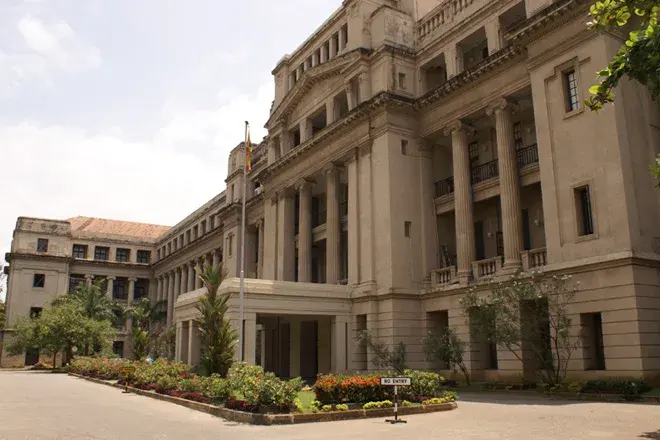
Colombo, April 26 – Sri Lanka’s first-ever Marxist government, that had secured a whopping 159 out of 250 seats in parliament in the November 2024 elections, is now in the midst of scandals in the purchase of coal and in the repayment of foreign currency debt.
The coal scam involving the import of inferior quality coal came when Sri Lanka was in the midst of an energy crisis because of the US-Iran war.
The Ministry of Finance reported the disappearance of US$ 2.5 million meant to pay back a foreign creditor, who had lent money when Sri Lanka was undergoing its worst foreign exchange crisis in 2020 when it defaulted.
At the time of the Presidential and parliamentary elections, sceptics wondered if an inexperienced political group like the National Peoples’ Power (NPP) led by Anura Kumara Dissanayake, himself a novice in administration, could rescue the country from the depths of economic degradation and an inept and corrupt bureaucracy.
But Sri Lanka’s voters, who were tired of power circulating among the same set of politicians, were hell bent on giving the amateurish but leftist NPP a chance to show that they were better.
In the honeymoon period, President Dissanayake and his band had struck a chord with the people, efficiently and speedily reaching help to the masses hit by the cyclone Ditwa in November-December 2025. Relief funds were disbursed without discrimination and health personnel rendered services efficiently.
Money was no problem at that time as the international community had stepped in with the UN alone pledging a grant of US$ 35 million.
However, in the months that followed the cyclone, people developed anxieties over the lack of employment opportunities. The government appeared to be indifferent to economic growth, preoccupied with launching cases against corrupt officials and politicians associated with previous regimes.
But come 2026, the government found that its own staff were committing crimes. Sri Lanka’s coal procurement process came under intense scrutiny, following revelations from audit findings, parliamentary disclosures, and political accusations.
At the centre of the controversy are allegations of irregular tender procedures, substandard coal imports, and financial losses running into billions of Rupees. Long-standing systemic weaknesses have combined with serious flaws in the current administration to create the current crisis.
A published audit of the Lanka Coal Company’s 2024 operations had highlighted irregularities in procurement procedures. These included deviations from standard competitive bidding practices, concerns about supplier qualification requirements, and decisions that did not fully align with established procurement principles such as transparency and integrity.
A Special Audit Report on coal procurement for the 2025/26 season, tabled in Parliament, pointed to several critical failures – (a) a supplier was awarded a contract despite incomplete or questionable registration status (b) the quality testing processes relied on a laboratory with an expired licence, (c) the coal supplied was below the required calorific value standards, affecting power generation efficiency (d) the estimated financial losses exceeded Rs. 2.2 billion, with additional penalties potentially recoverable, (e) procedural concerns, including contract finalization before full legal clearance.
It is true that Sri Lanka’s coal procurement process has long been criticized. Allegations of inefficiency, opacity, and political interference are not new. Successive governments have been accused of failing to reform what is widely seen as a structurally weak system. But what cannot be accepted is the current administration’s bid to escape responsibility by citing past deals.
At this stage publicly available evidence does not conclusively establish a coordinated criminal scheme or personal financial gain. But is certain is non-compliance with standard procedures , poor oversight and inefficiencies.
The Secretary to the President has reportedly sought a comprehensive Criminal Investigation Department (CID) probe into coal imports dating back to 2009. But one critic said that while investigating historical wrongdoing is both necessary and justified, prioritising a retrospective probe without first providing full clarity and accountability on the present controversy risks being perceived as a deflection rather than a solution.
Cyber Hacking of the Treasury
The government recently reported that US$ 2.5 million went missing from the Treasury in January 2026. The fund was part of a US$ 22.9 million external debt repayment due by the end of September 2025. It had been misdirected to a computer hacker or a third party, instead of the intended creditor country.
Cyber hackers had breached the External Resources Department affecting a foreign currency transaction. The Ministry said a preliminary internal inquiry had been conducted and disciplinary action initiated against several officials. Two Deputy Directors, two Directors, and the Head of the Computer Division of the Treasury had been suspended in connection with the matter.
The responsibility for foreign debt repayments, previously handled by the Central Bank of Sri Lanka, was transferred to the Department of Foreign Resources and the Public Debt Management Office (PDMO) following the enactment of the new Finance Act.
It is pointed out that transactions of this magnitude could not have been authorised or executed solely by junior or mid-level officials. The role of higher officials have to be probed.
The current investigation is being conducted under an Additional Secretary to the Treasury who also oversees debt repayment operations. This had only raised concerns over independence.
Since the ultimate responsibility for public finance rests with Parliament, there is a demand by the opposition parties for a full and independent investigation by a body external to the Finance Ministry and the Treasury, and for Parliament to take appropriate steps through a suitable mechanism to establish the facts surrounding the transaction and determine accountability.
Civilizational Change
The NPP government had brought in legislation to remove privileges like lifelong pensions to retiring Members of Parliament with just a minimum five years of parliamentary service. The government is firmly committed to completely eradicating the narcotics menace which had spread its tentacles island-wide targeting the youth.
Strike threats in the state sector are being handled both fairly and firmly. The threatened Ceylon Electricity Board(CEB) strike and the tactful handling of the hunger strike launched by the Development Officers (in schools) clamouring for government teaching posts are cases in point.
But government medical officers continue to threaten or indulge in strikes to the great inconvenience to the poor who cannot pay for treatment in private hospitals.
However, with the passage of time, there appears to be a slippage with allegations of corruption coming up, said “Sunday Island” in its editorial of February 1, 2026, titled “Thriving corruption and delayed probes” where allegations of large-scale corruption against the current regime were cited.
One of the cases cited was the green channelling (without inspection) of 423 red-flagged freight containers from the Colombo Port in January 2025, not long after the current administration took office. The suspicion was that the cleared cargo might have included narcotics. A Parliamentary Select Committee was appointed to probe the above. Another case of suspected corruption involving a solar power tender award had also come up recently.
These corruption allegations are fresh developments as far as the NPP is concerned and they are black marks against that party.
As one observer noted in “Sunday Island,” time is flying and the government will be soon judged by the electorate on its achievements and delivery on promises made.
“It is not too late for all concerned to get their act together and do better with early mid-course corrections while fully supporting the President who seems to be doing his best trying to keep his team together.”
END
RELATED NEWS
View all

Current Affairs
Sri Lankan Presidential pardons- the good and the bad
Sep 11, 2026

Current Affairs
The pros and cons of joining BRICS- the dilemma of Pakistan and Bangladesh
Sep 09, 2026

Current Affairs
Disaster in Nepal gets embroiled in geopolitics.
Sep 08, 2026
Current Affairs
Why Mecca Pact, and what does it imply for its members, Israel and India?
Aug 18, 2026