Current Affairs
The world woos the Taliban despite stubborn refusal to reform
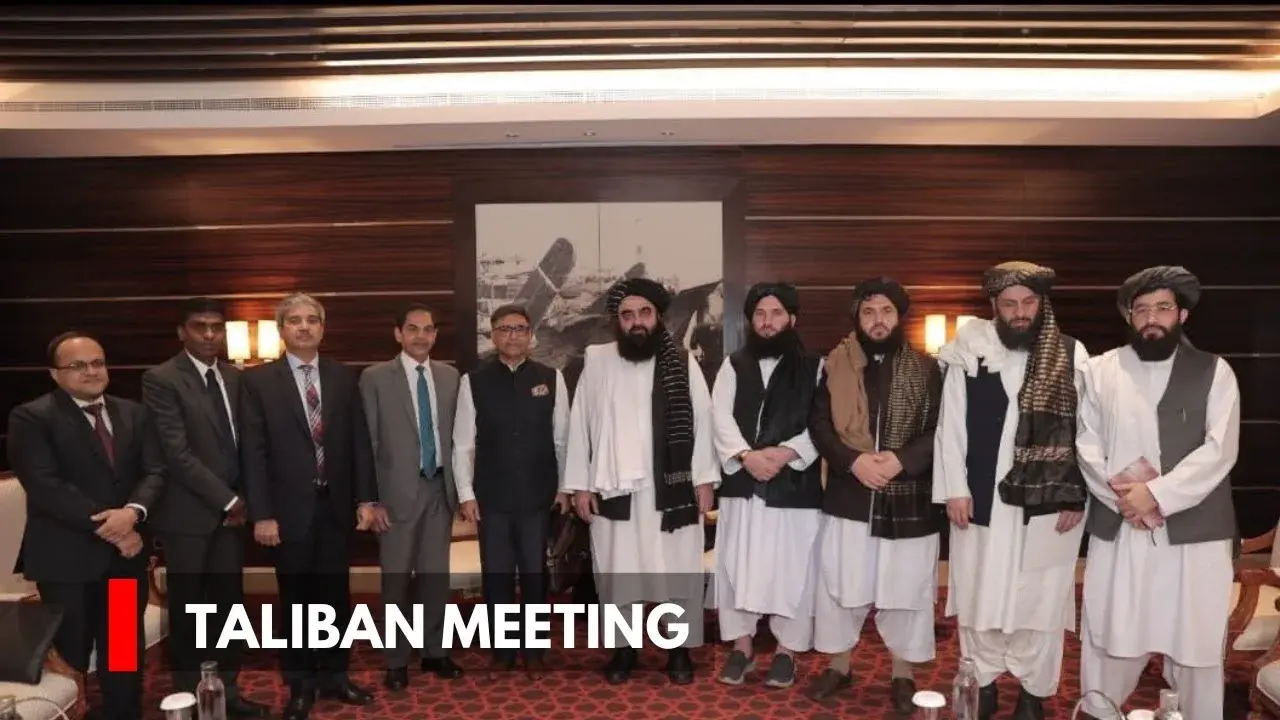
Afghanistan’s strategic location and mineral wealth are making regional and global powers see merit in befriending the Taliban
By P.K.Balachandran
Colombo, October 4 - On August 15, 2021, the Taliban took over Afghanistan from US and NATO forces after fighting a two decade-long devastating war. The radical Islamic group then established a harsh regime with sweeping restrictions on women and girls based on edicts from its leader Hibatullah Akhundzada.
This year, the Taliban marked the fourth anniversary of its rule with fiery speeches justifying the regime. According to Foreign Minister Amir Khan Muttaqi, equality is ensured in Afghanistan under Islamic law. He has asked the world not to treat Afghanistan as a battle ground but as a vital link to various nations in the region.
However, members of the United Afghan Women’s Movement for Freedom issued a statement to mark the anniversary which said - “This day marked the beginning of a black domination that excluded women from work, education, and social life. We, the protesting women, remember this day not as a memory, but as an open wound of history, a wound that has not yet healed. The fall of Afghanistan was not the fall of our will. We stand, even in the darkness.”
Rights groups, foreign governments, and the UN have condemned the Taliban for their treatment of women and girls. Governments across the world have been reluctant to establish formal diplomatic relations with Taliban-ruled Afghanistan. Their leaders continue to be sanctioned by the UN Security Council. When Foreign Minister Amir Khan Muttaqi wanted to go to India to meet Indian leaders on October 9, he had to obtain a waiver from the UNSC, which was given at India’s request.
Isolation Fraying at the Edges
However, the isolation of the Taliban has not been total. It is fraying at the edges. Some countries operate embassies in Kabul and have accepted diplomats appointed by the Taliban. The Taliban control Afghan missions in some 14 countries.
Afghanistan's neighbours, concerned about security, trade, migration, and drug trafficking, have established unofficial ties with the Taliban to influence their policies. Big powers who have money to invest, are eyeing Afghanistan’s rich natural resources. According to CNN, US geologists have said that Afghanistan has mineral deposits worth US$ 1 trillion. These include, iron, copper, gold, rare earths, and, most importantly, the world’s biggest deposits of lithium, an essential but scarce component in rechargeable batteries.
China, Russia, Pakistan
In January 2025, China became the first country to formally accept the credentials of a Taliban-appointed Ambassador, though it did this without officially recognizing the Taliban-led government. China latter formed a contact group on Afghanistan with Russia, Pakistan, Iran and Afghanistan.
Russia followed China in July, becoming the first country to formally recognise the Taliban regime. The Taliban were removed from Russia's list of terrorist organisations in April. Russian President Vladimir Putin referred to the Taliban as an "ally" in fighting terrorism. Taliban representatives had visited Moscow for talks in 2018.
Pakistan had kept a link with the Taliban since October 2021 and allowed the Taliban to take over the Afghan embassy in Islamabad. However, Pakistan-Taliban relations soured because Pakistan accused the Taliban of supporting the radical Islamist Tehrik-e-Taliban Pakistan (TTP) and other terror groups like the Baloch Liberation Army. Islamabad's decision earlier this year to repatriate more than 80,000 Afghan refugees strained ties with the Taliban.
India
India reopened its embassy in Kabul in 2024 but without giving diplomatic recognition to the Talban regime. In March 2025, India decided to allow the Taliban to appoint a representative to lead Afghanistan’s embassy in New Delhi. India is now set to send personnel to fully resume operations at its embassy and consulates in Afghanistan. The Afghan Foreign Minister is visiting New Delhi on October 9.
India is reacting to the changing situation in the region with Russia and China establishing ties with Central Asian countries including Afghanistan. Strained Taliban-Pakistan relations has given India a new opening to Afghanistan.
Furthermore, US President Donald Trump’s wanting to retrieve the airbase at Bagram in Afghanistan has added a new dimension to geopolitics in Central and South Asia, which India cannot ignore.
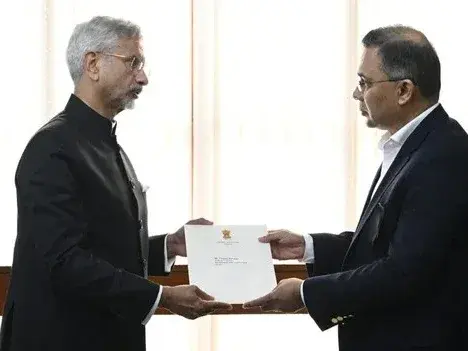
The turning point in Indo-Taliban relations came on May 15 immediately after India's Operation Sindoor against Pakistan, when the Indian External Affairs Minister S. Jaishankar held a phone conversation with his Afghan counterpart Amir Khan Muttaqi – the first ministerial-level contact since 2021. During the discussion, Jaishankar expressed appreciation for the Taliban's condemnation of the Pahalgam terror attack, indicating that India and Afghanistan were on the same page on Pakistan-sponsored terrorism in the region.
India has since expanded direct humanitarian aid to Afghanistan. Following the devastating earthquake in September this year, India swiftly dispatched 1,000 family tents and 15 tonnes of food. This was followed by an additional 21 tonnes of relief material, including essential medicines, hygiene kits, blankets, and generators.
Since the Taliban's takeover of Afghanistan in 2021, India has supplied Afghanistan with nearly 50,000 tonnes of wheat, more than 330 tonnes of medicines and vaccines, and 40,000 litres of pesticides, along with a range of other essential items, which were critical for millions of Afghans grappling with food insecurity and health challenges.
Central Asia
Given the geographical proximity, Central Asian countries and the Taliban have forged close ties. Kazakhstan removed the Taliban from its list of terrorist groups. Uzbekistan had been engaging the Taliban since the latter returned to power. The Taliban appointed a diplomat to take charge of the Afghan Embassy in the Uzbek capital. Turkmenistan had accepted a Taliban ambassador in March 2022. The two countries worked on regional energy and transport projects. Azerbaijan has reopened its embassy in Kabul.
Tajikistan is the only country in Central Asia to publicly oppose the Taliban's return to power and has hosted some of the leaders of the National Resistance Front, an anti-Taliban resistance group.
In the Arab world, Qatar is most friendly. Doha was the scene of negotiations between the Taliban and the US that paved the way for the complete withdrawal of all foreign troops from Afghanistan in 2021. The Taliban is expecting Qatar to enable it to enter an Islamic grouping and help it in defence matters.
Saudi Arabia has maintained an embassy in Kabul and continues to offer consular services for Afghans, thousands of whom work in Saudi Arabia as labourers. After the Taliban takeover, Riyadh helped establish an Organization of Islamic Countries mission in Kabul.
The United Arab Emirates maintains an embassy in Kabul. The Taliban have appointed diplomats to the Afghan Embassy in Abu Dhabi and the consulate in Dubai.
Turkiye, however, has been unfriendly with the Taliban. Several exiled Afghan political leaders are believed to reside in Turkey, including former Vice President Abdul Rashid Dostum.
Multilateral Forums
In August, representatives of Kazakhstan, Kyrgyzstan, Tajikistan, and Uzbekistan announced the holding of the first meeting of the Central Asian countries’ contact group for Afghanistan, hosted by Uzbekistan’s Ministry of Foreign Affairs.
In a statement, Uzbekistan’s Ministry of Foreign Affairs said the meeting emphasized regional cooperation for ensuring Afghanistan’s stability, security, and sustainable development. It sought coordination in the fight against transnational crime, extremism, terrorism, and drug trafficking.
There is already another contact group on Afghanistan, comprising Russia, China, Pakistan, and Iran. In September, this quadrilateral group jointly expressed deep concern over the presence of terrorist organisations operating from Afghanistan, including Al-Qaeda, the Tehreek-e-Taliban Pakistan (TTP), the Balochistan Liberation Army (BLA) and other groups. The group urged the Afghan authorities to take “effective, concrete and verifiable actions” against terrorist outfits, dismantle training camps, cut off financing, and prevent recruitment and access to weapons.
The Taliban’s submission to the world is that to ensure that narcotics are no longer cultivated or trafficked in Afghanistan, that young people do not turn to insurgent groups, and that they are not forced into economic migration again—Afghanistan needs international support including the return of funds frozen in the US and diplomatic recognition.
For obvious reasons, the US has shown the least interest in making up with the Taliban. However, it is immediately interested in getting Americans and Westerners in Taliban’s custody released. In this it has succeeded with the help of Qatar. The Taliban freed US citizen Amir Amiri.
President Trump recently demanded that the Taliban return the Bagram base, the largest US base abroad. But the Taliban have made it clear that they will not allow any foreign base on Afghan soil.
END
RELATED NEWS
View all

Current Affairs
Sri Lankan Presidential pardons- the good and the bad
Sep 11, 2026
Current Affairs
The pros and cons of joining BRICS- the dilemma of Pakistan and Bangladesh
Sep 09, 2026
Current Affairs
Disaster in Nepal gets embroiled in geopolitics.
Sep 08, 2026
Current Affairs
Why Mecca Pact, and what does it imply for its members, Israel and India?
Aug 18, 2026