Current Affairs
West Asian developments will trigger changes in South Asia too
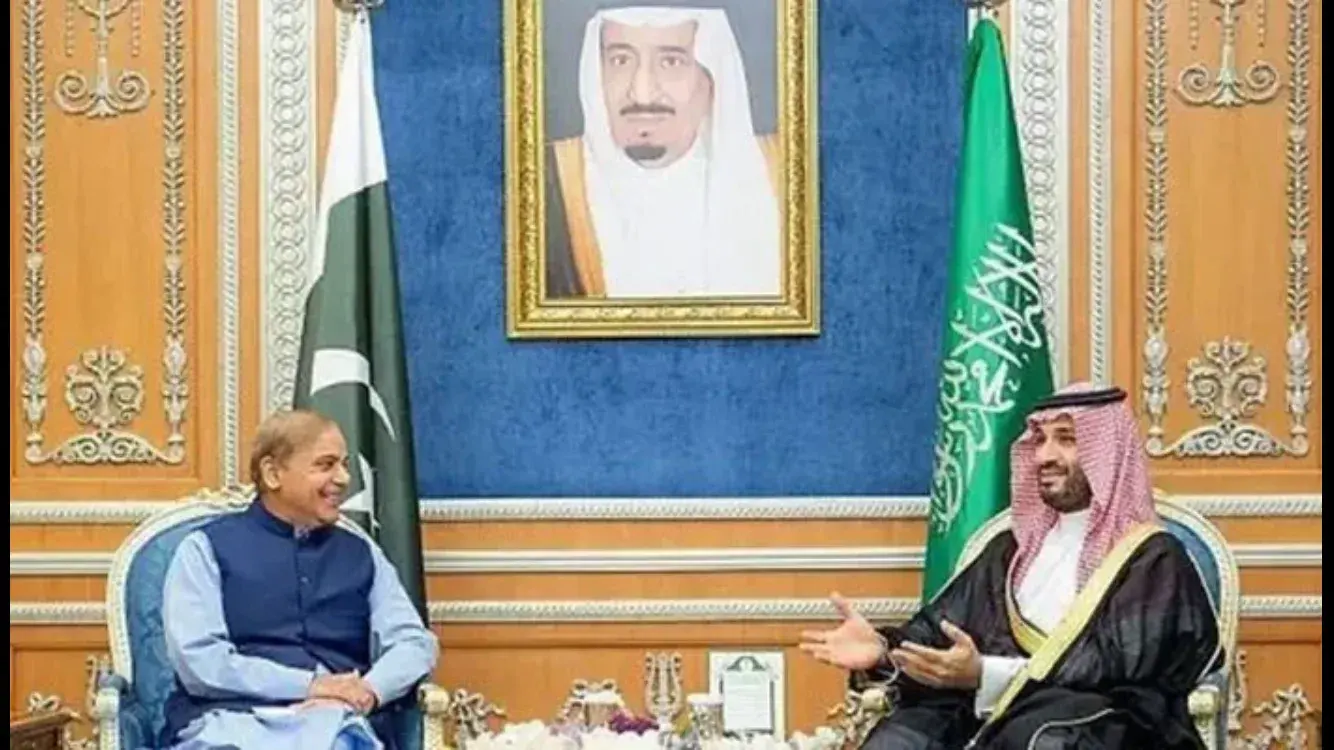
US-Israel air action against Qatar and the Saudi-Pakistan defence pact will change the geopolitical architecture in both West and South Asia.
By P.K.Balachandran
Colombo September 20 – In the past week, dramatic developments had taken place in West Asia, throwing the troubled area into further disorder.
Israeli and US air raids against Qatar nullified the latter’s mediatory role in the Hamas-Israel conflict. Qatar has now become the nucleus of an anti-US and anti-Israel “lslamic” alliance.
And on Thursday, the US vetoed a draft resolution in the US Security Council calling for an immediate and permanent ceasefire in Gaza and demanding that Israel lift all restrictions on humanitarian aid to the enclave. This further alienated the US from the Arab and Muslim world.
The US and Israeli bombings in Qatar also damaged Saudi Arabia’s confidence in the security umbrella that the US was supposed to provide to it. On the rebound, Riyadh entered into a security pact with nuclear-armed “Islamic” Pakistan.
While the Kingdom of Saudi Arabia (KSU)-Pakistan defence pact opens the door to Islamabad to play a role in the security of West Asia, it could alienate the US, a country with which it has deep economic ties and on which it is dependent for getting World Bank and IMF support.
If alienated from the US, Pakistan will have no alternative but to further increase its economic and defence ties with China. But this will only further sharpen its conflict with the US.
Pakistan’s taking a definite anti-Israel and anti-US stance will encourage India to get closer to the US and Israel. Washington and Tel Aviv will get a key role in South Asian politics through India. Pakistan and China will have to evolve strategies to contain India backed by the US and Israel. China is likely to further strengthen its iron-clad alliance with Pakistan, a scenario that will tilt the scales against India in any future Pakistan-India armed conflict.
On September 9, about 50 Arab and Muslim leaders met in Doha, Qatar’s capital and condemned the Israeli and US attacks on Qatar. The summit called upon the member States of the Organisation of Islamic Cooperation (OIC) to examine suspension of Israel’s membership of the United Nations. West Asian scholars are considering the summit as a bid to form an “Islamic NATO” against Israel and the US.
In other words, the security and political order in both West and South Asia are poised to undergo a tectonic shift with an increase in the possibility of war rather than peace. US President Donald Trump and Israeli PM Benjamin Netanyahu are already pursuing an aggressive policy in West Asia.
America’s utility to Israel rests on its influence with the Arab and Muslim states in West Asia. But Qatar’s alienation from the US will make it harder for the US to pursue regional diplomacy. That space will be occupied by China. Beijing had only recently brought about an understanding between Iran and the KSA and Iran. It could expand its influence in the coming years.
The Gulf states may also move closer to Iran as Iran also had face the wrath of the US and Israel.
Saudi-Pakistan Defence Pact
On Wednesday Pakistani Prime Minister Shahbaz Shariff and the Saudi Crown Prince Mohammad bin Salman signed a ‘Strategic Mutual Defence Agreement’ under which an attack one will be deemed an attack on the other and there would be military response.
Asked whether Pakistan’s nuclear assets were also up for use under the agreement, Pakistan’s Defence Minister Khwaja Asif said: “What we have, our capabilities, will absolutely be available under this pact. But let me say, since Pakistan has become a nuclear state, never has anyone challenged our status of being a responsible nuclear power.”
Asif clarified it was not an “aggressive pact” but a defensive arrangement, similar to NATO. Questioned as to whether the United States was taken into confidence on the matter, Asif said there was no ground or justification for any other third party to be involved in the development.
“This agreement will not be a hegemonic arrangement but a defensive arrangement … we don’t have any plans to conquer territory or attack anyone. But our fundamental right can’t be denied to us and we exercised that yesterday,” he explained. Asif also said that that Pakistan could also pursue similar arrangements with other countries.
The agreement marks the most significant upgrade in Pakistan-Saudi defence ties in decades. Cooperation between the two states goes back to 1967. It deepened after the 1979 Grand Mosque seizure, when Pakistani special forces helped Saudi troops reclaim Masjid al-Haram. In 1982, the two sides institutionalised their security ties through a Bilateral Security Cooperation Agreement that enabled Pakistani training, advisory support and deployments on Saudi soil. At times, as many as 20,000 Pakistani troops were stationed in the kingdom, and Saudi Arabia became a key purchaser of Pakistani-made arms. In February, a meeting of the Joint Military Cooperation Committee in Riyadh pledged to expand training and exchanges.
For Pakistan, the agreement offers both strategic and economic benefits. It secures vital Saudi investment and funding at a time of fiscal strain. It also reinforced Islamabad’s standing as a pan-Islamic security provider. And KSA secures the Islamic world’s best fighting force -the Pakistan army – to protect it.
India’s challenge now is to preserve its strategic foothold in the Gulf, while responding to the reality of a more assertive Pakistan, now armed with a new level of geopolitical legitimacy and strategic depth through its partnership with Riyadh.
And in any armed conflict with Pakistan, India will have to face a Pakistan that has Chinese military support and Saudi financial support. This will make Pakistan a formidable enemy.
India is expected to rebuild its damaged ties with the US by making tariff concessions sought by the US. Indo-US talks on tariff and trade are to commence soon and both sides have made hopeful statements about an agreement.
There is also hope in New Delhi that Saudi Arabia will not allow Pakistan to attack India because of its strong economic ties with India. Bilateral trade between India and Saudi Arabia has seen consistent growth over the years. India is Saudi Arabia’s second-largest trading partner. In FY 2023–24, bilateral trade reached US$ 42.98 billion, comprising Indian exports worth US$ 11.56 billion and imports totalling US$ 31.42 billion.
Indian investments in Saudi Arabia have witnessed a notable rise in recent years, reaching a total of approximately US$ 3 billion as of August 2023. Saudi investments in India, including those from the Public Investment Fund (PIF), Saudi-backed Vision Fund, and major companies, total around US$10 billion.
However, Saudi Arabia’s security tie up with Pakistan will have implications for India’s energy security. Saudi Arabia is one of India’s largest energy suppliers. The Saudi-Pakistan defence agreement could also jeopardise the India-Middle East-Europe Corridor (IMEEC). IMEEC was meant to link India to Europe via Saudi Arabia and be a counter to China’s Belt and Road Initiative (BRI). If Saudi Arabia aligns with China through the good offices of Pakistan, the BRI would be hard to catch up with.
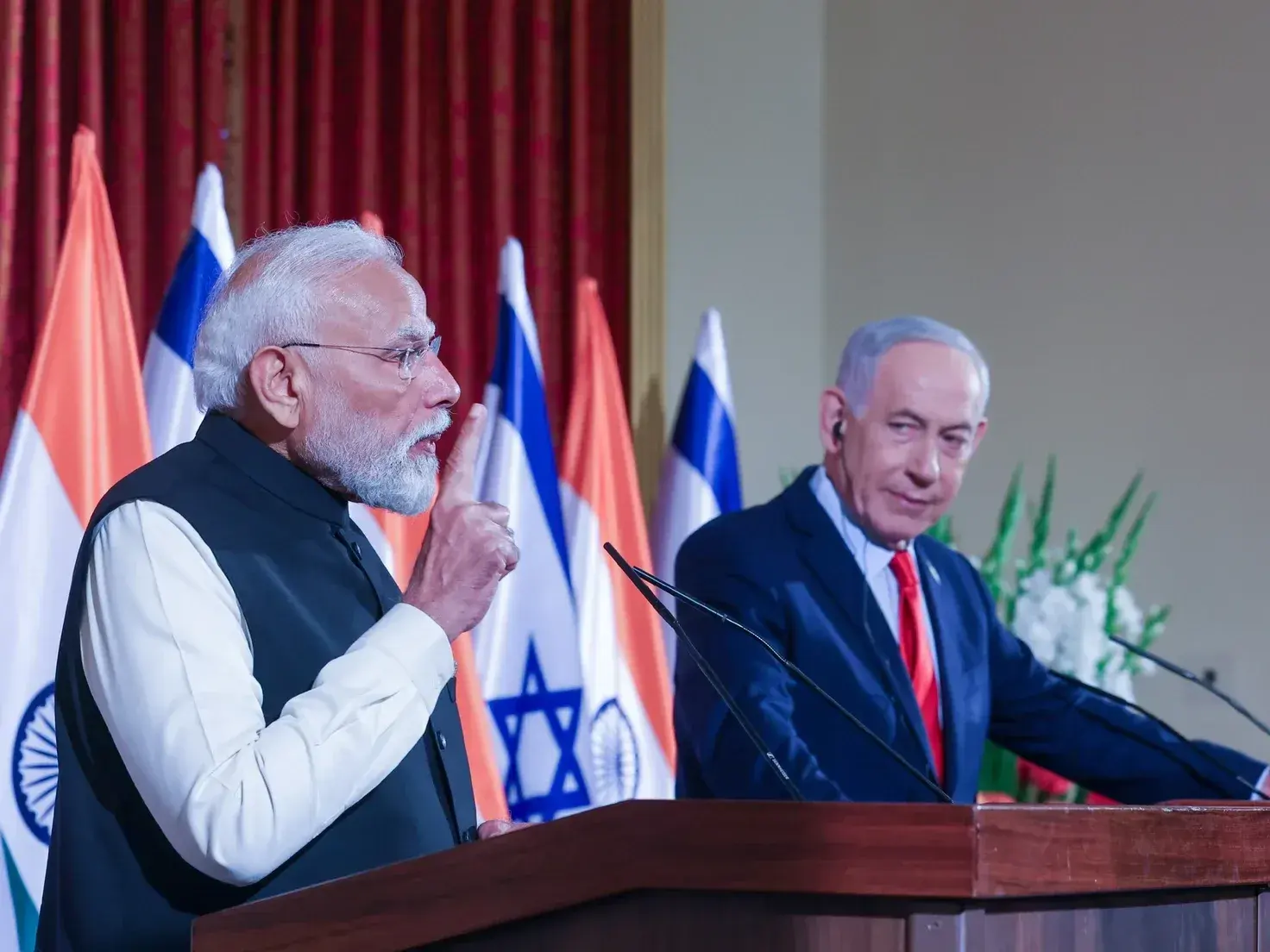
India will also strengthen its ties with Israel. Since establishing diplomatic relations in 1992, India-Israel bilateral trade and economic ties have progressed rapidly. From around US$ 200 million in 1992 (comprising primarily of diamonds), merchandise trade diversified and reached around US$ 10.77 billion (excluding defence) in FY 2022-23. In FY 2023-24 (April-March), bilateral trade was US$ 6.53 billion (excluding defence) with India's exports at US$ 4.52 billion and Israel's exports at US$ 2.0 billion.
Recent years have witnessed an increase in trade in areas such as electronic machinery and high-tech products, communications systems, and medical equipment.
India and Israel reaffirmed their strategic defence cooperation at a high-level in New Delhi on July 23 this year. Discussions focused on creating a robust framework for sustained cooperation in emerging domains such as cyber defence, artificial intelligence, and unmanned systems. India uses Israeli defence equipment like unmanned aerial vehicles (UAVs), surveillance systems, and precision-guided munitions and Barak 8, also known as LR-SAM or MR-SAM.
END
RELATED NEWS
View all

Current Affairs
Sri Lankan Presidential pardons- the good and the bad
Sep 11, 2026
Current Affairs
The pros and cons of joining BRICS- the dilemma of Pakistan and Bangladesh
Sep 09, 2026
Current Affairs
Disaster in Nepal gets embroiled in geopolitics.
Sep 08, 2026
Current Affairs
Why Mecca Pact, and what does it imply for its members, Israel and India?
Aug 18, 2026