Politics by Vishvanath, Cover Story
Will the NPP abolish the executive presidency?
By Vishvanath
The Opposition usually asks the government many questions in the parliament during one sitting, but the latter provides evasive answers to them or keeps asking for more time until the issues that its political rivals highlight fizzle out. Sometimes, not even the Opposition MPs who raise questions take them seriously. There are times when many of those who are scheduled to raise questions are not present in the House.
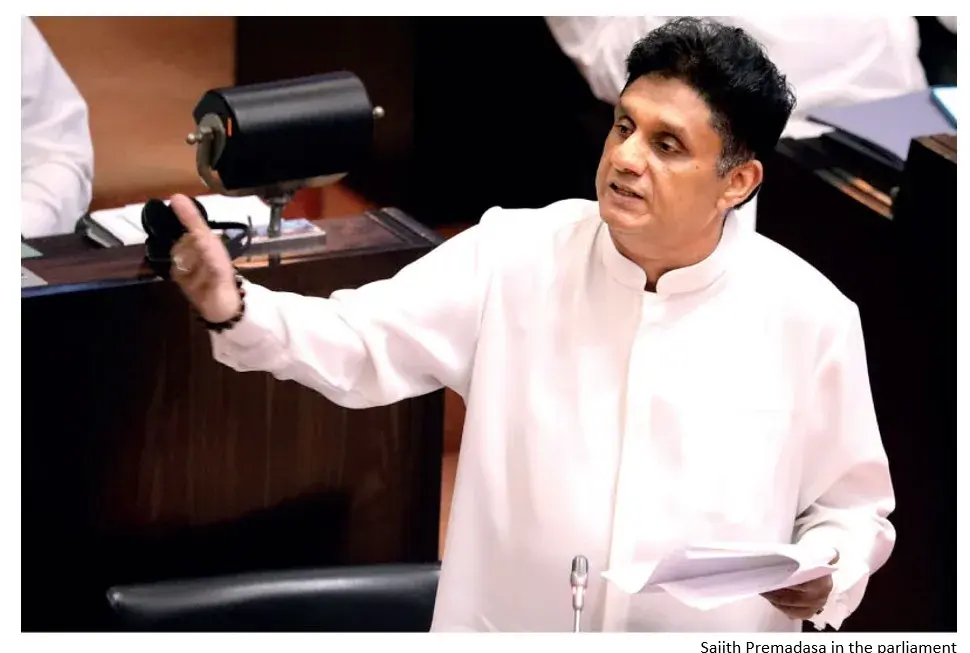
On Wednesday, only one of the 10 Opposition MPs who were scheduled to ask questions from the government was present. But there are occasions when the Opposition throws the ruling party real curveballs, the way Opposition Leader Sajith Premadasa did on Wednesday. He often fires barrages of questions in the House so much that it is difficult for anyone to keep track of them. But on Wednesday he posed a pointed question. He asked when the government would abolish the executive presidency and hold the Provincial Council elections. Chief Government Whip Dr. Nalinda Jayatissa said Prime Minister Dr. Harini Amarasuriya would answer those questions in due course. Premadasa pressed for a prompt response, saying that the government should have answers ready for such questions, but Dr. Jayatissa insisted that the government needed time to provide a detailed response. Premadasa, however, succeeded in putting the government on the spot. The latter is bound to take an inordinately long time to answer his question at issue.
The JVP, which leads the NPP government, has opposed the executive presidency consistently since it was introduced in 1978. One of the JVP’s main demands during its second uprising in the late 1980s was that the executive presidency be scrapped. After re-entering democratic politics in the early 1990s, it pressured President Chandrika Bandaranaike Kumaratunga to carry out her promise to do away with the executive presidency, and restore the parliamentary system of government. In 2000, she unveiled a constitutional reform package but lacked a two-thirds parliamentary majority to secure its passage. The following year, her government, which was facing the prospect of an imminent collapse due to mass crossovers, succumbed to pressure from the Opposition to introduce the 17th Amendment to the Constitution, reducing the powers of the presidency. The JVP repeated its demand for the abolition of the executive presidency when it contested the 2004 general election as a constituent of the SLFP-led UPFA under President Kumaratunga’s leadership. Kumaratunga did not care to honor her pledge. The following year, the JVP made its support for Mahinda Rajapaksa in the presidential race conditional to his promise to abolish the executive presidency. Rajapaksa reneged on his promise, and the JVP turned against him, and backed Gen. Sarath Fonseka in the 2010 presidential contest in a bid to achieve that goal. Fonseka lost. In 2015, the JVP joined other parties, including the UNP, to help Maithripala Sirisena win the executive presidency, the abolition of which was one of the main planks of his election campaign. He, too, did not fulfil his pledge. Instead, some powers in the executive presidency were reduced through the 19th Amendment, but they were later restored by President Gotabaya Rajapaksa through the 20th Amendment; the SLPP, during the political upheavals triggered by the current economic crisis, in 2022, had to introduce the 21st Amendment, curtailing the powers of the President.
Eventually, the JVP, which leads the NPP, made a solemn pledge to do away with the executive presidency, itself, in the run-up to last year’s presidential election. JVP leader Anura Kumara Dissanayake ran for President successfully and then asked for a parliamentary majority to carry out the NPP’s election promises including the abolition of the executive presidency. The NPP received a two-thirds majority. So, the JVP/NPP is now in a position to scrap the executive presidency even without the Opposition’s support.
The JVP/NPP has won elections by taking moral high ground, and making itself out to be different from the other political parties. So, unless it carries out its pledge to abolish the executive presidency, the public will invariably think less of it. In December 2024, Deputy Minister Sunil Watagala, legal advisor to the NPP government, said in an interview with the state-owned ITN that they (meaning the NPP/NPP politicians) would not be able to conduct another presidential election campaign, ‘with their clothes on’, as they had promised to do away with the executive presidency. But losing the executive powers vested in the presidency is not something the government can come to terms with for obvious reasons.
One year has elapsed since the election of President Dissanayake and the subsequent regime change, but the government remains silent on the promised constitutional reforms. It won’t be able to go on dilly-dallying and prevaricating indefinitely. The Opposition is bound to intensify pressure on it to reveal its position on the executive presidency and specify a timeframe for introducing a new Constitution.
There is much more to Sri Lanka’s Constitution than the executive presidency. Devolution has remained a thorny issue. Successive governments have come under pressure to devolve more power to the provinces, amidst resistance from the proponents of the unitary character of the state. President Kumaratunga’s efforts to introduce a new Constitution to abolish the executive presidency and devolve power to the Regional Councils instead of the existing Provincial Councils sparked protests in 2000 both inside and outside the parliament. The Opposition parties, especially the UNP and the JVP, pulled out their support for her draft Constitution, claiming that she had smuggled in some transitional provisions into it without its concurrence, and her constitutional reform project fell through.
Unlike its predecessors, the NPP received a cross-ethnic mandate in last year’s parliamentary election to carry out its pledges, and among its supporters are the advocates of greater devolution. Therefore, it will be under pressure to address their concerns as well. That will be a balancing act, given stiff resistance from the nationalistic forces in the Opposition as well as the NPP to constitutional reforms. They are a force to be reckoned with.
The government also finds it difficult to specify when the PC polls will be held. It was planning to hold elections to the PCs a few months after the May 06 local government polls, but its national vote share dropped significantly in the mini polls, compared to that in last year’s general election, although it emerged the overall winner and won the highest number of local councils. This is considered the reason why the NPP has decided against holding the PC polls anytime soon. It has redoubled its efforts to shore up its image and recover lost ground on the political front, and chances are that it will not face another election until it is fully confident that it can improve its electoral performance. However, the Opposition will continue to pressure the NPP to reveal when the PC polls will be held. It has got hold of something to beat the NPP with—effectively.
RELATED NEWS
View all
Politics by Vishvanath
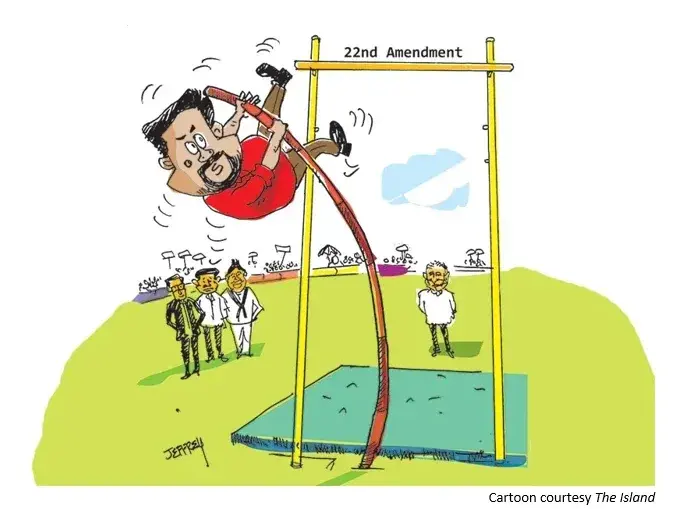
Has 22A become the govt.'s Catch-22?
Aug 27, 2026
Politics by Vishvanath
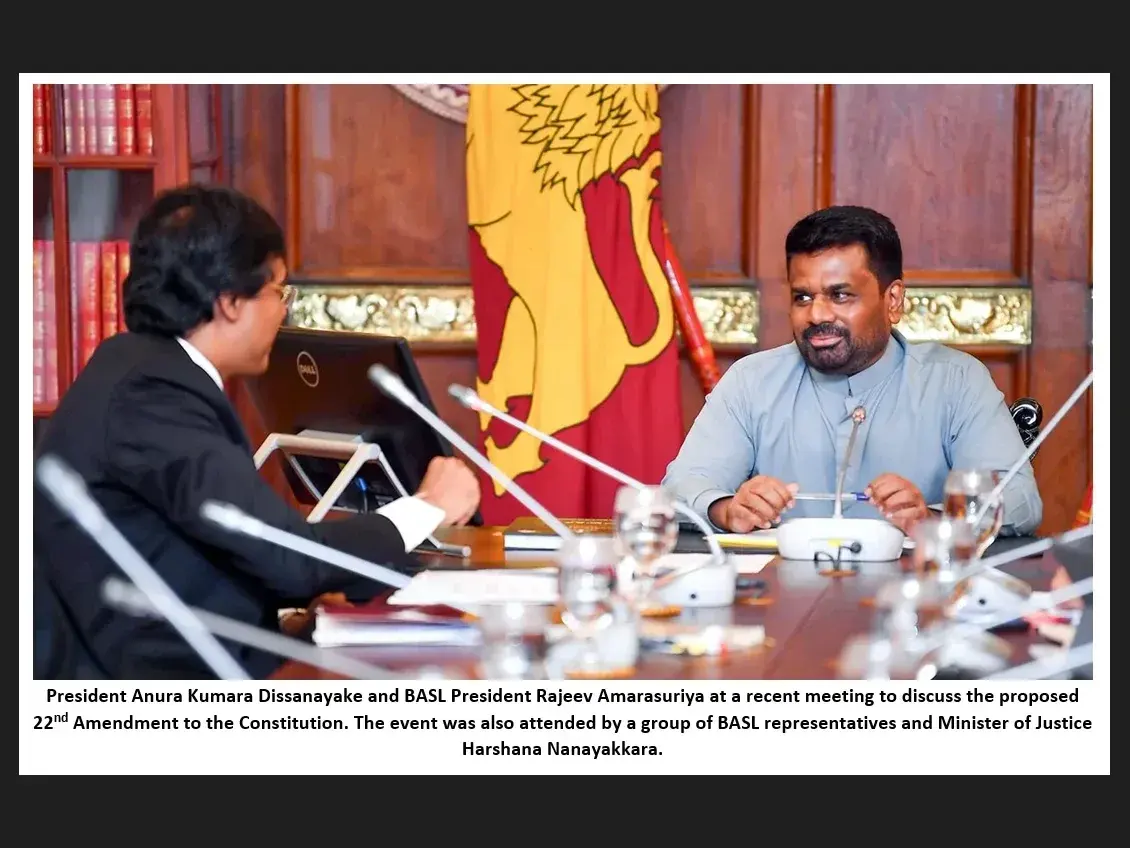
22nd Amendment: A huge political gamble for govt.
Aug 21, 2026
Politics by Vishvanath
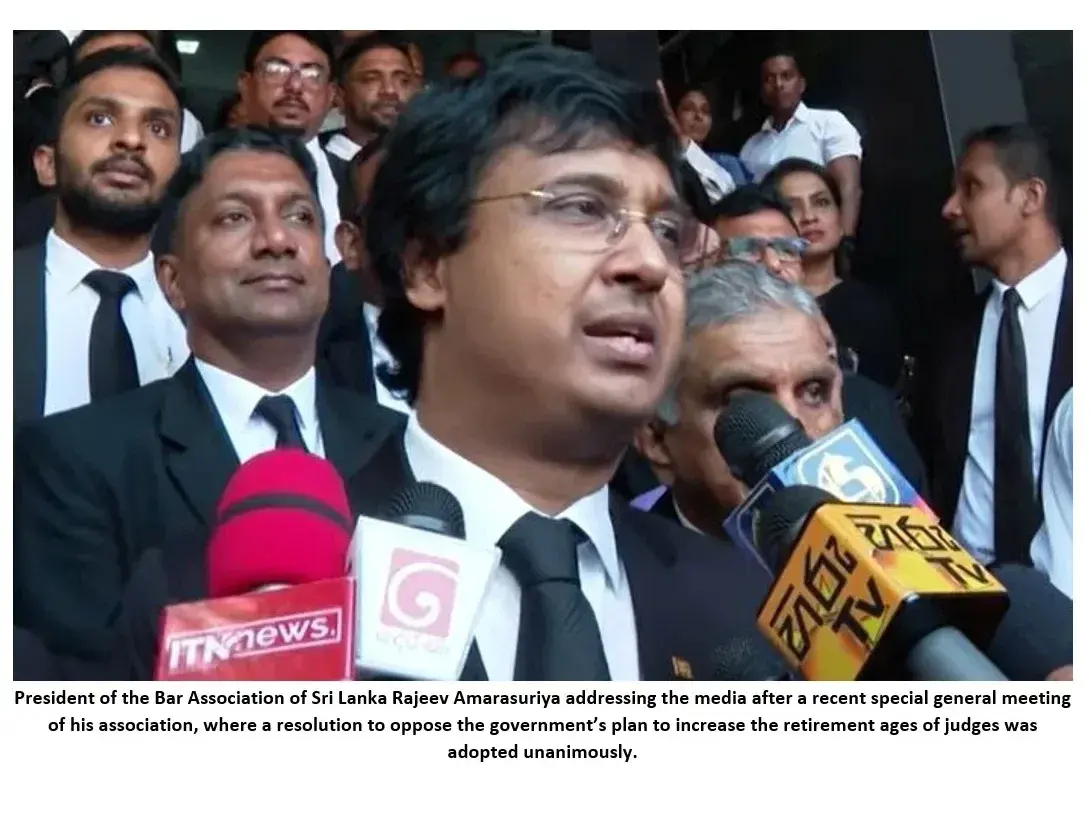
Move to raise retirement ages of judges: Options before govt.
Aug 05, 2026
Politics by Vishvanath
‘Cockroach’ uprising and echoes of Aragalaya
Jul 26, 2026