Current Affairs
World Bank turns its attention to the family as a factor in development
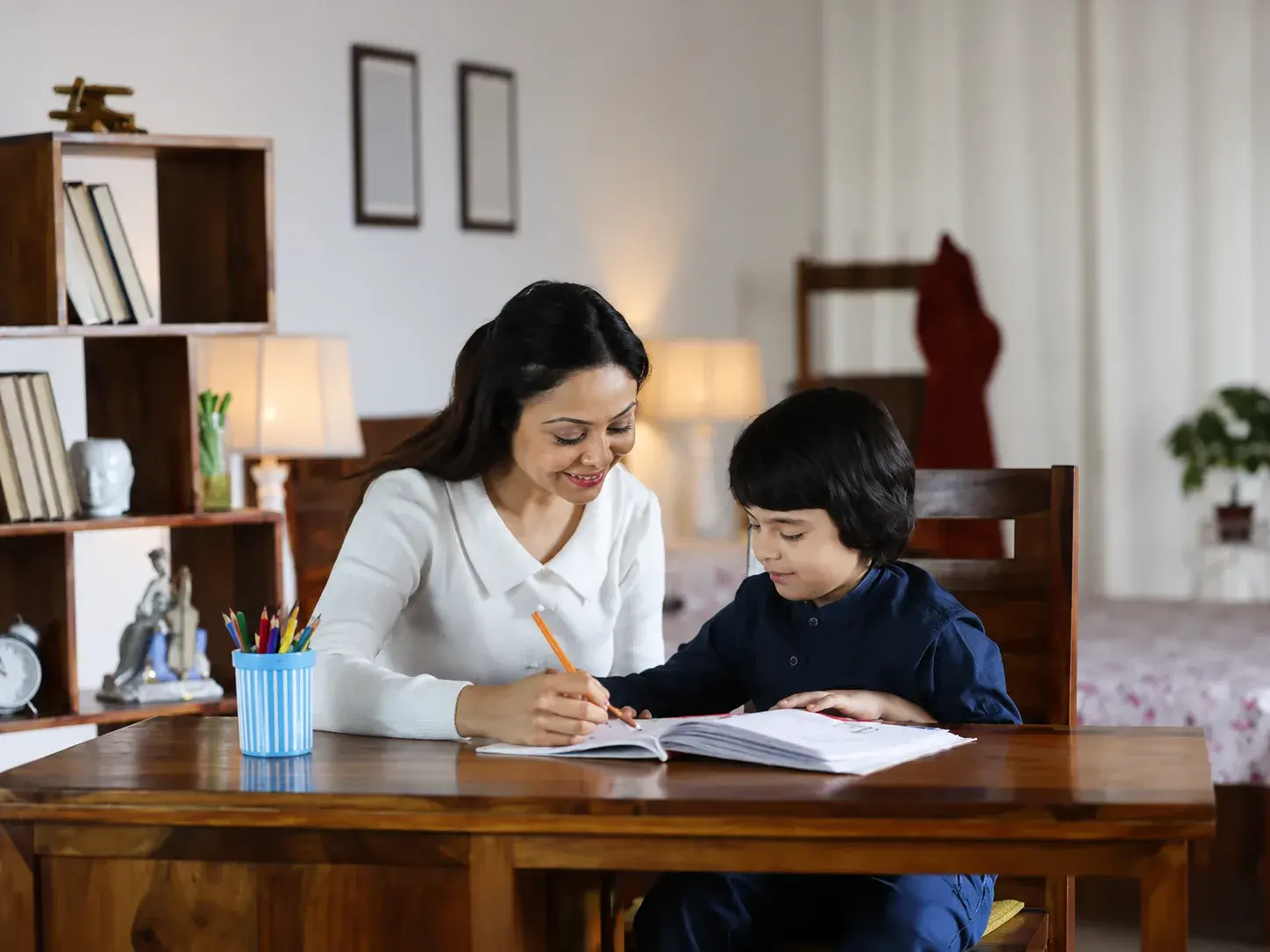
The World Bank’s global study presents the observations of economist Dr. Alaka Holla on how the family could be nurtured as a factor in development.
By P.K.BALACHANDRAN
Colombo, May 21 – The World Bank has turned its attention to the family as a factor in development and has suggested ways to make it contribute to development.
The latest report by the World Bank’ presents the observations of economist Dr. Alaka Holla on how the family could be nurtured as an economic asset.
Human beings are a part of the wealth or “capital” of a country, as much as other kinds of capital, be it finance, production or trade. In the production of human capital, families play a critical role. A world-wide study by World Bank economist, Dr. Alaka Holla, brings out, with interesting insights, the role of the family in the development (or accumulation) of a country’s “human capital.”
Among the first observations made by Dr.Holla is the role the mother’s educational level plays in the development of the child who will eventually be required to contribute to the country’s human capital.
She found that in rural Peru, children whose mothers had had a primary education or less had roughly half the vocabulary of children whose mothers had completed secondary school. In Afghanistan, children whose mothers had less than a primary education were 47% more likely to be “stunted” than children whose mothers had secondary education.
In Bangladesh, children were two times more likely to have attained minimal proficiency in mathematics if their mothers had completed some tertiary education than if they had completed only primary education or less. Similar patterns were apparent in Ethiopia, India, and Viet Nam.
Dr. Holla says that such childhood disadvantage persisted throughout school and adolescence. “Children of mothers with lower educational attainment never catch up,” she says bluntly.
Resources and Parenting
Families vary in their access to resources. To thrive, children need nutritious food, safe and sanitary living conditions, and opportunities to learn. Many of these needs can be met only if families spend money. Healthier foods and diets tend to cost more. Even if schools and health care are provided free of charge, families will still need to purchase books and medicines and cover transportation costs.
Homes also vary a great deal in how much time parents invest in helping their children learn, how often they play with their children, their disciplining styles, and how much social and emotional support they offer to children and adolescents. Playing with the children or indulging in fun activities with them helps the latter relax and open their minds to learning and creative pursuits which will help them in later life.
Separation from Children
Children left with relations so that their parents could go to work in distant places to earn more, tend to show poor progress in studies, Dr. Holla points out. In China, millions of children are left by their parents in the care of relations when they move from rural to urban areas in search of better jobs. These “left-behind children” may be living in homes with higher household income, but they do worse in tests in mathematics and language ability. They also exhibit higher levels of depression.
Care Environment
The availability of more resources, either through higher earnings or through cash transfers, has been shown to improve child outcomes in many settings. But parenting programmes that are aimed at changing the “care environment” at home can add to the positive effects of having a high income.
However, care or parenting programmes, have frequently proven difficult to sustain or improve. Therefore, Dr. Holla suggests, that to sustain human capital accumulation, the school’s responsibilities could be widened to cover family responsibilities. In other words, the school could be assigned some of the activities now left to the household, or the mother, to be precise.
Tamil Nadu’s Example
In Tamil Nadu, a South Indian State, the noon meal scheme in government-run schools, is an example of schools entering the domestic sphere.
The scheme was introduced by Chief Minister K.Kamaraj in the 1950s. It was then expanded by Chief Minister M.G.Ramachandran in 1982. Chief Minister M.K.Stalin expanded it recently by including the morning breakfast. These meals enabled working mothers to go to their places of work without lighting the fire at home.
Earlier, Chief Minister J.Jayalalithaa introduced “Amma Canteens” in towns to provide cheap but healthy breakfast to working men. These programmes created space for parents to join the organized workforce and increase their earnings, which in turn, were used to cater to the educational needs of their children.
Against Orphanages.
According to Dr.Holla, it is better for children and society to encourage the adoption of destitute children or orphans than to promote homes for abandoned children and orphanages.
In the early 1990s, families in Western countries began to adopt large numbers of Romanian orphans after learning about the bad living conditions in the orphanages, where children were often deprived of necessities and even human contact.
A study found in the UK that orphans adopted by families displayed were better learning abilities. According to Dr.Holla ,the Romanian children who had spent more than six months in orphanages had what is called “autism spectrum disorder” marked by inattention, overactivity, and cognitive impairment. The deficits were present even at age 25. This is because their early environment was marked by severe human deprivation.
Children’s Books
The presence of children’s books in a home is particularly important for early language acquisition and cognitive development Dr.Holla says. If parents engage in early reading activities with their children, they are helping build early skills in literacy, in vocabulary and comprehension. These skills also facilitate the development of other cognitive skills, such as proficiency in mathematics.
In nationally representative data from Madagascar, children living in homes with at least three children’s books are four times more likely to be proficient in mathematics than children without books at home.
Spending Time With Kids
A second source of variation across households stems from the care environment in the home, that is, the amount of time parents invest in helping children learn and in playing with their children, their methods of maintaining discipline, and the amount of social-emotional support they offer to children and adolescents.
Children’s early development increases with the number of care or stimulation activities at home. Adult singing or playing with a child greatly helps socialise the child.
Violent Punishment is Harmful
By contrast, there is a negative association between children’s skills and the use of violent punishment as a form of discipline. In Thailand, for example, nearly 70% of children exhibited proficiency in mathematics if their parents refrained from physically violent forms of punishment, while only 53% of the children who faced such harsh discipline at home achieved mathematics proficiency.
Global data suggest that the prevalence of harsh forms of disciplining in the home is substantial. In Nigeria, for instance, nearly 80% of parents reported that they relied on violent punishment to discipline their children. On an average, in low- and middle-income countries on which data are available, 60 % of children ages between 1–14 experienced violent physical punishment at home.
Physical Conditions At Home
Improvement in the physical conditions at home impacts the child’s mental and physical conditions. A cement floor may be out of reach for many poor households, but replacing a dirt floor with a concrete floor could decrease children’s exposure to the faecal matter and parasites that cause disease and mental deficiencies. In Mexico, for example, a program that replaced dirt floors with floors made of concrete improved children’s cognitive development.
Parents’ Mental Health
If parents suffer from an emotional or behavioural disorder, they may take out their frustrations on their children. A decline in parental mental health, rather than declines in income, appears to underlie the negative impacts of parental job loss on children’s school performance.
Close to one in five adults globally had a mental health disorder in 2021, and this negatively affected parenting, and the physical and psychological growth of children was adversely affected.
In conclusion, Dr.Holla regrets that most human capital accumulation policies do not focus on the home as a place for nurturing and learning. The home is where the foundation is. A vital link in the human capital production chain is thus neglected.
END
RELATED NEWS
View all

Current Affairs
Sri Lankan Presidential pardons- the good and the bad
Sep 11, 2026

Current Affairs
The pros and cons of joining BRICS- the dilemma of Pakistan and Bangladesh
Sep 09, 2026

Current Affairs
Disaster in Nepal gets embroiled in geopolitics.
Sep 08, 2026

Current Affairs
Why Mecca Pact, and what does it imply for its members, Israel and India?
Aug 18, 2026